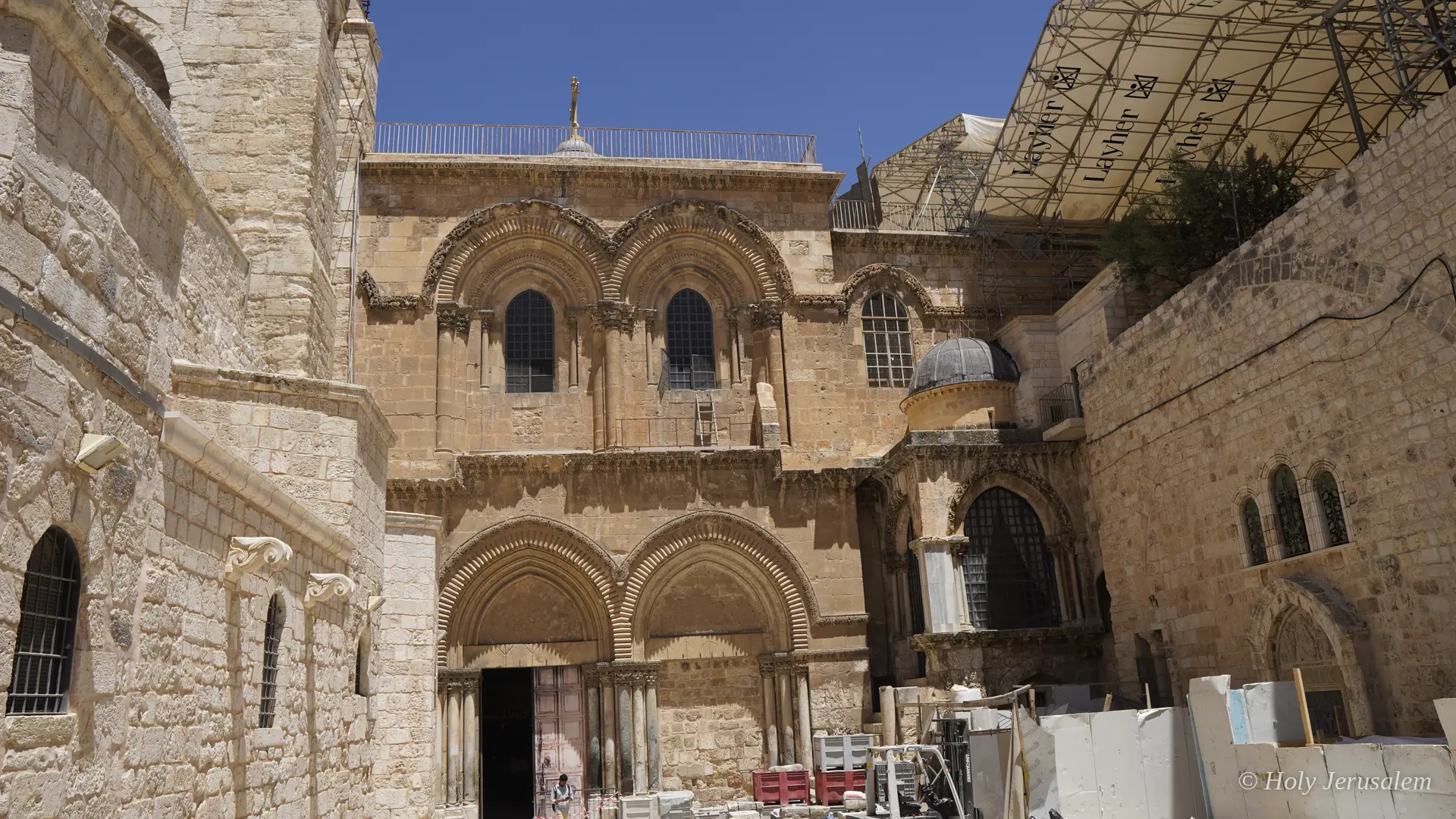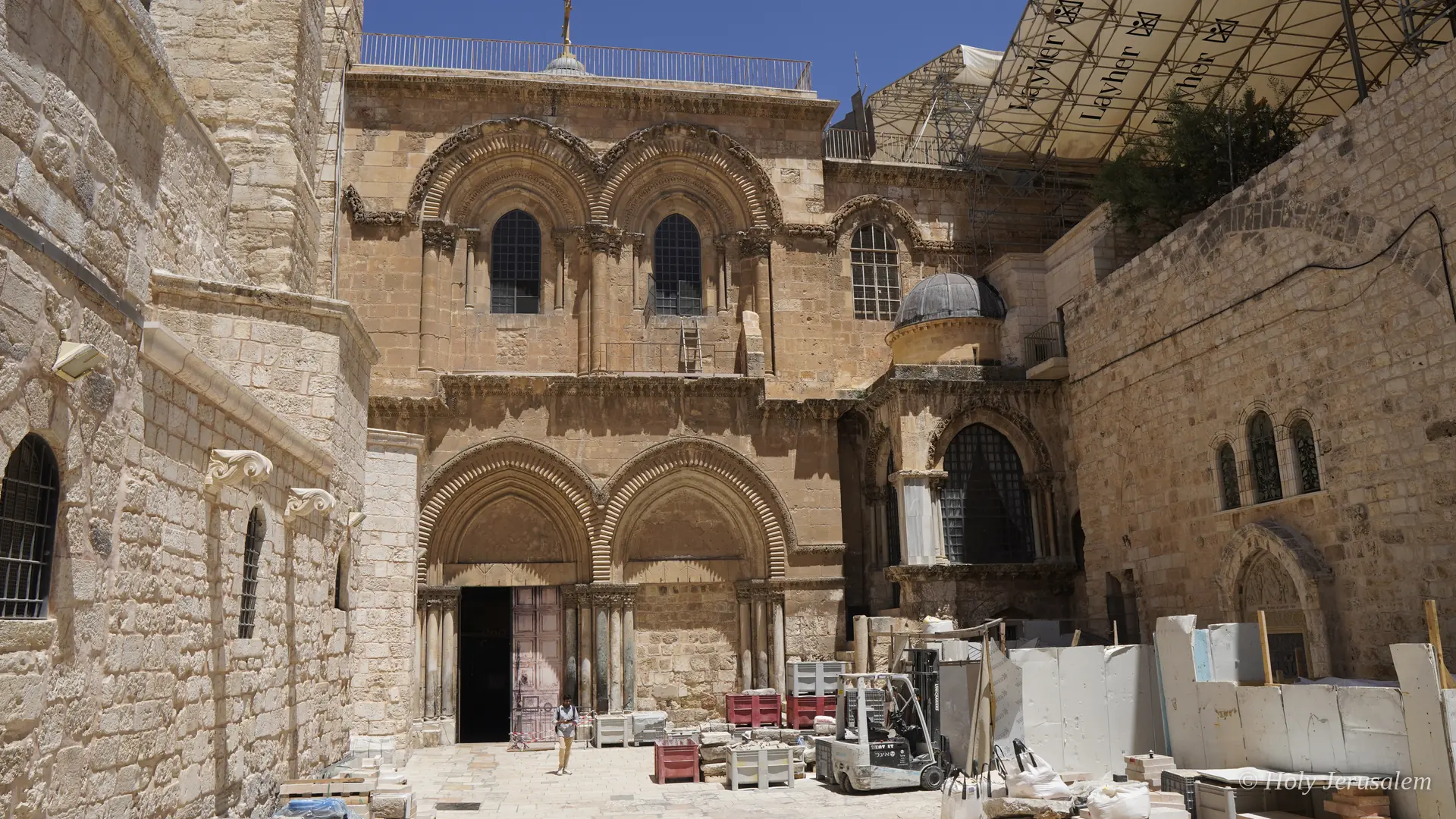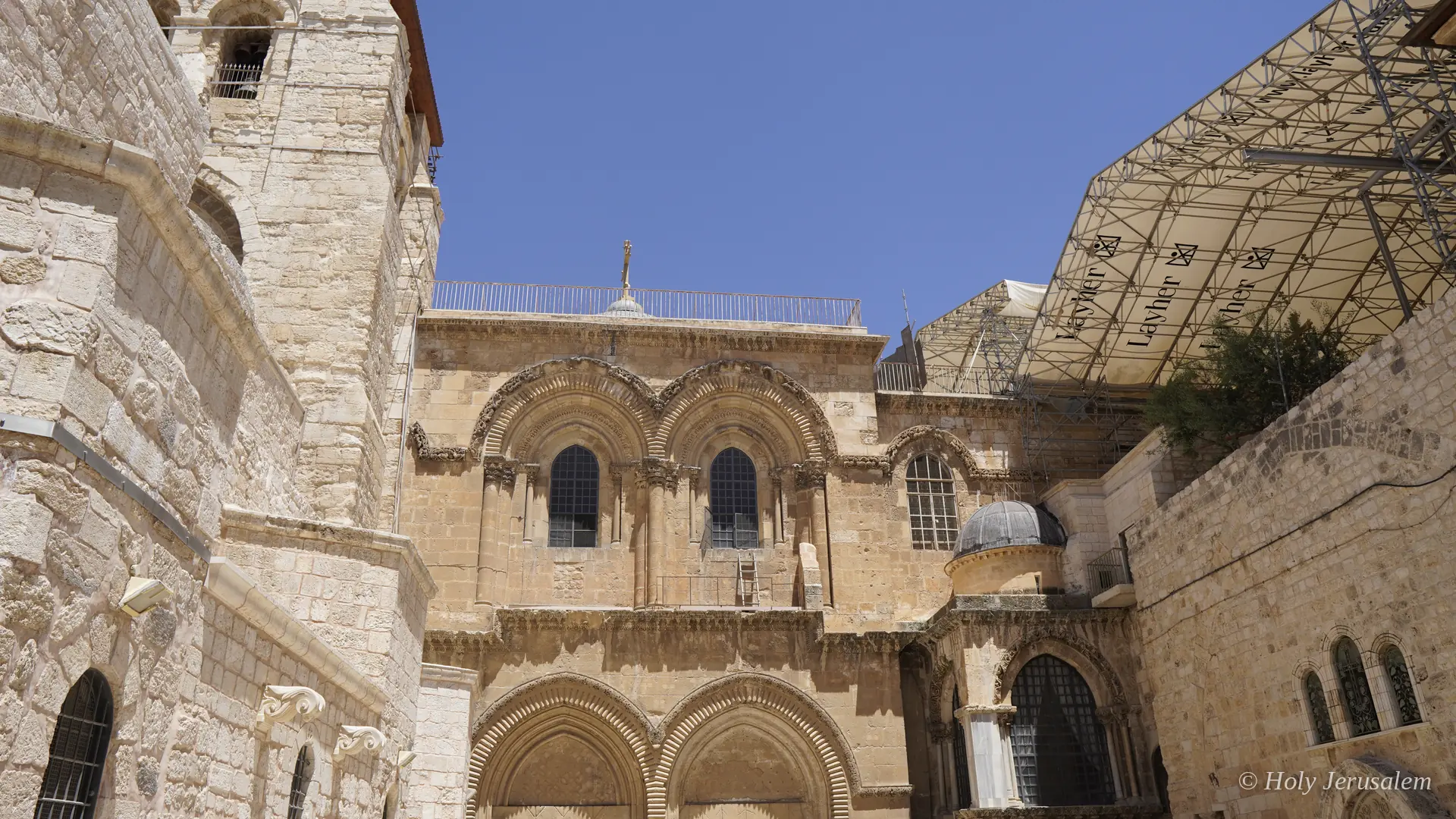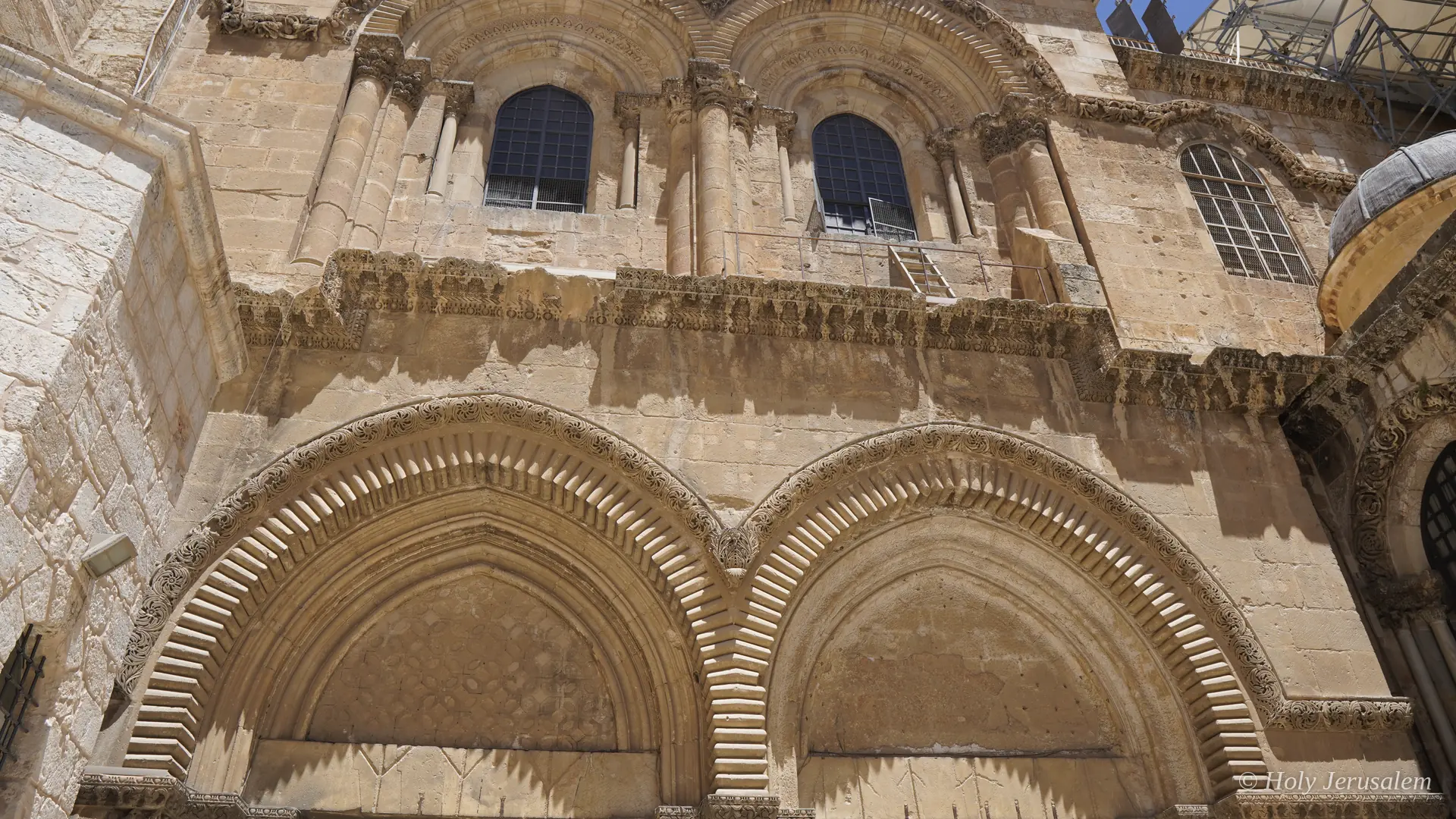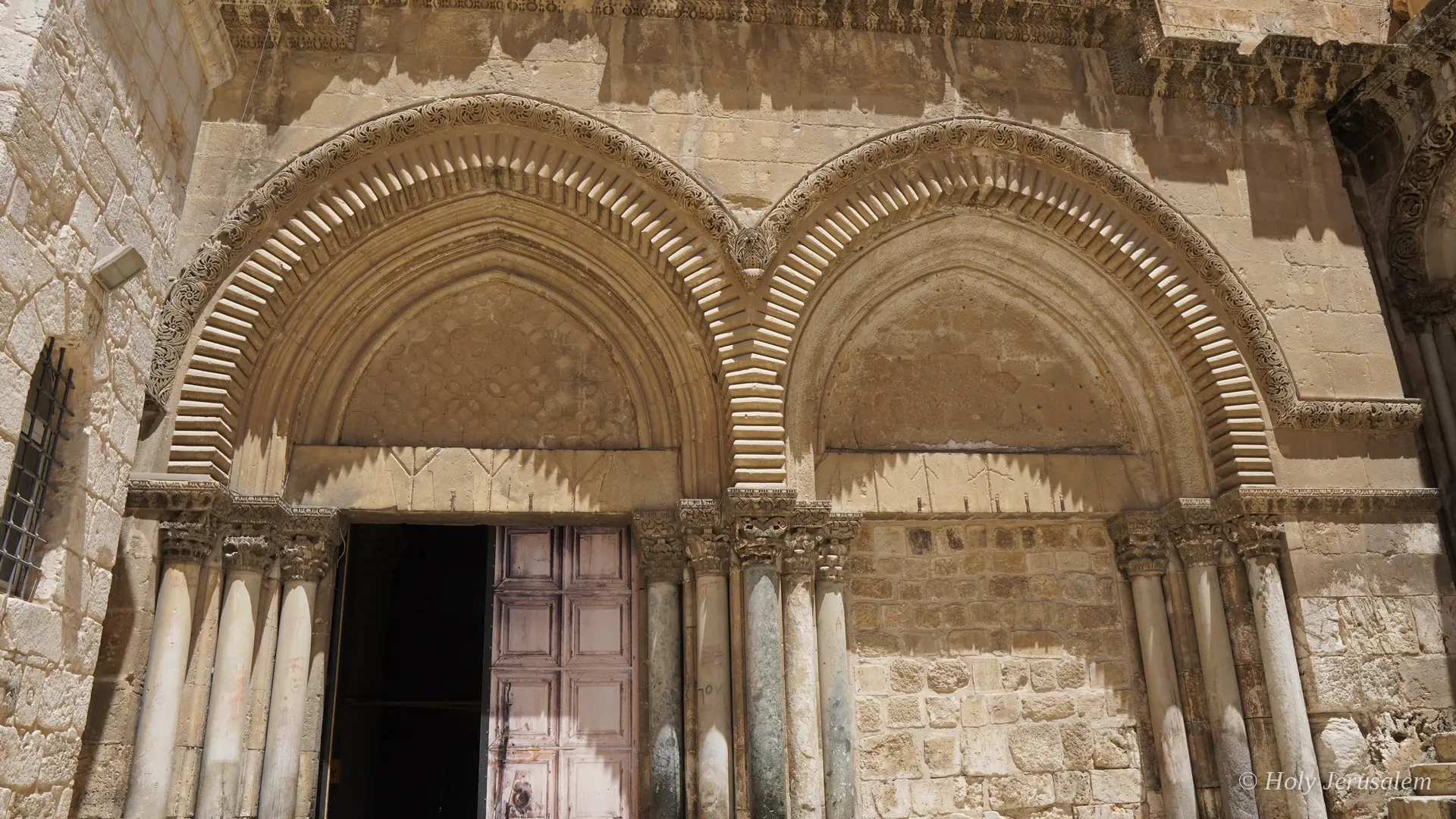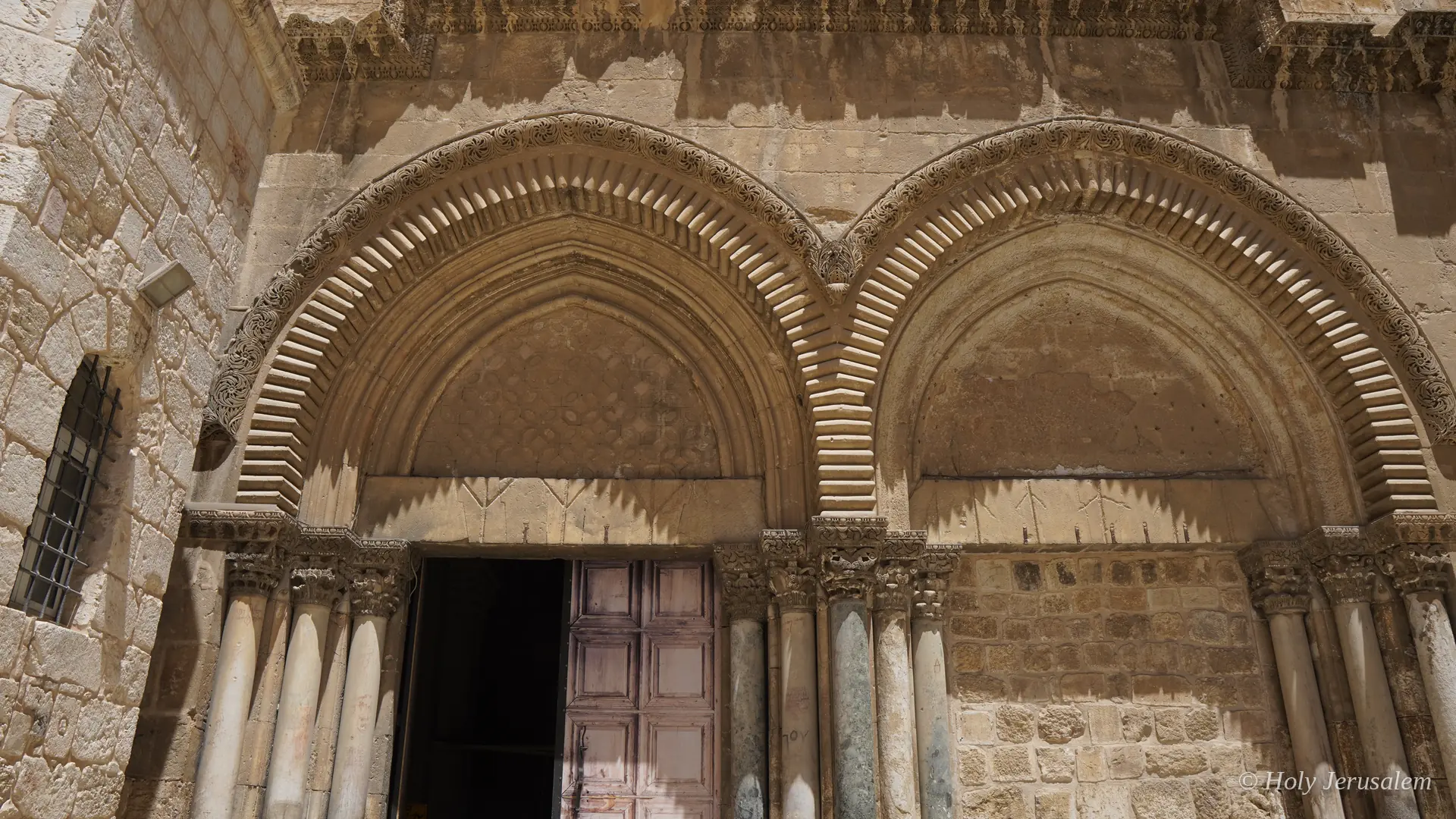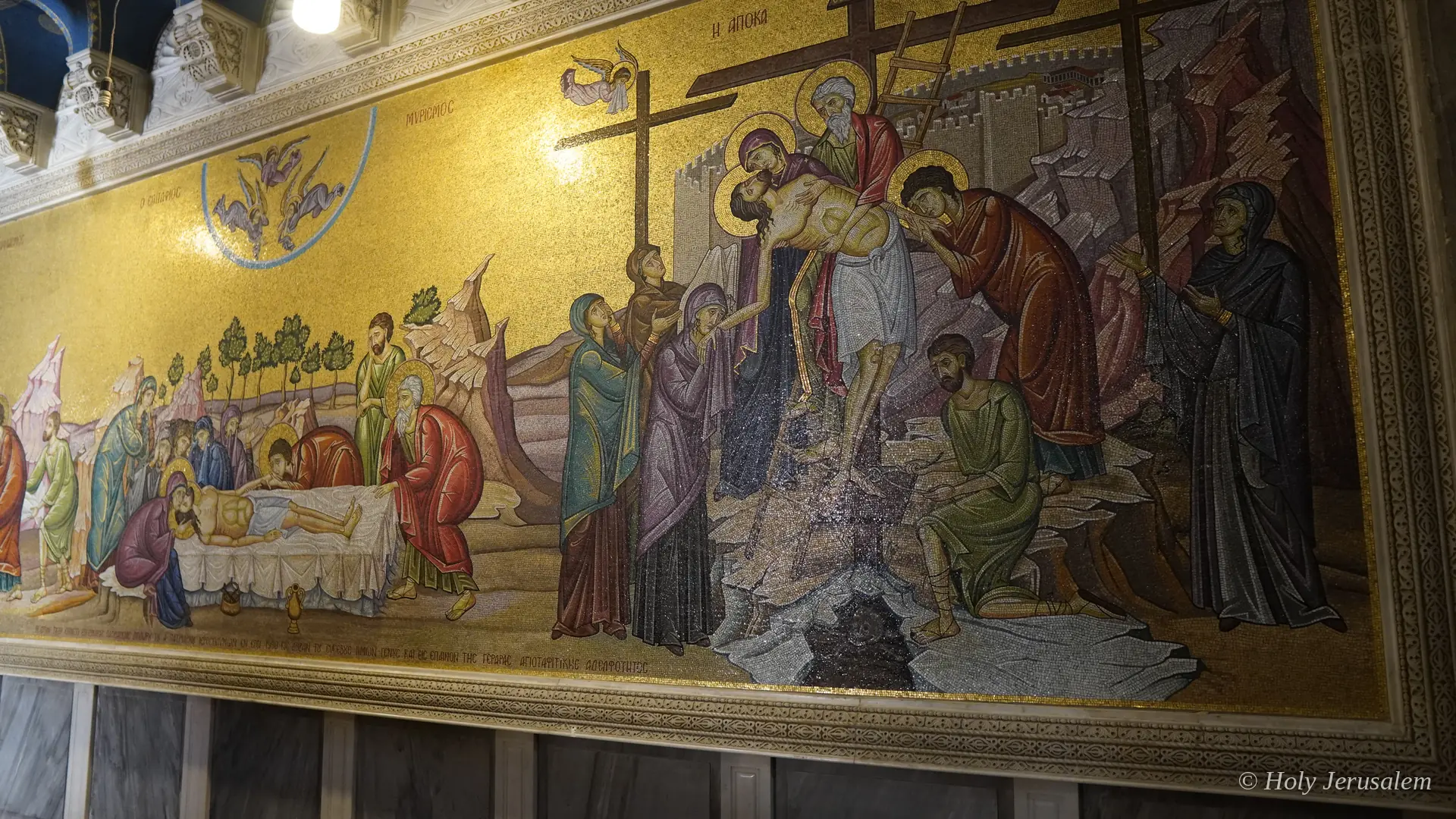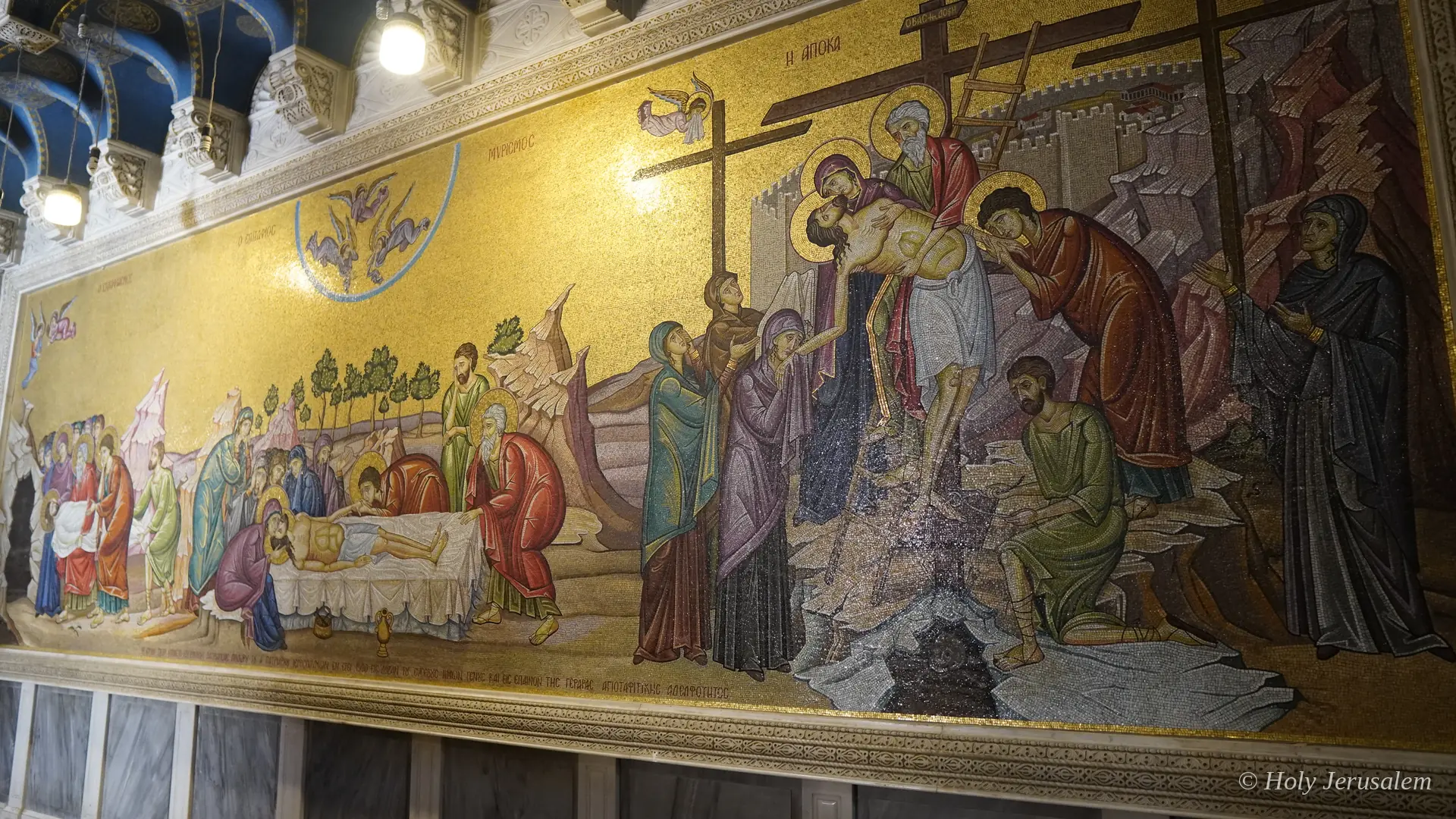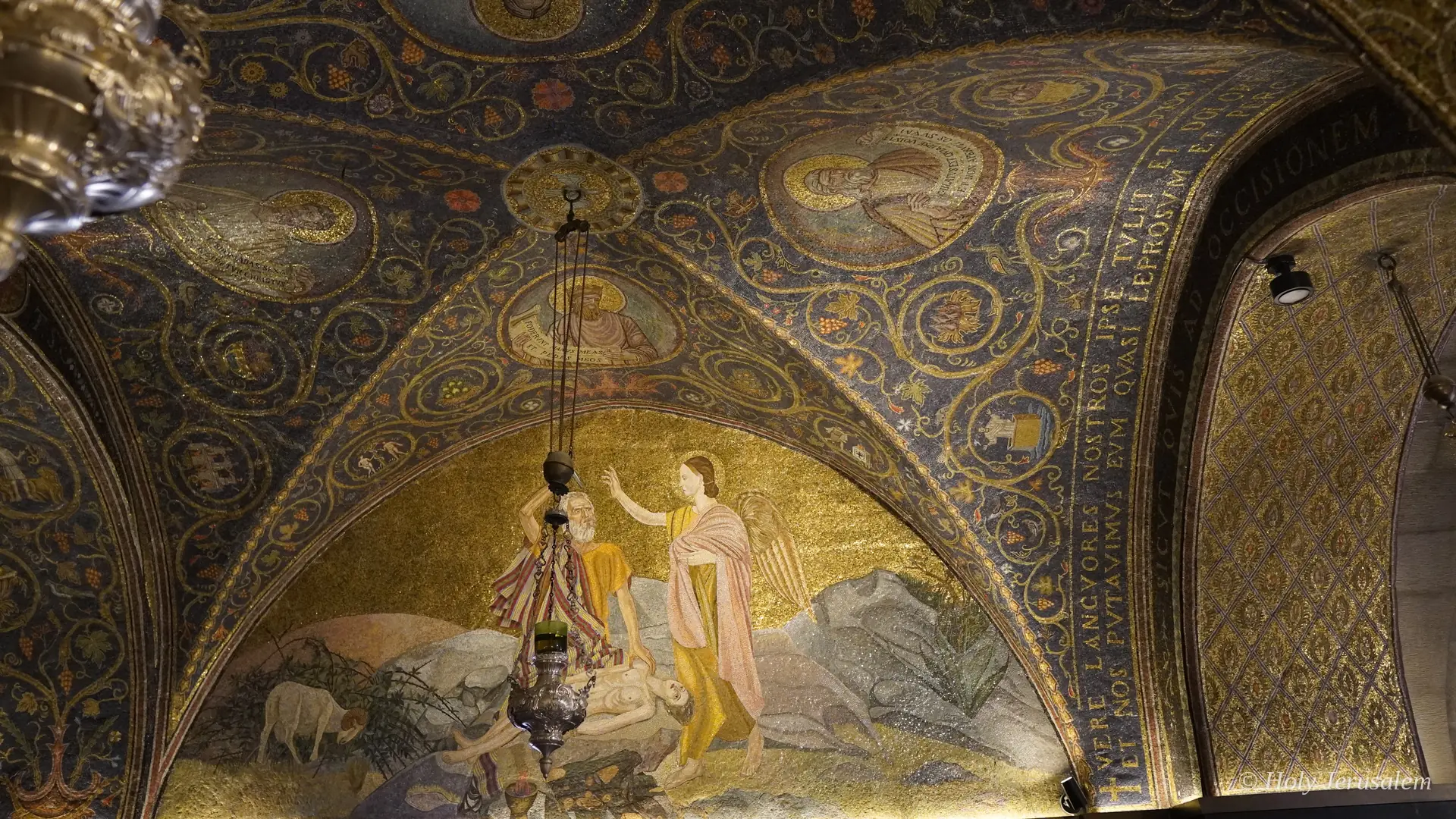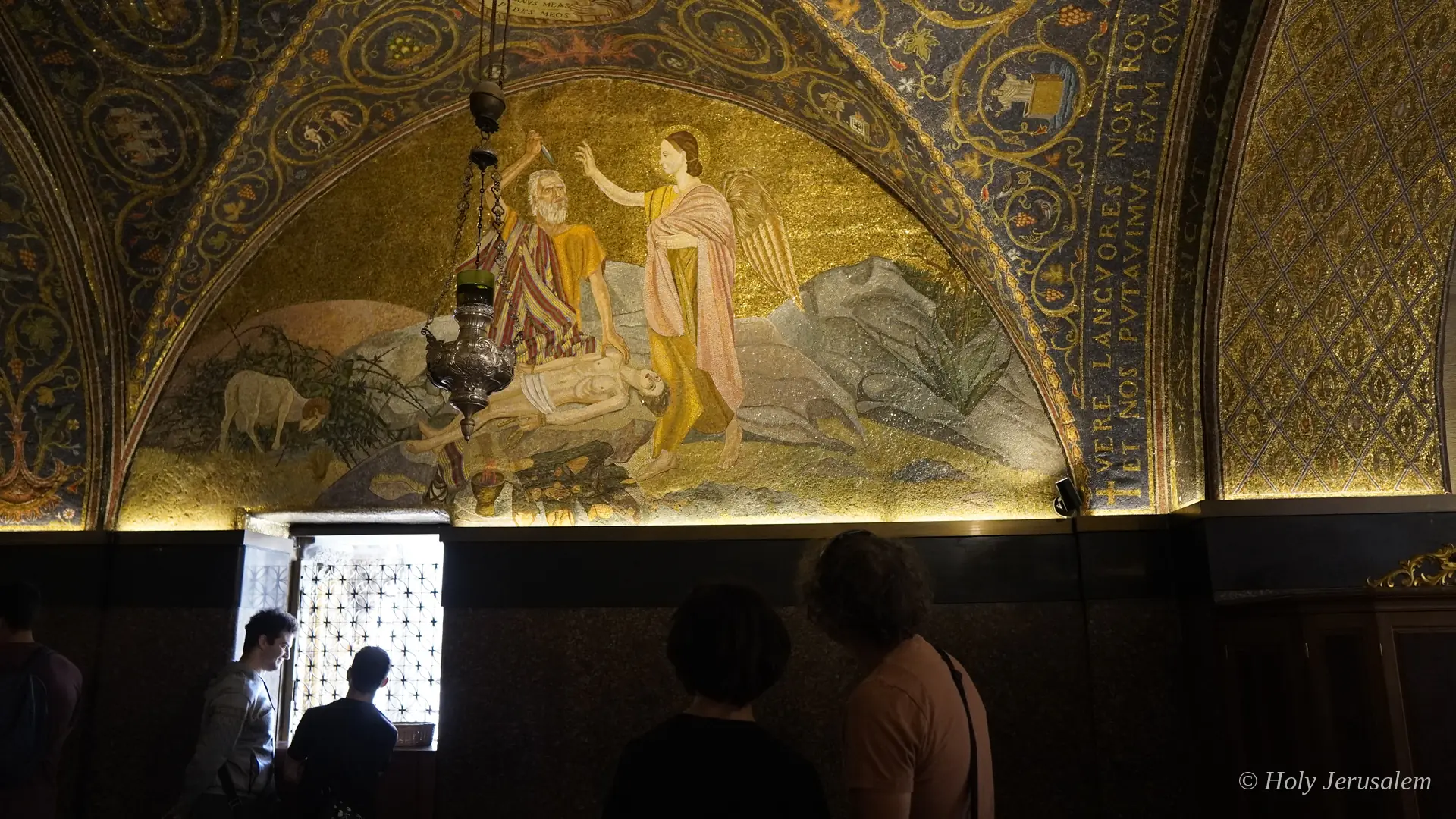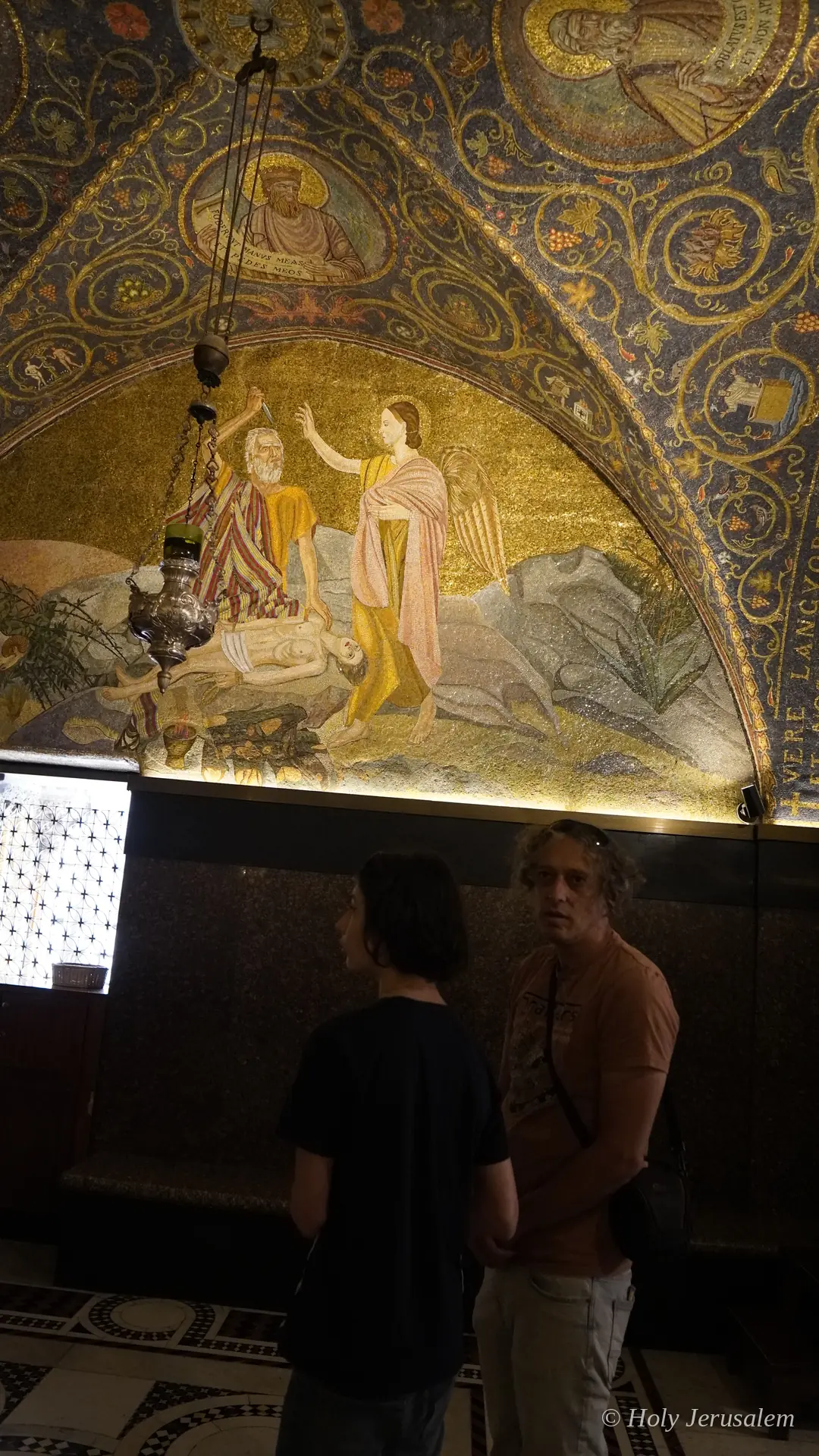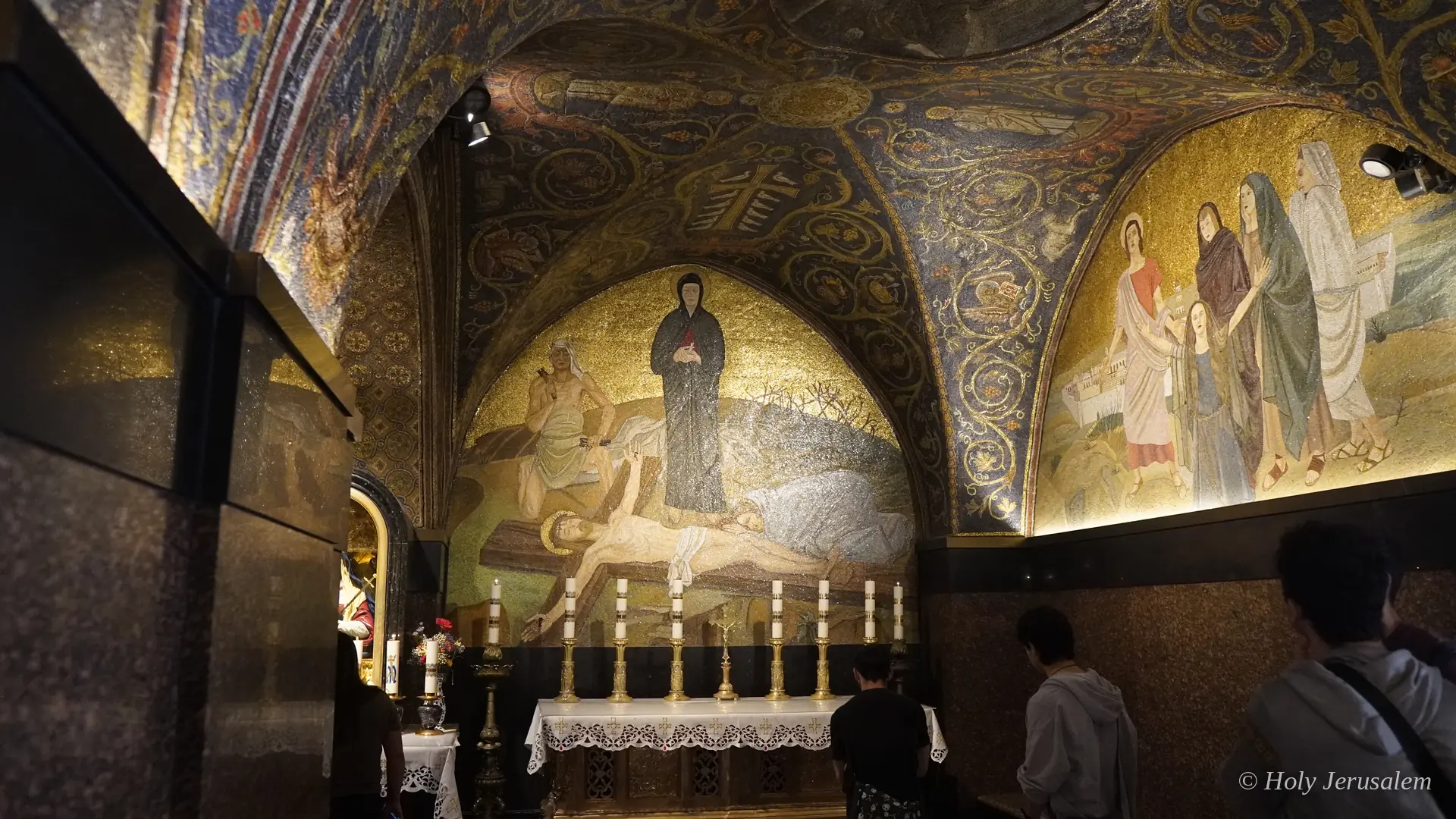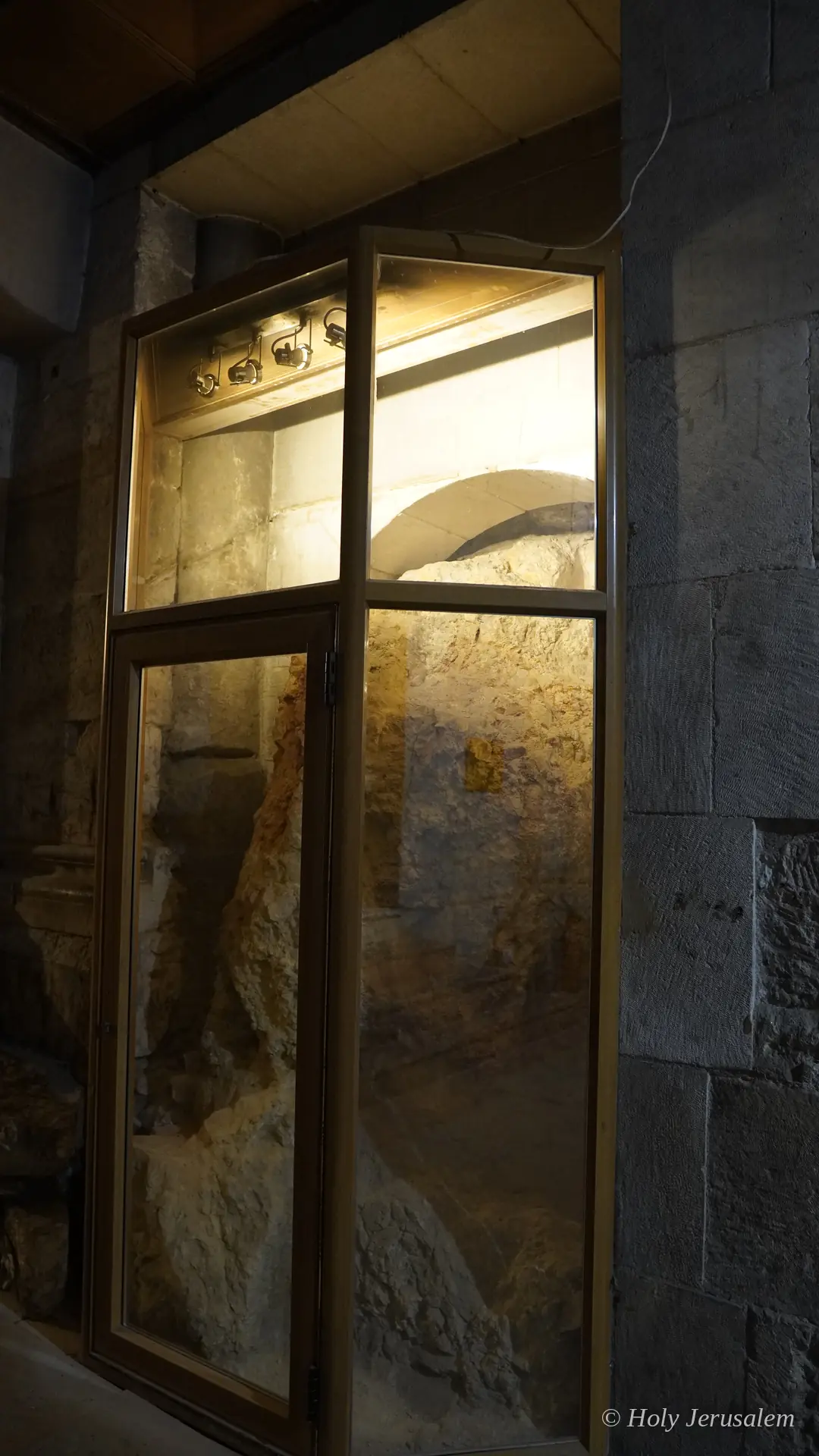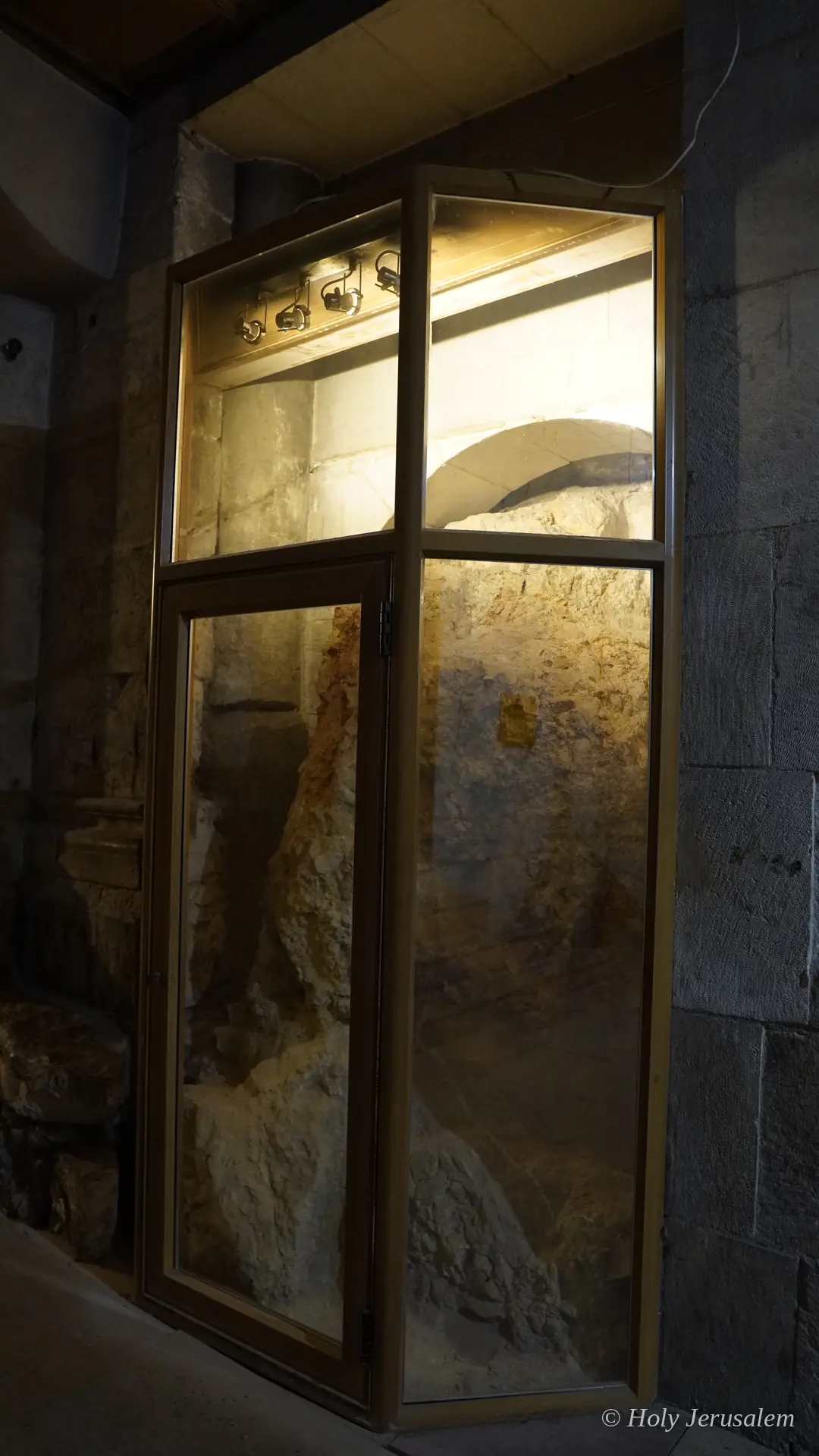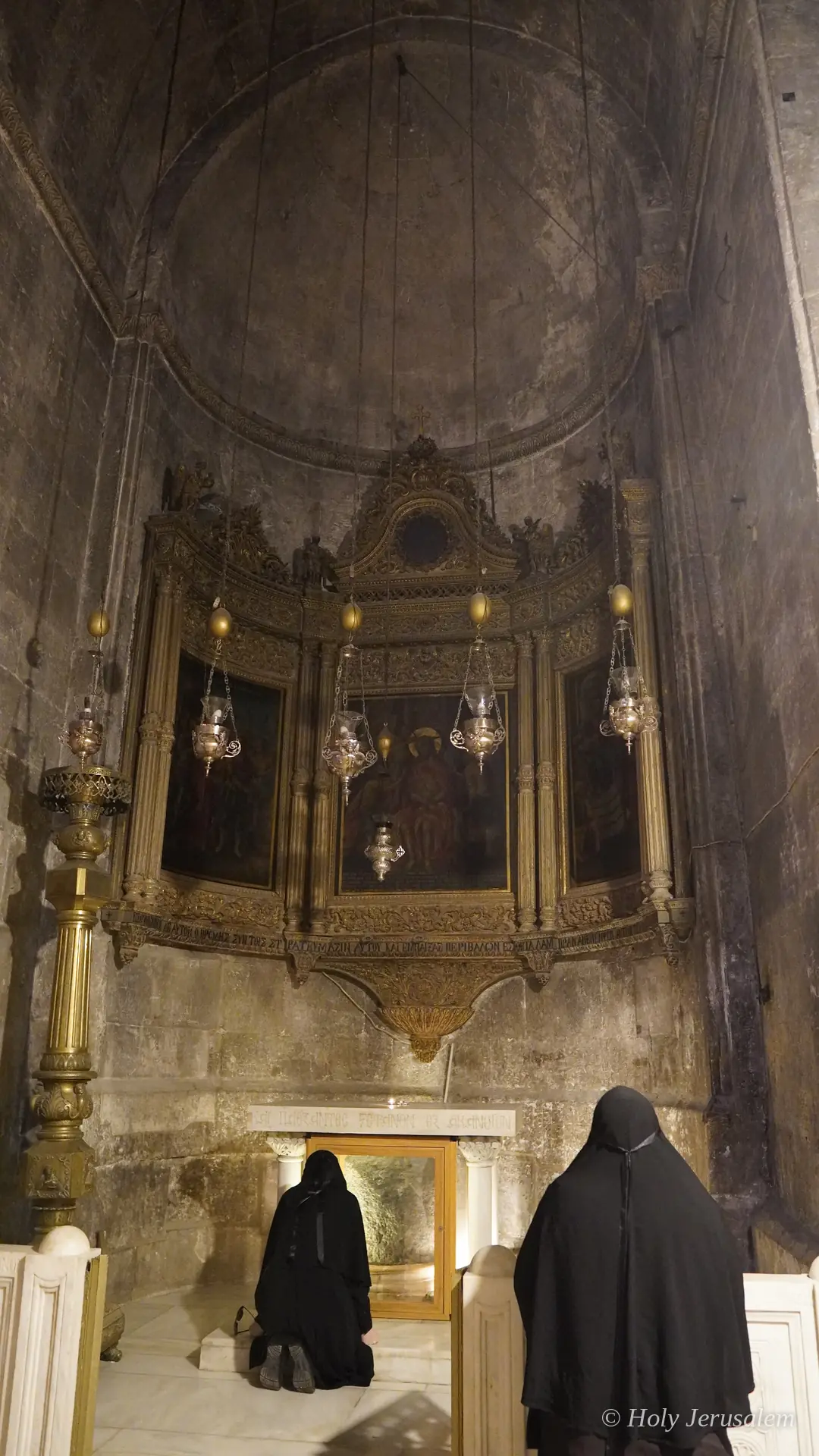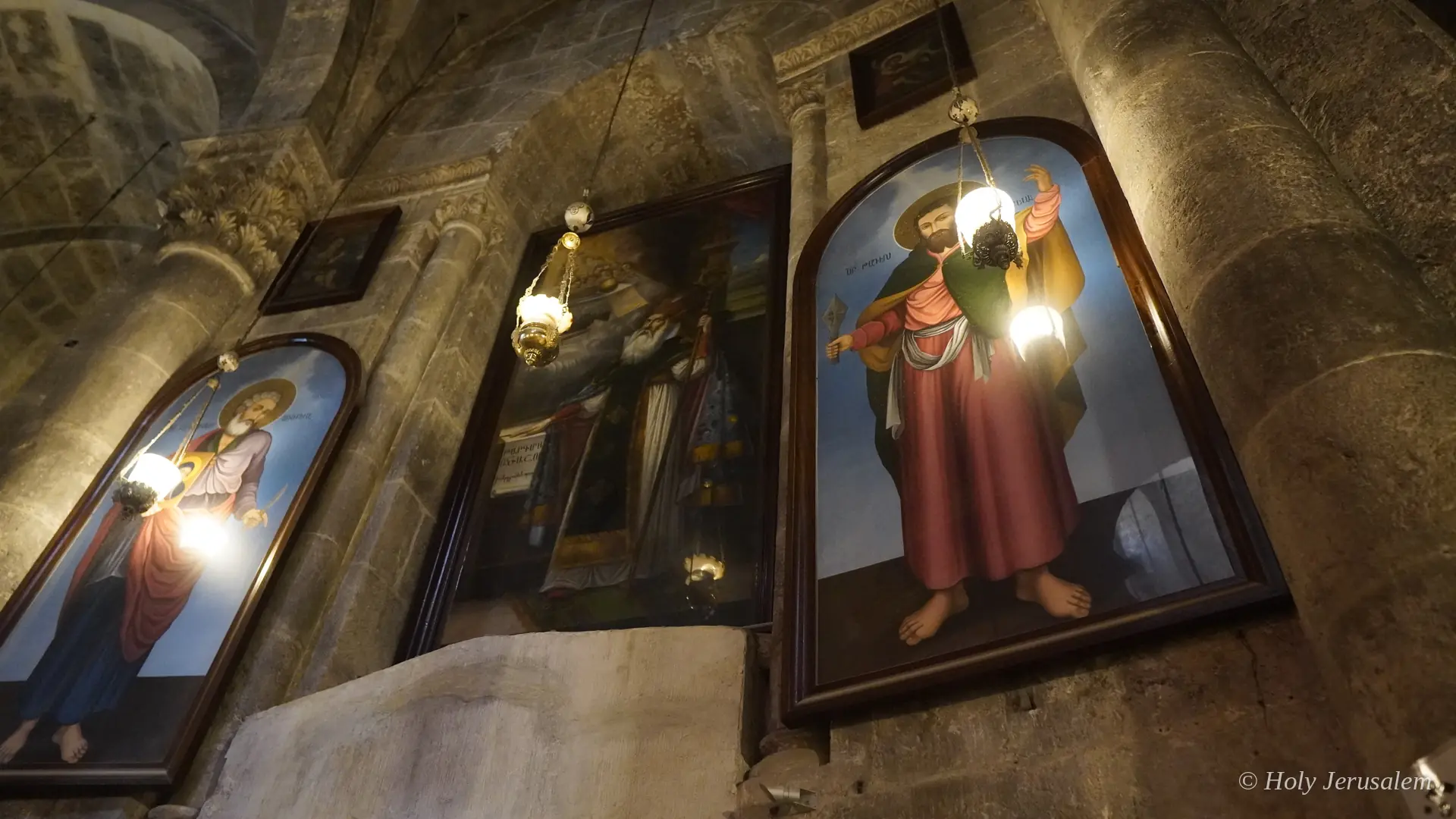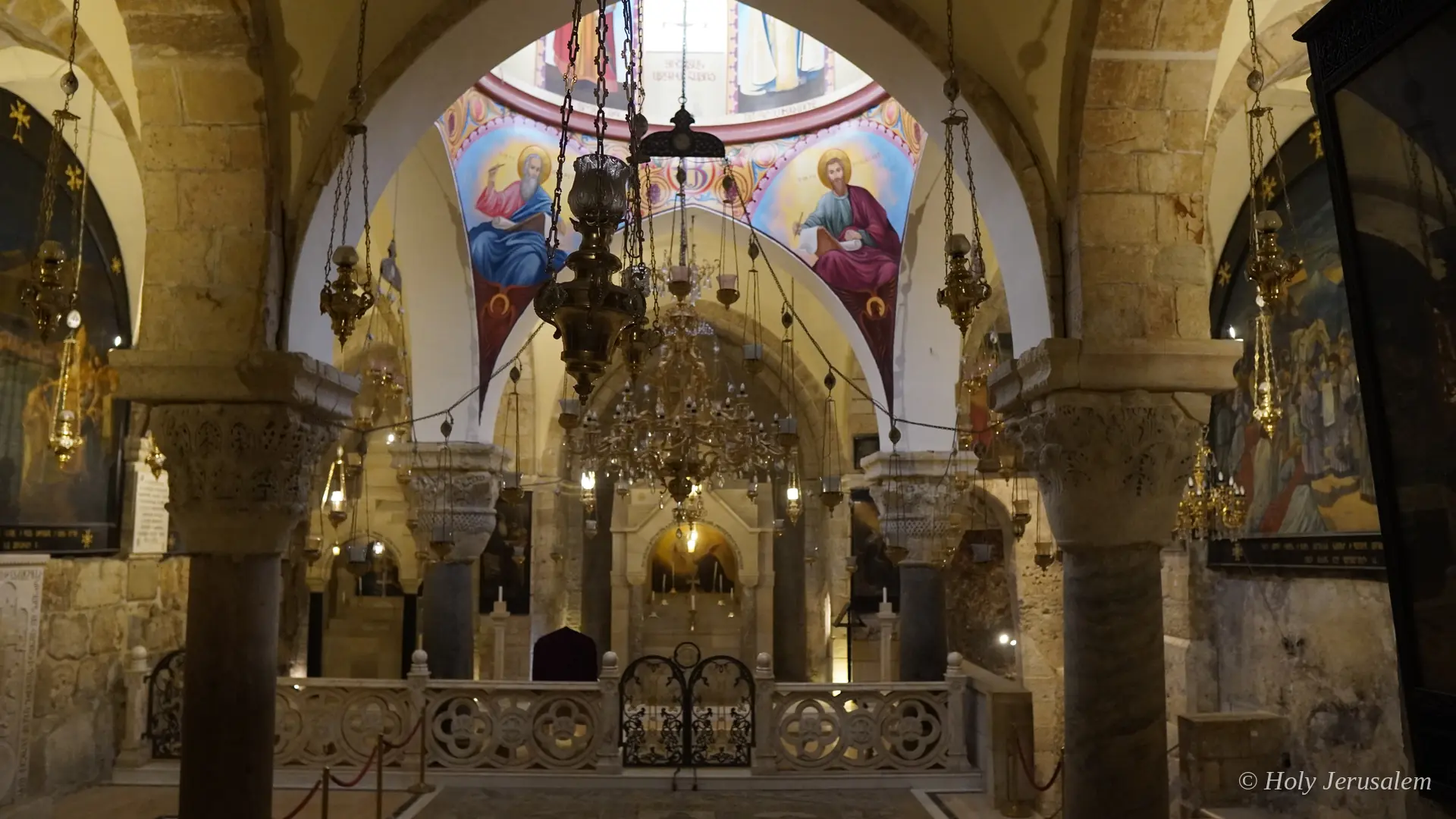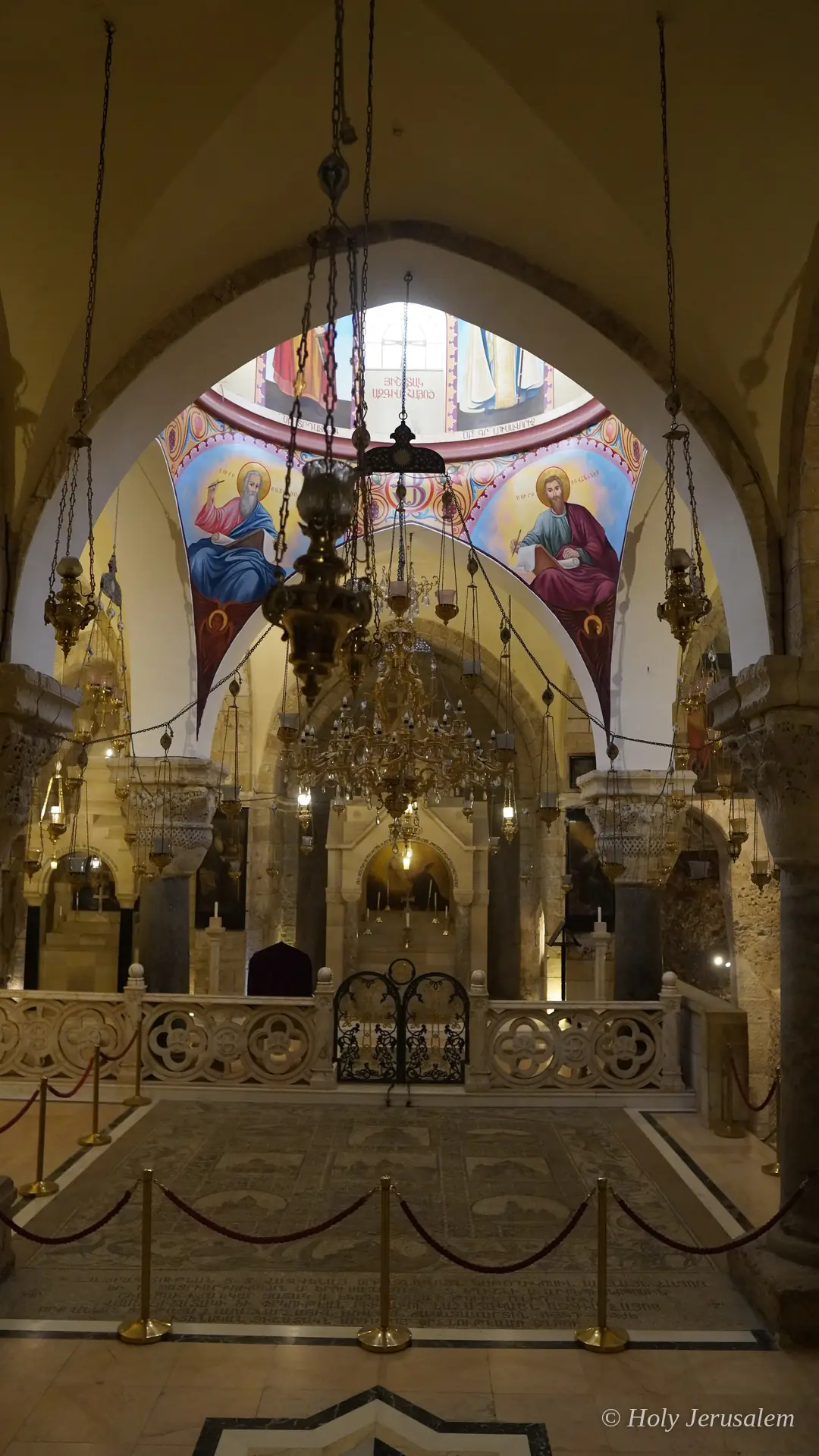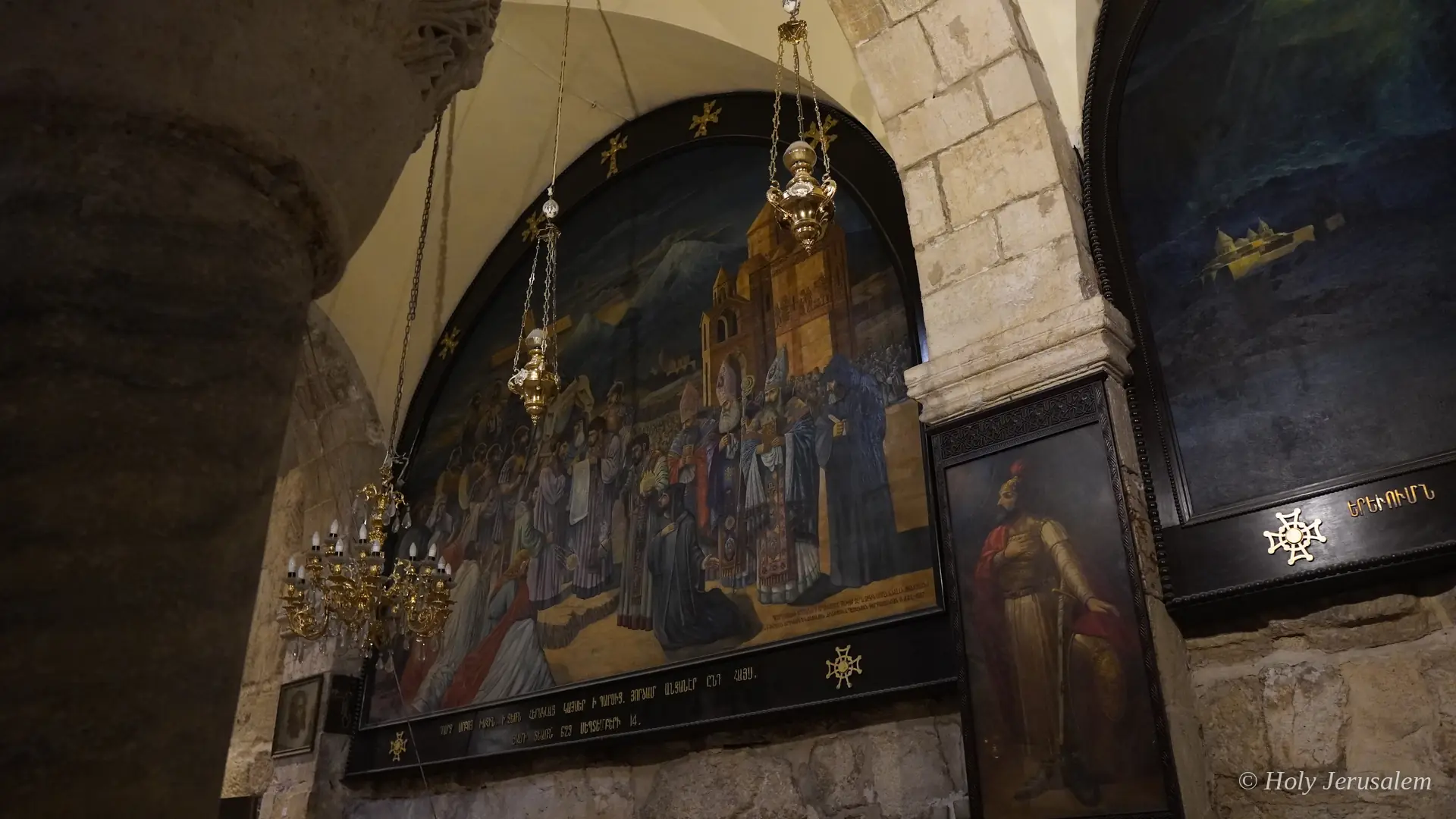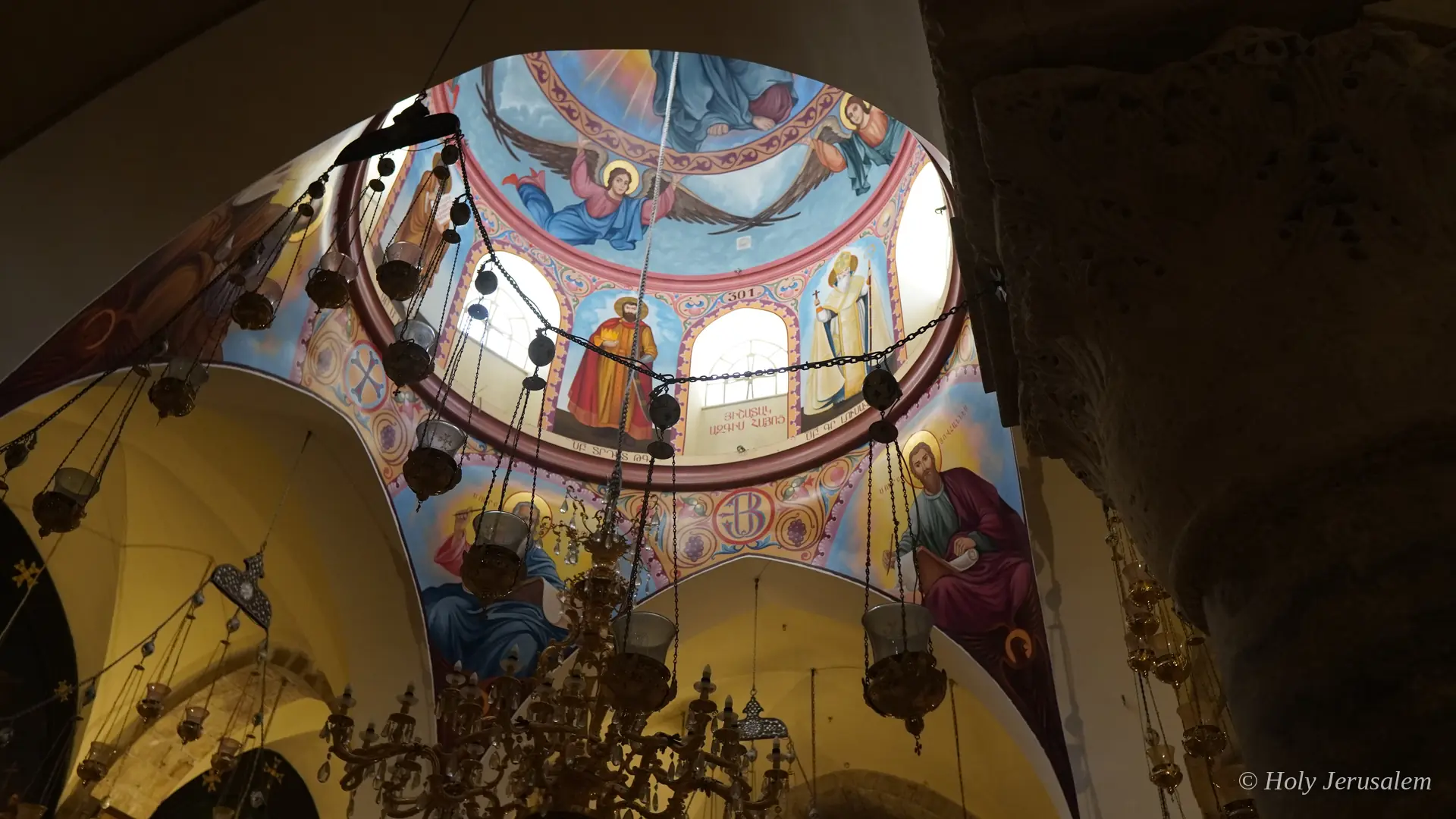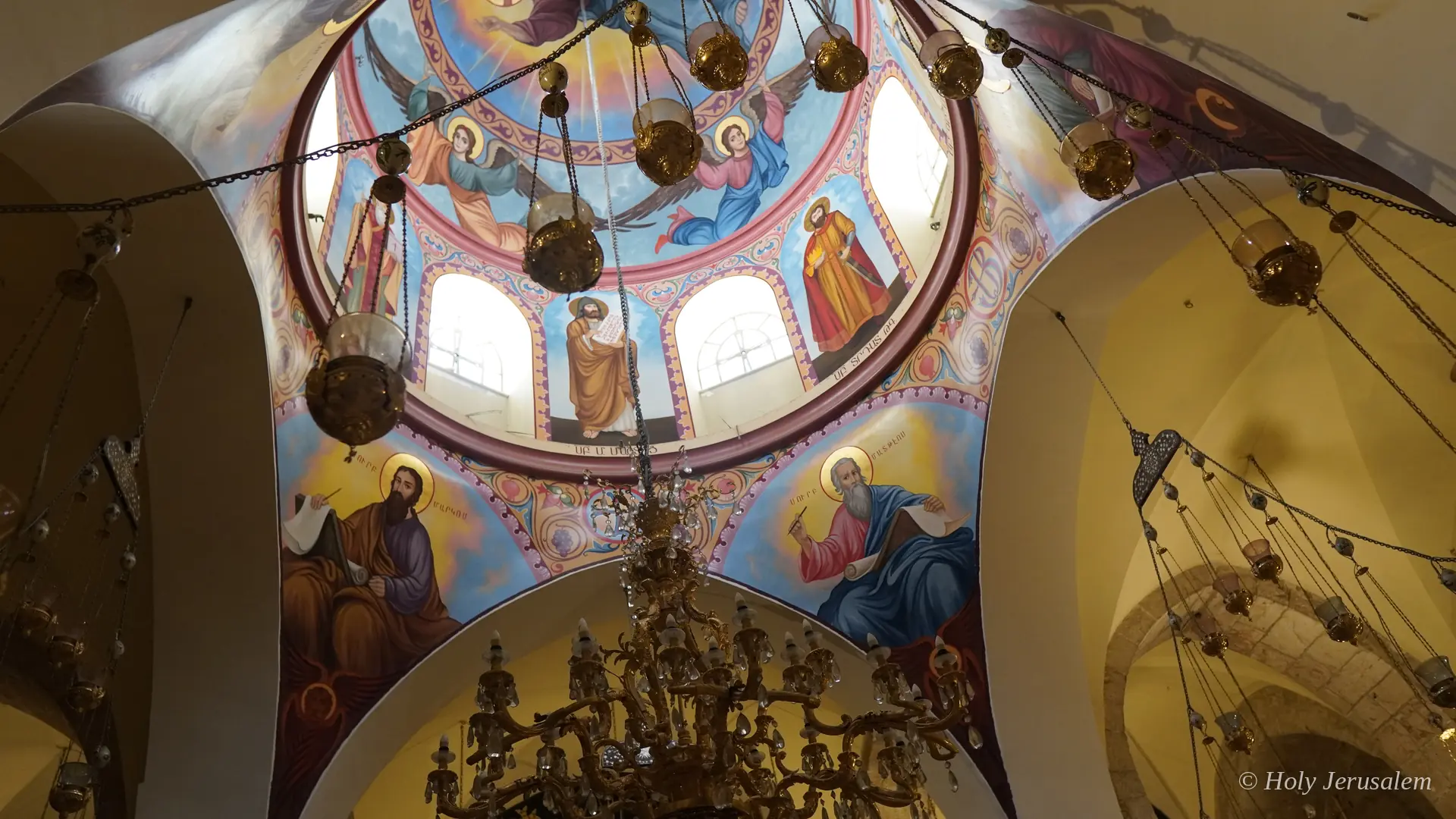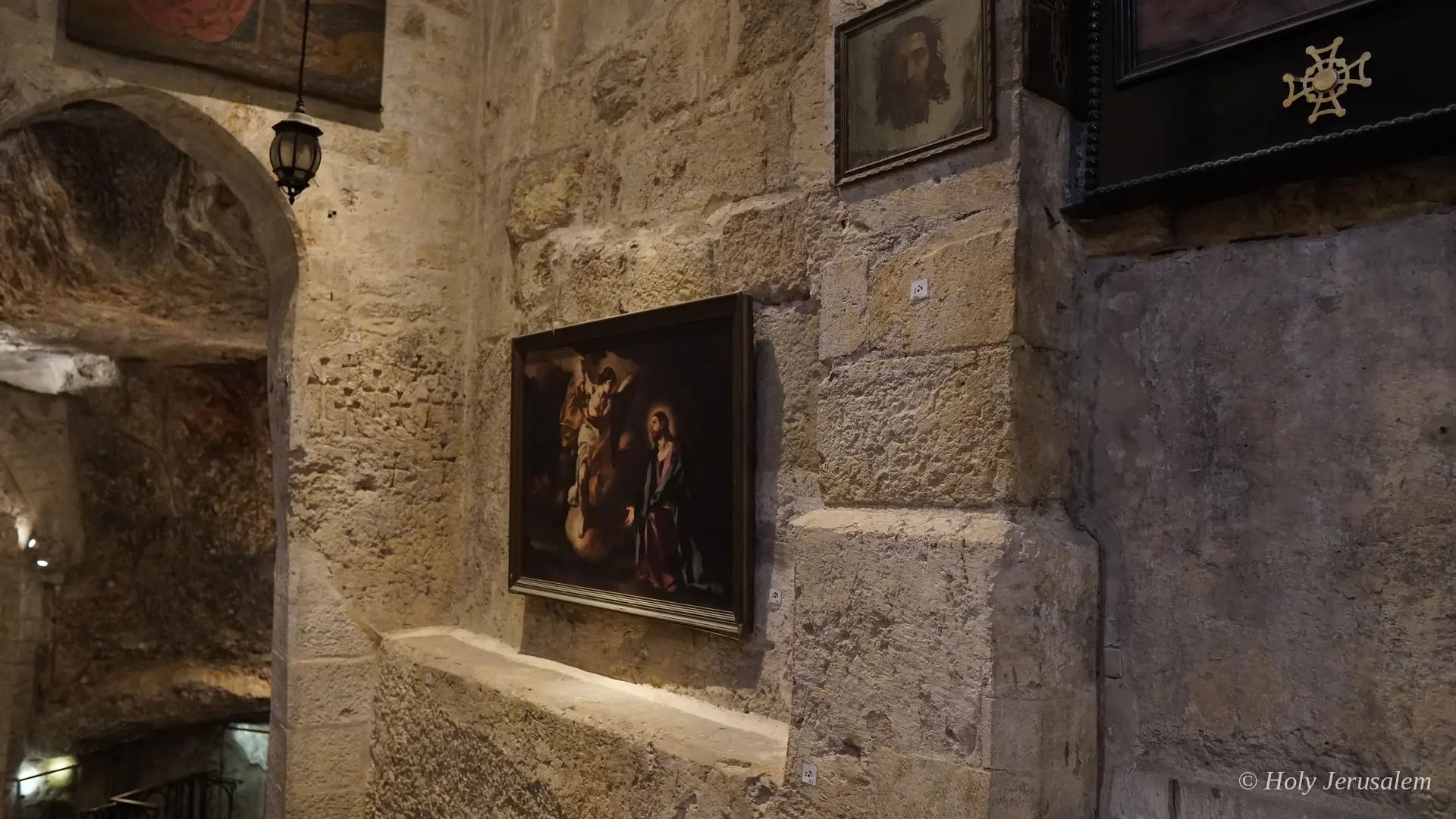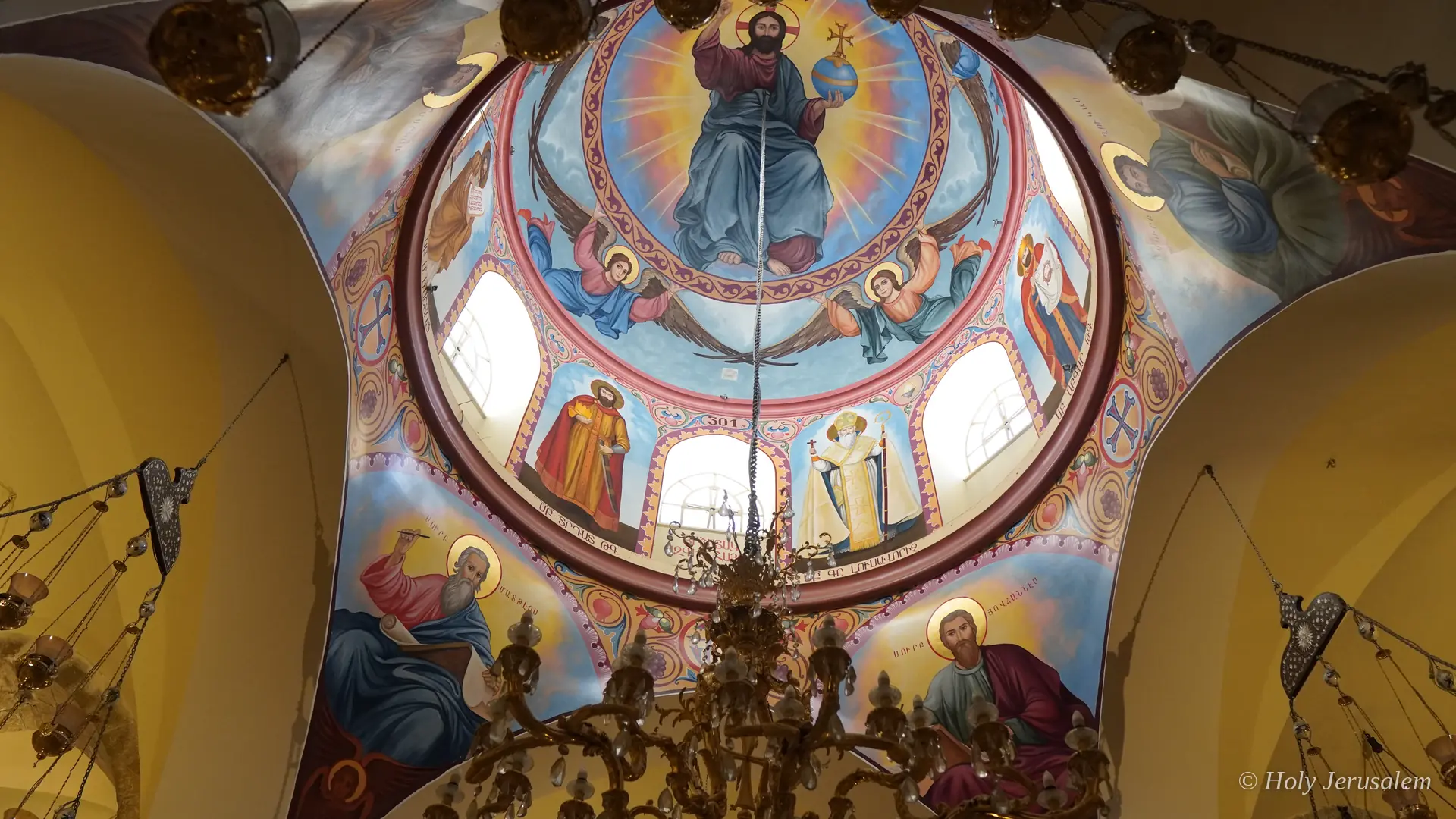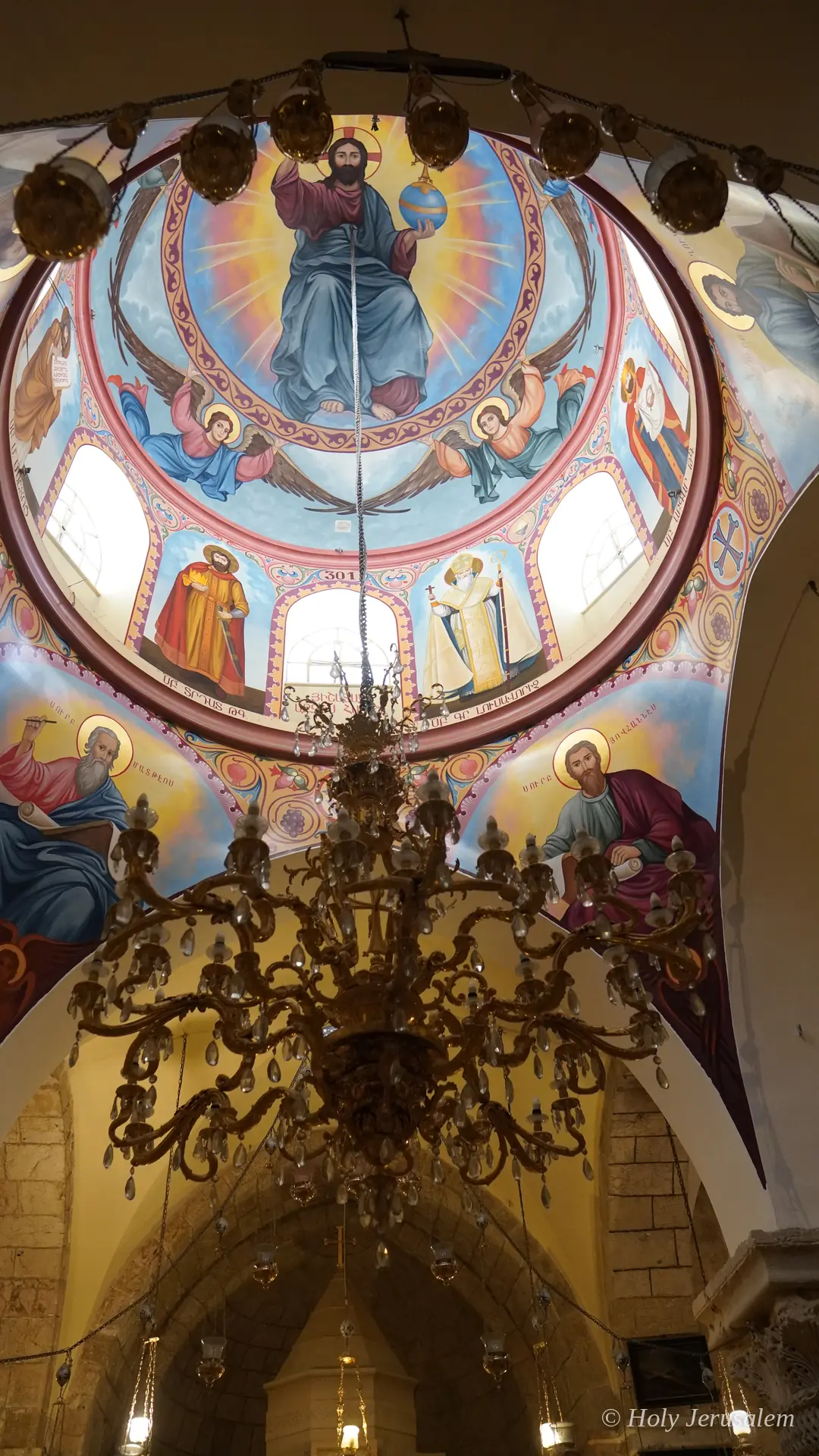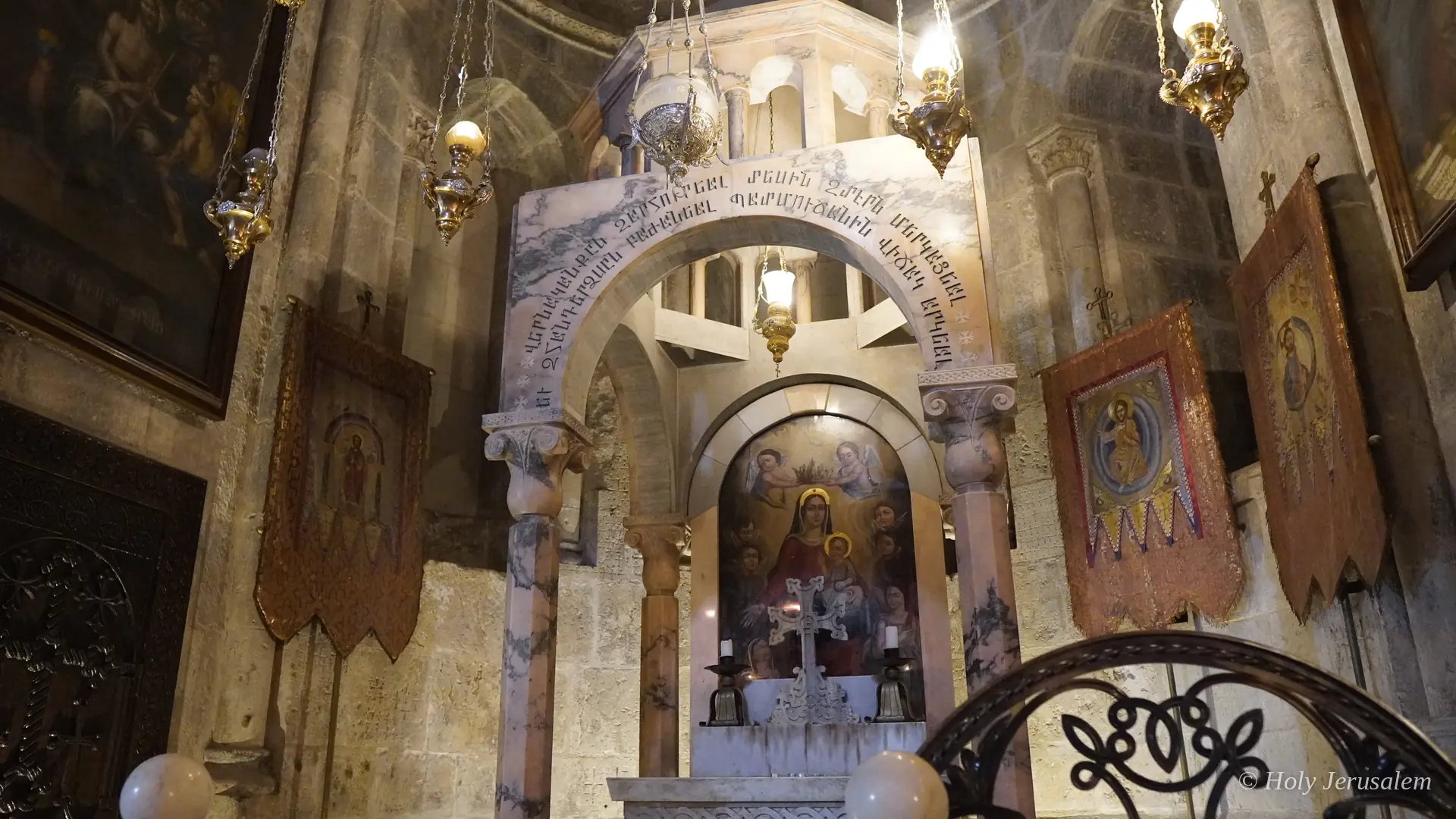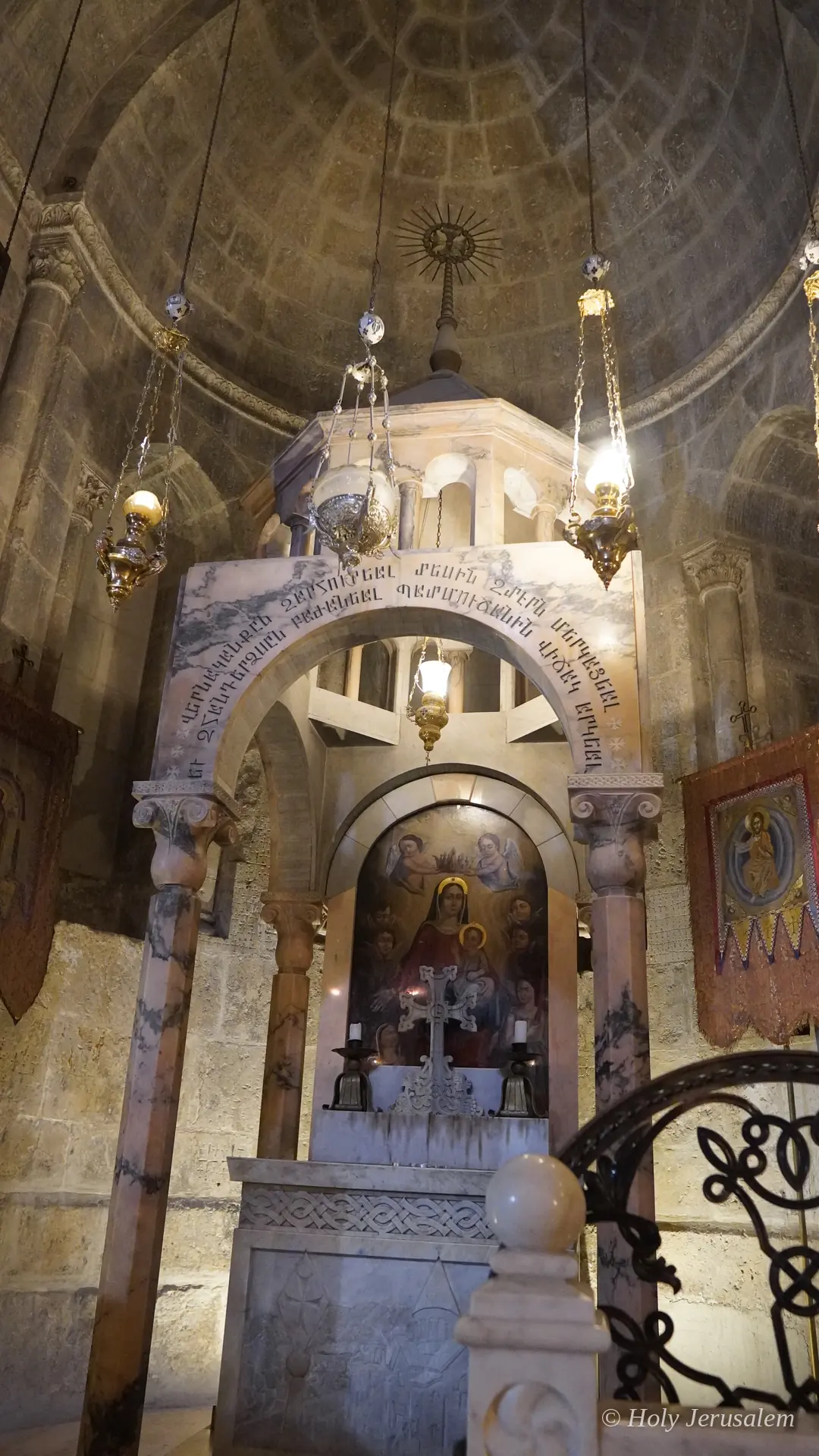
Within the walls of Jerusalem's Old City stands the church that, for most of the Christian world, marks the two holiest places on earth: Golgotha, the rock of the Crucifixion, and the tomb in which Jesus was laid and from which He rose on the third day.
The first church here was built by Emperor Constantine in the 4th century, after his mother Helena came to Jerusalem in search of the holy places. Destroyed, rebuilt and reshaped over the centuries — by Persians, by the Fatimid caliph al-Hakim in 1009, by Crusader builders who rededicated it in 1149 — the church is a layered maze of chapels, stairways and dim, candlelit spaces.
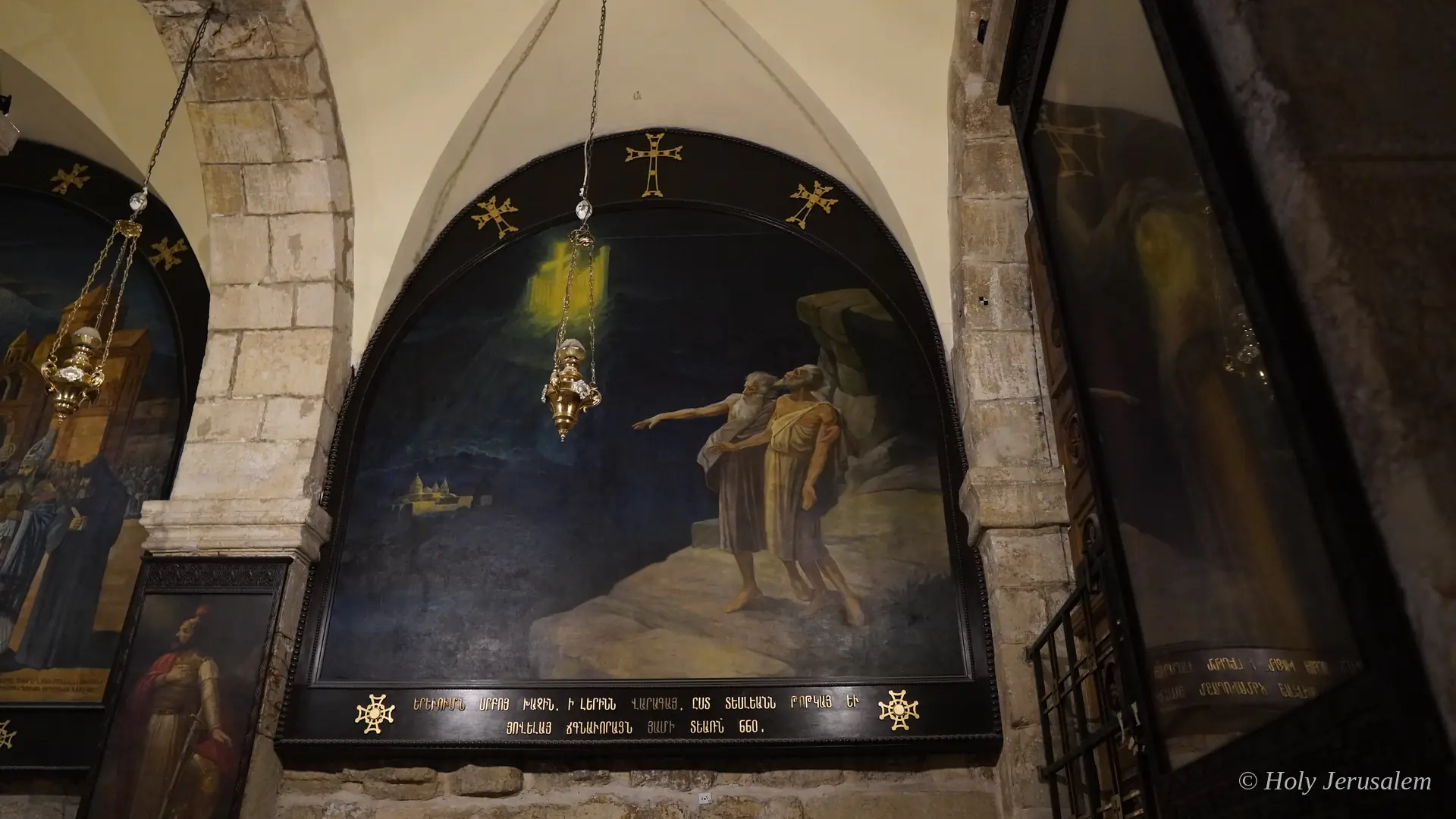
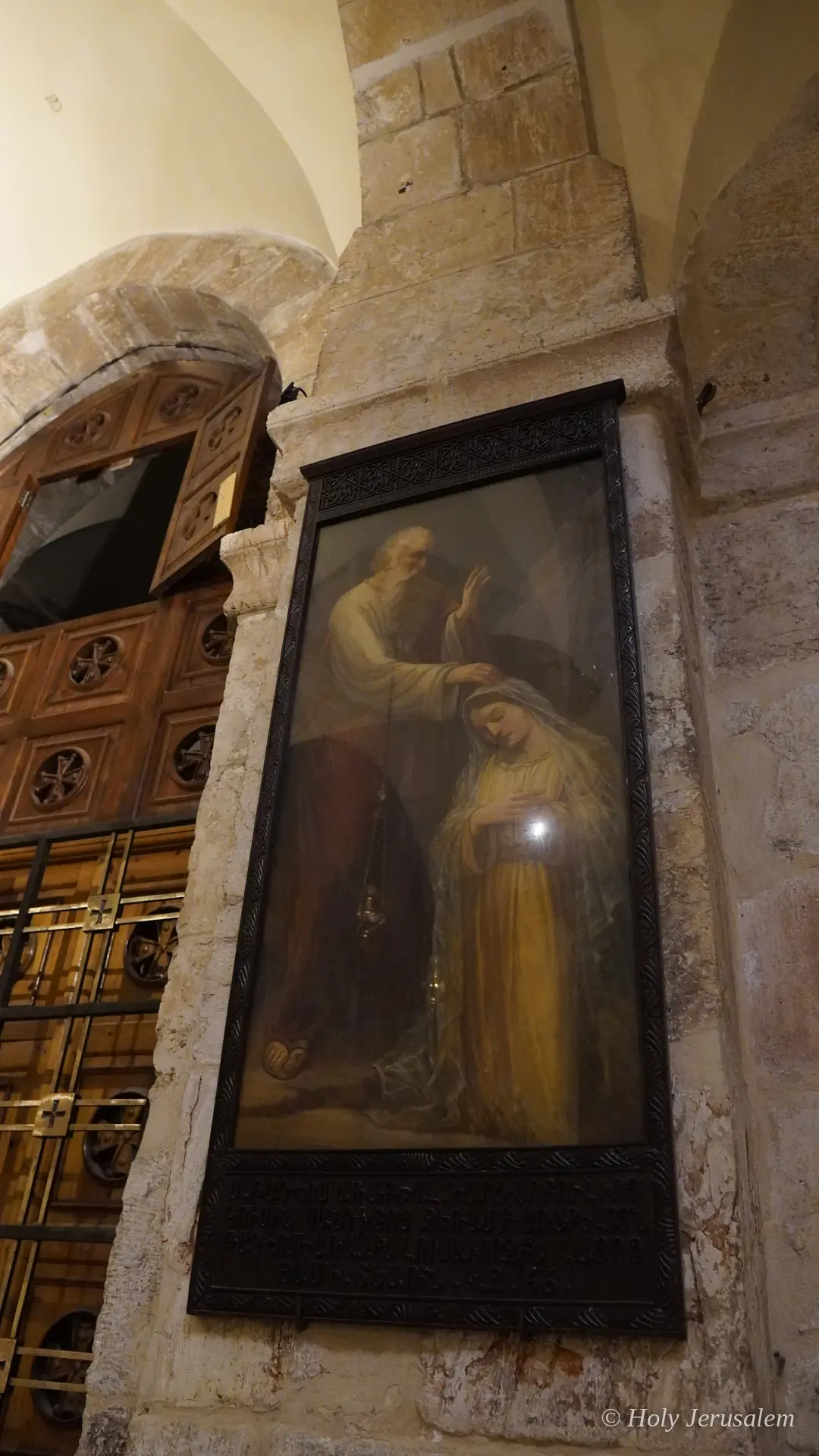
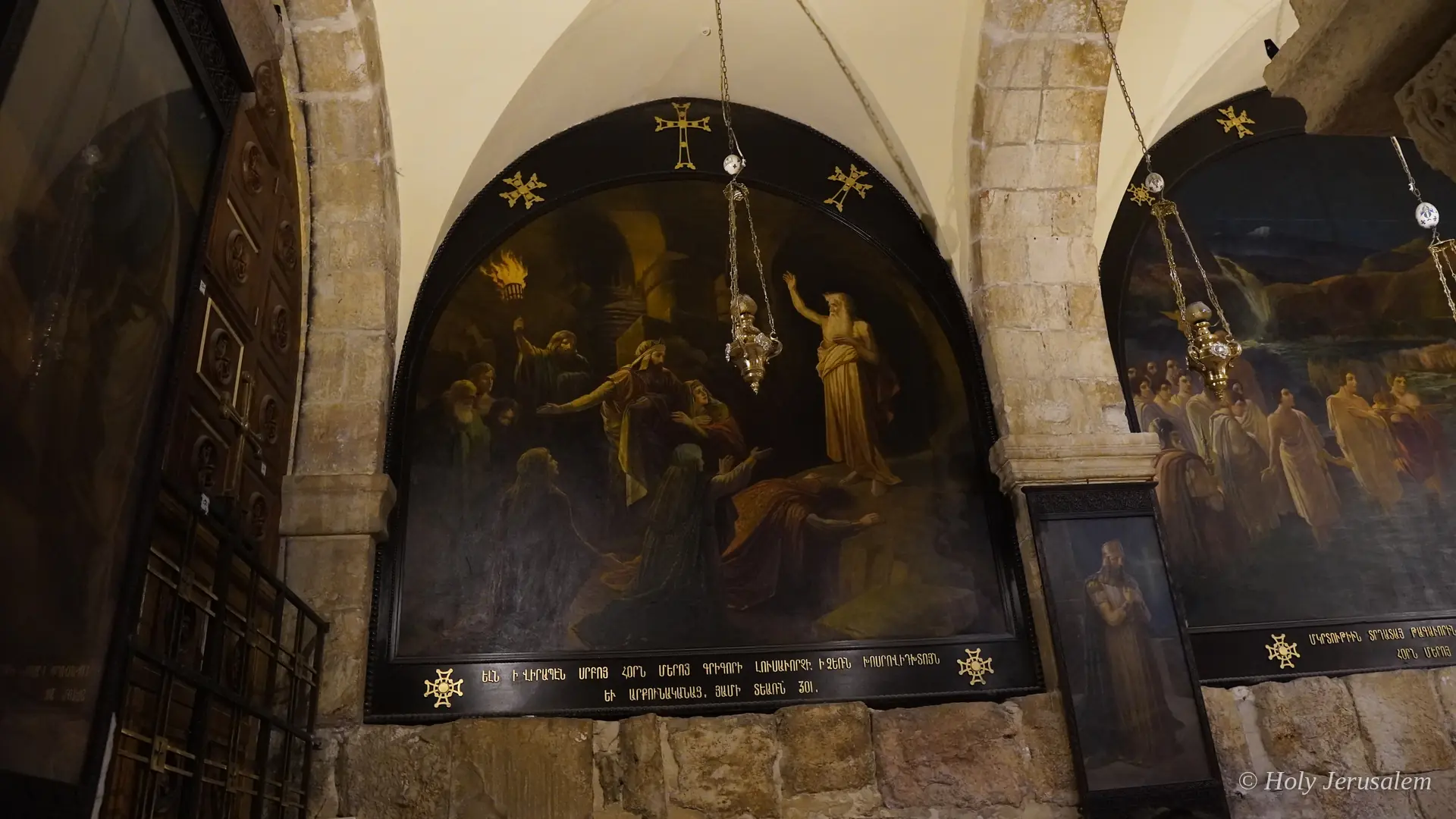
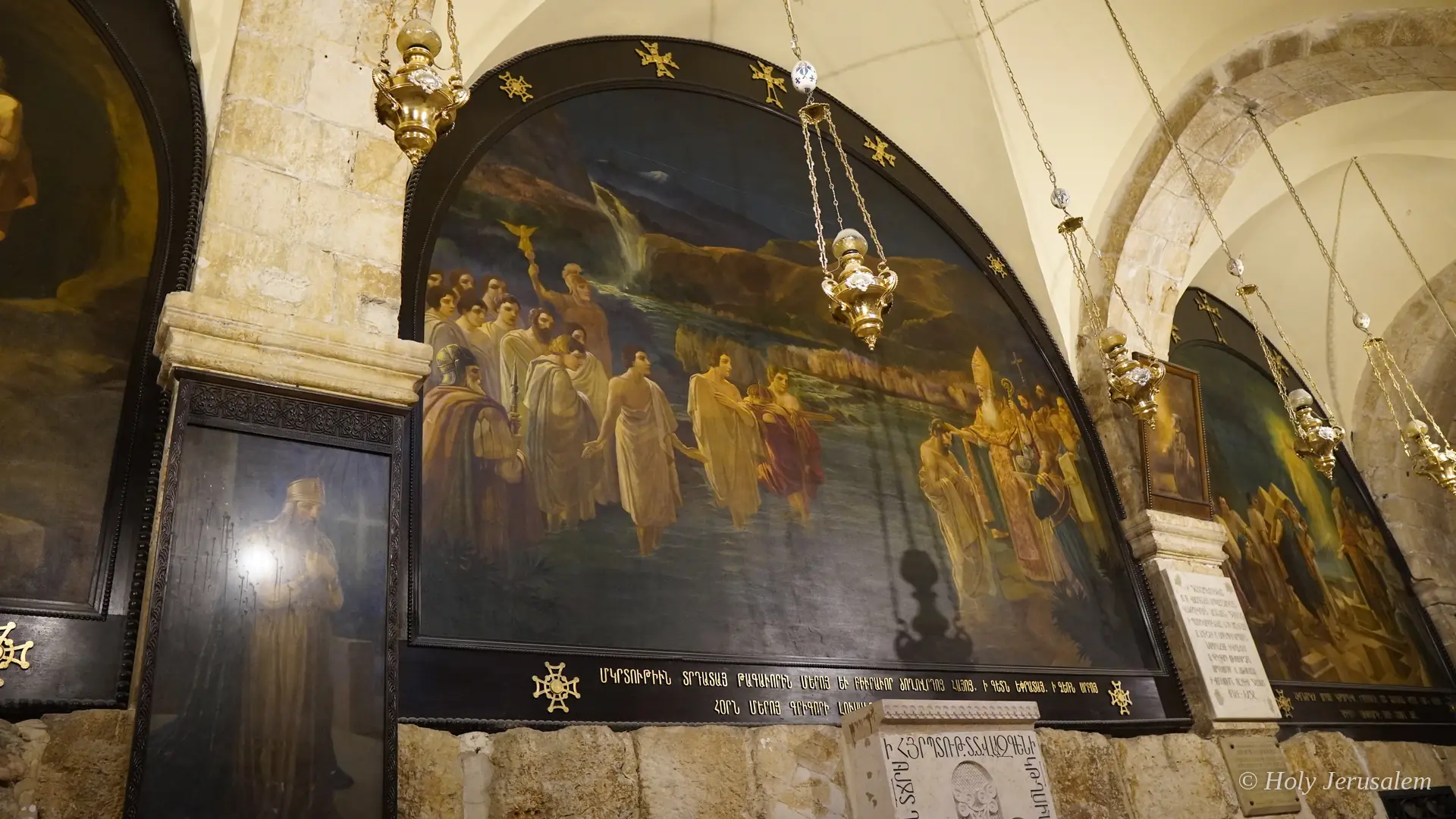
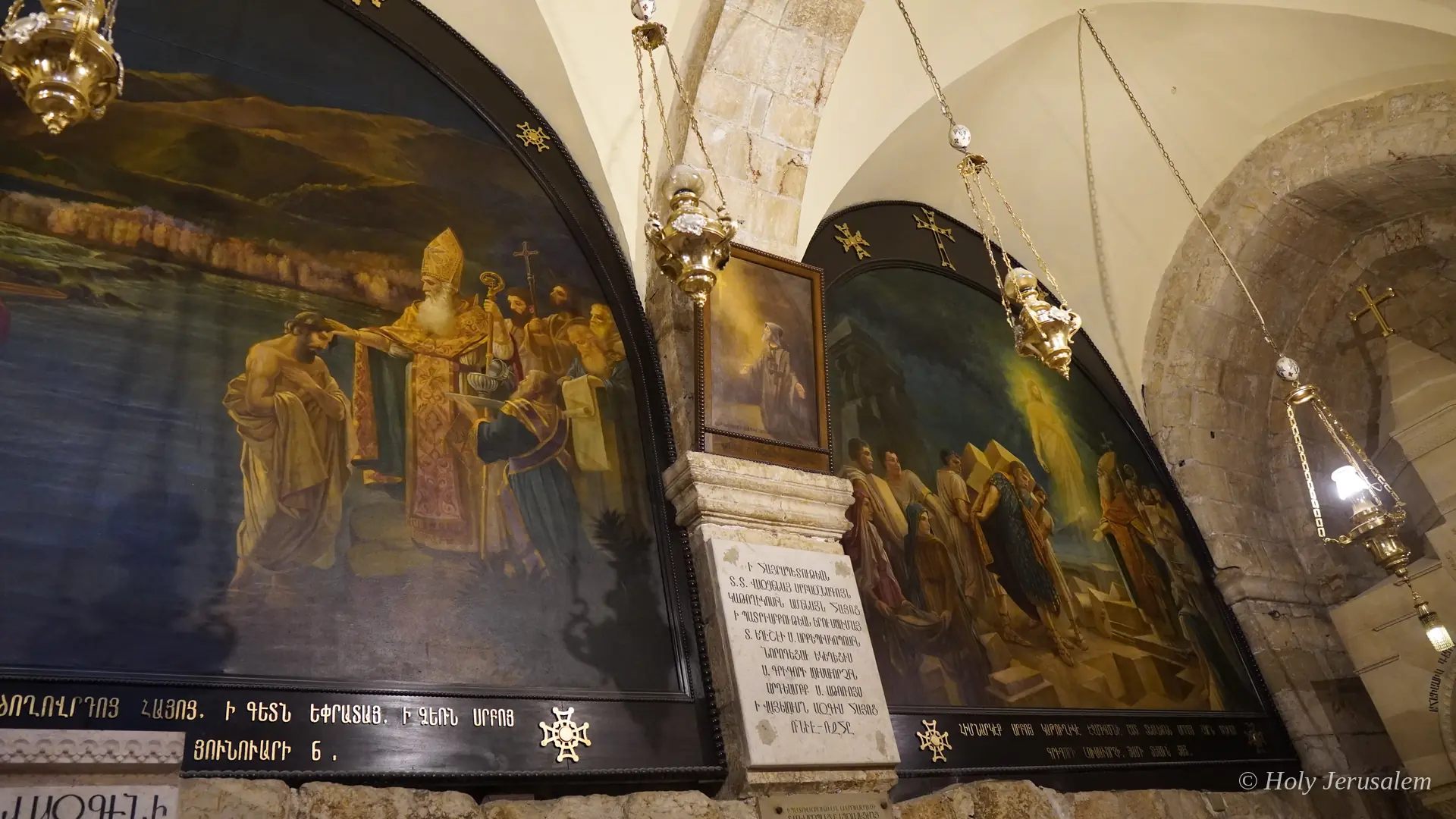
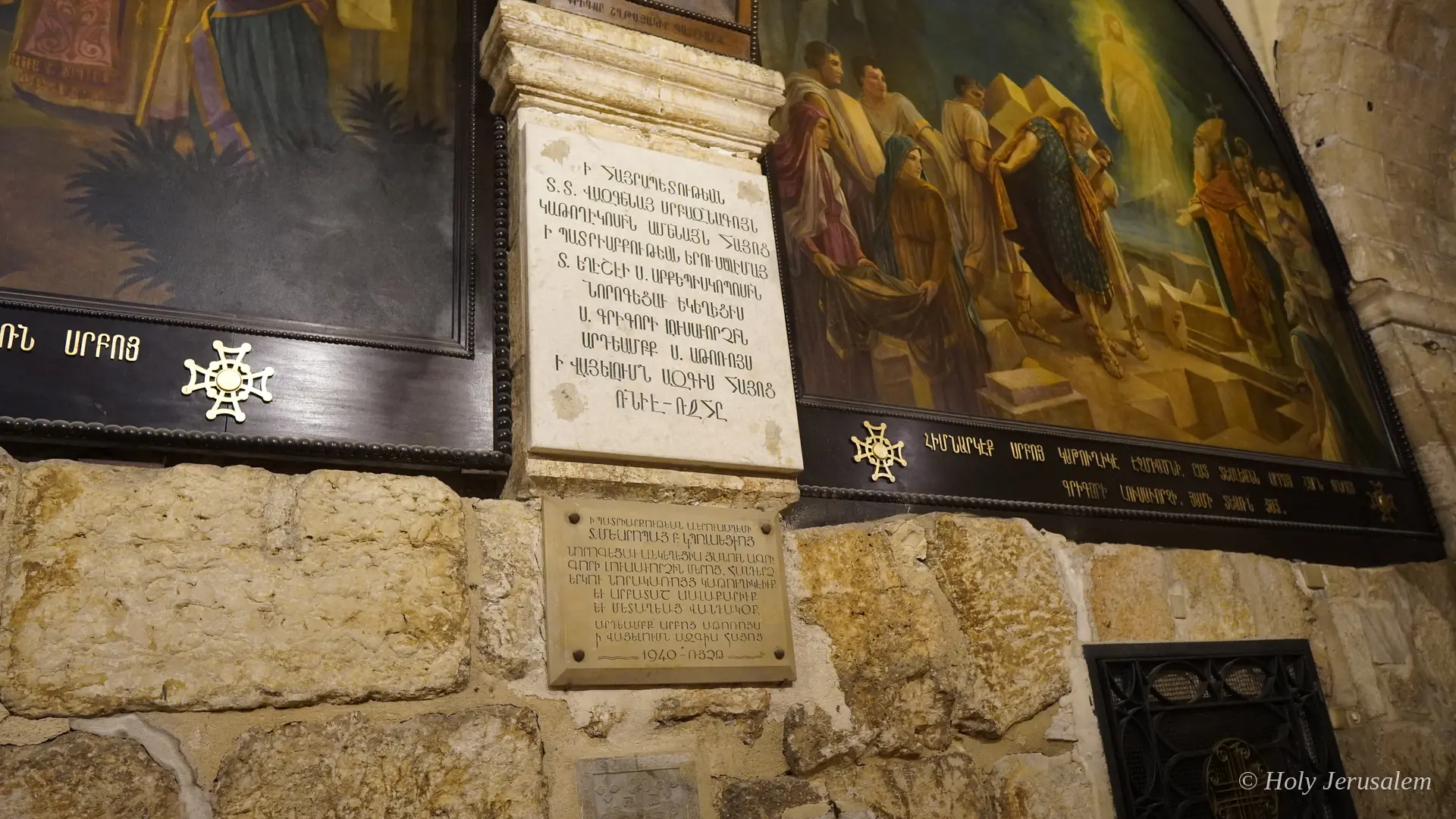
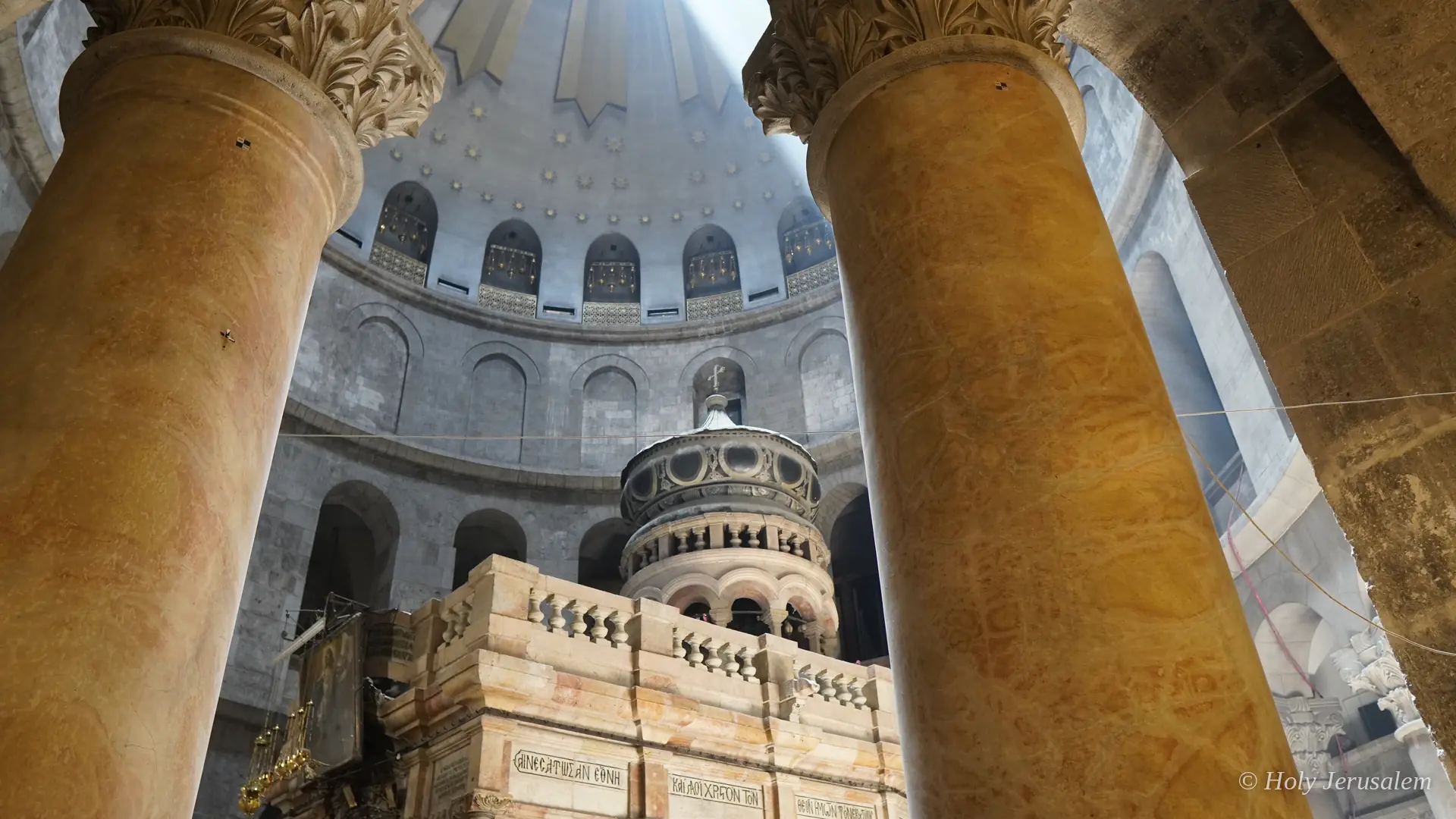
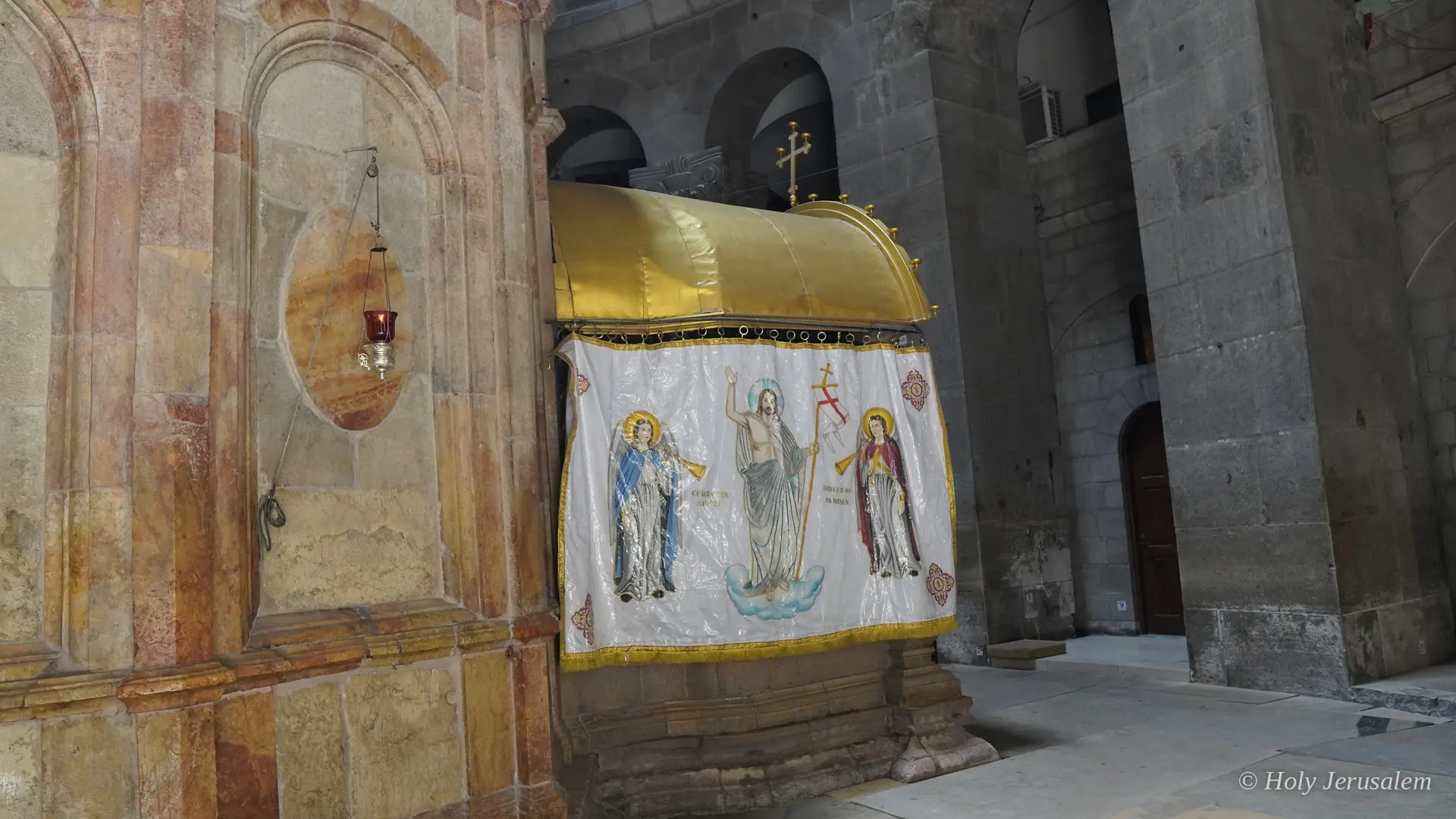
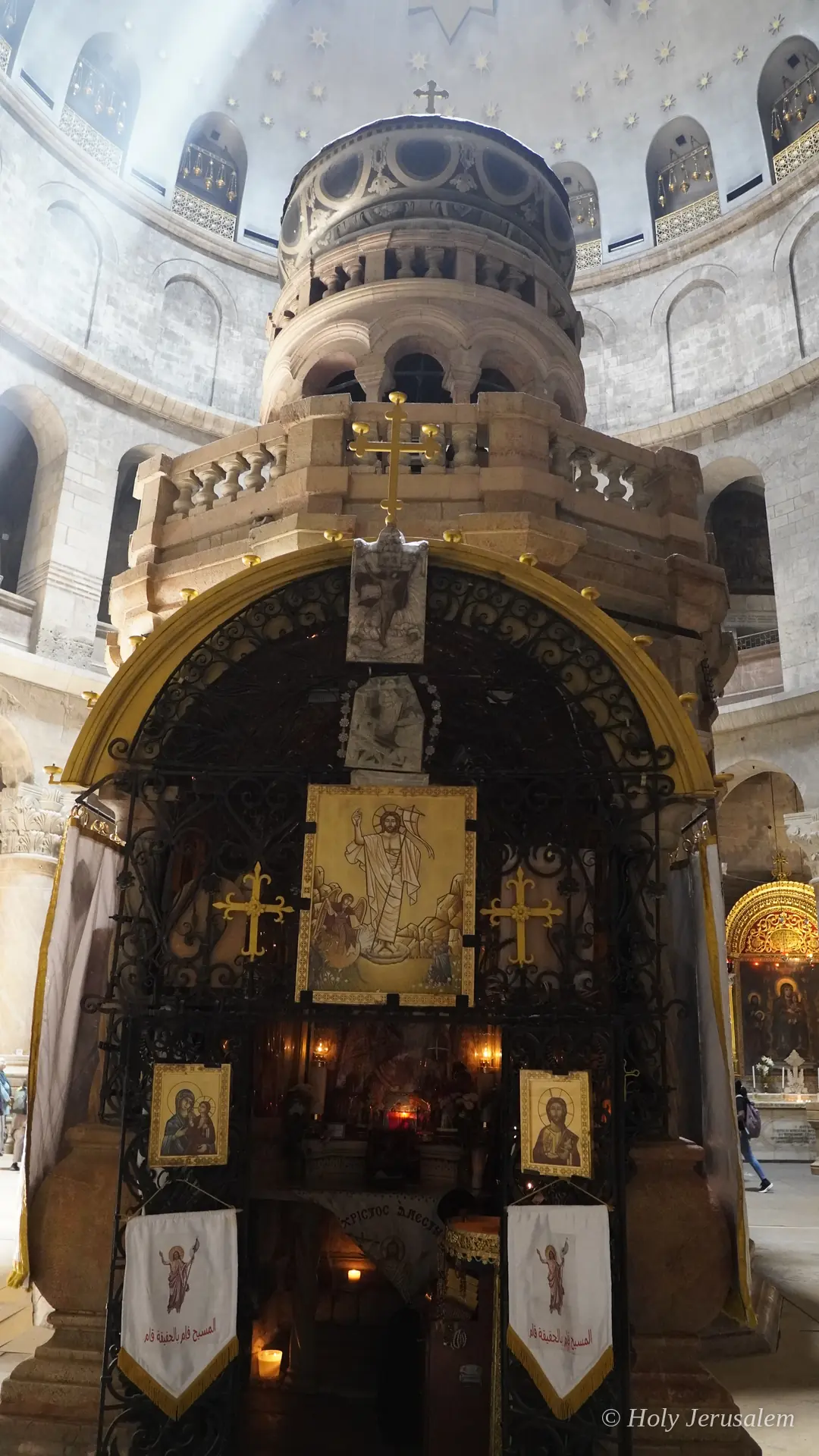
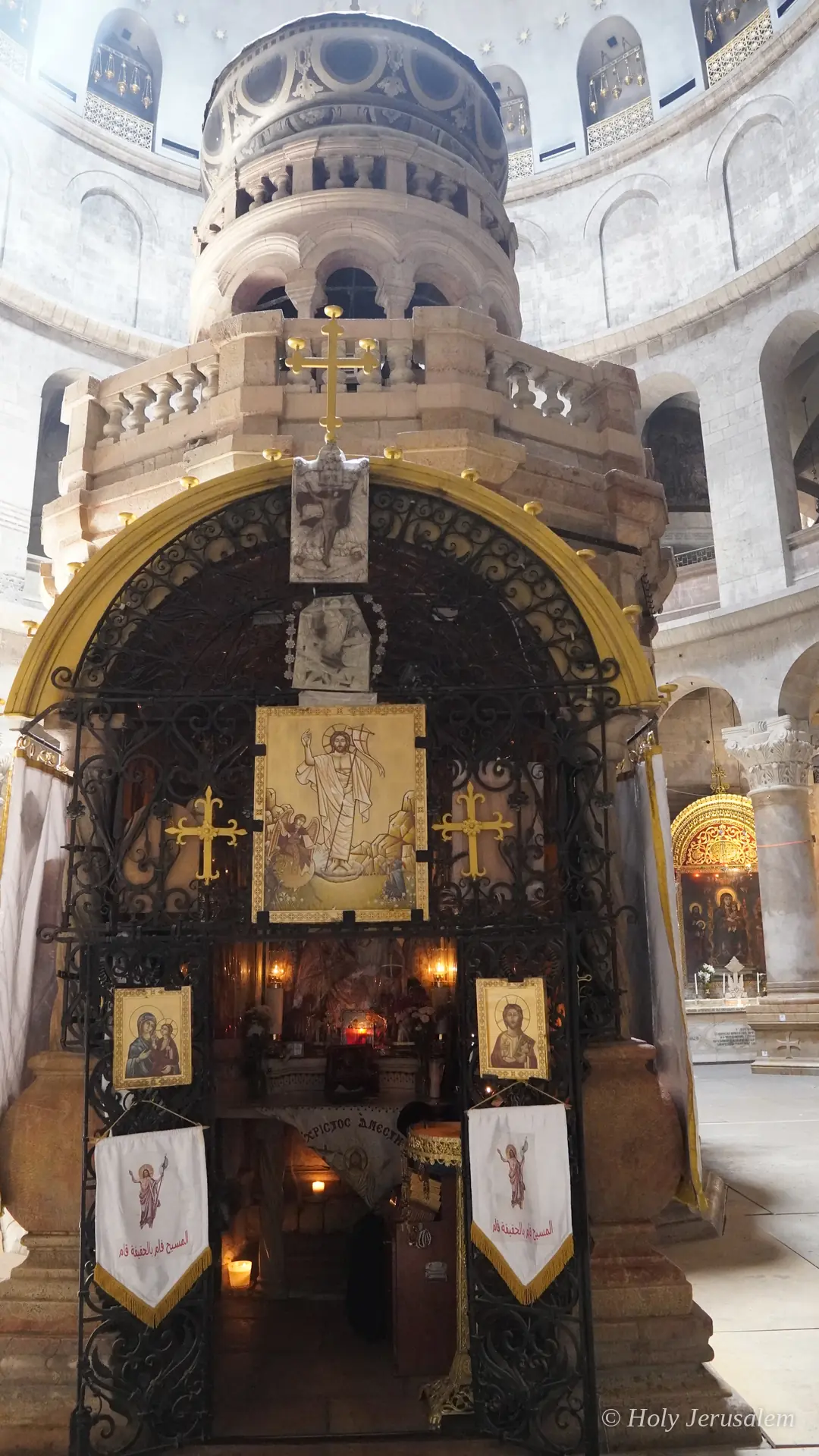
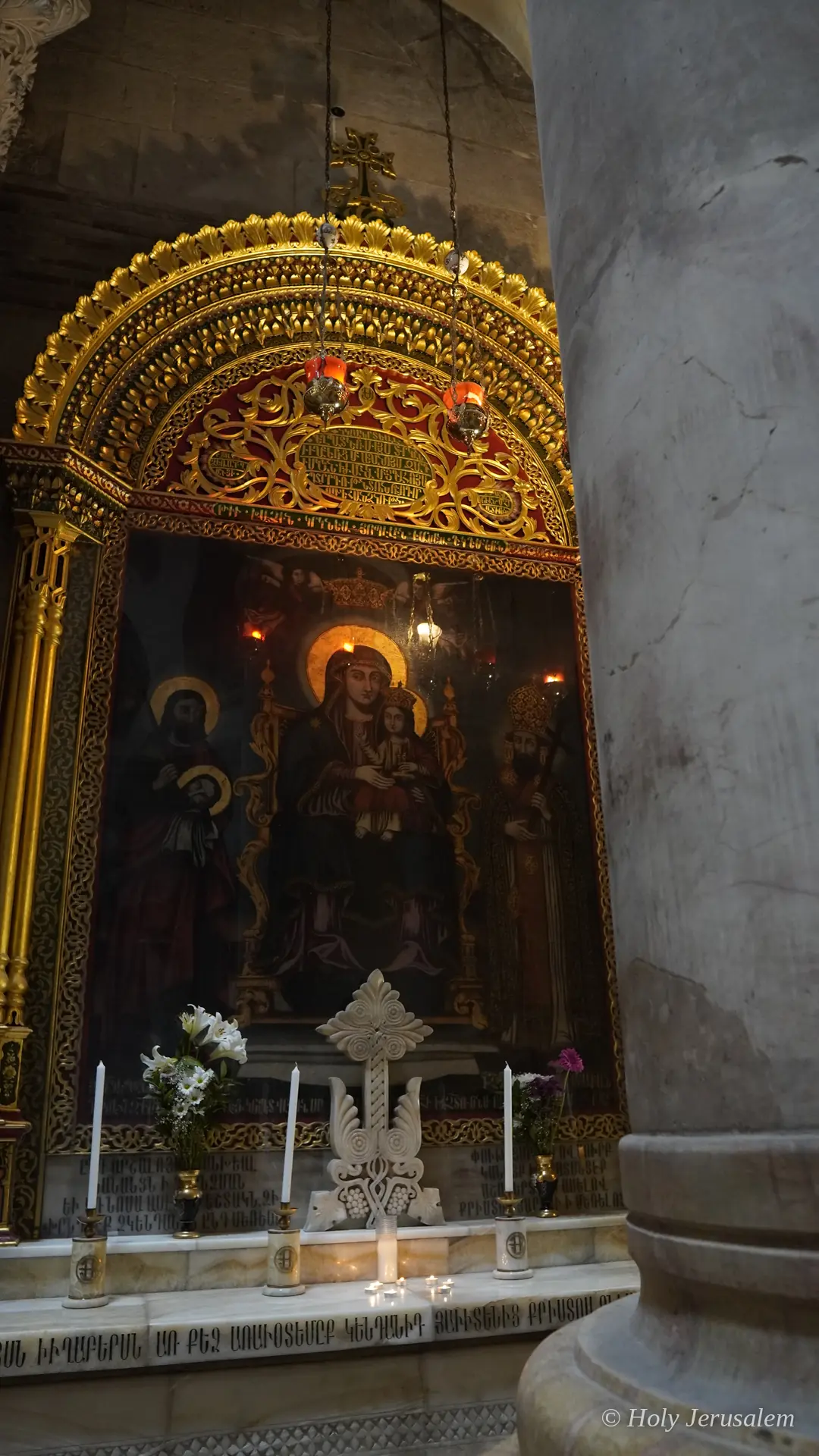
It is shared by several ancient communities: the Greek Orthodox, the Roman Catholic Franciscans and the Armenian Apostolic Church, with the Coptic, Ethiopian and Syriac Orthodox also holding chapels. Their rights are governed by the 'Status Quo' of 1852, and the keys to the great door have been kept by Muslim families for centuries. At its heart stands the Edicule over the tomb, restored in 2016–2017.
“He is not here; he has risen, just as he said.” Matthew 28:6
What to see
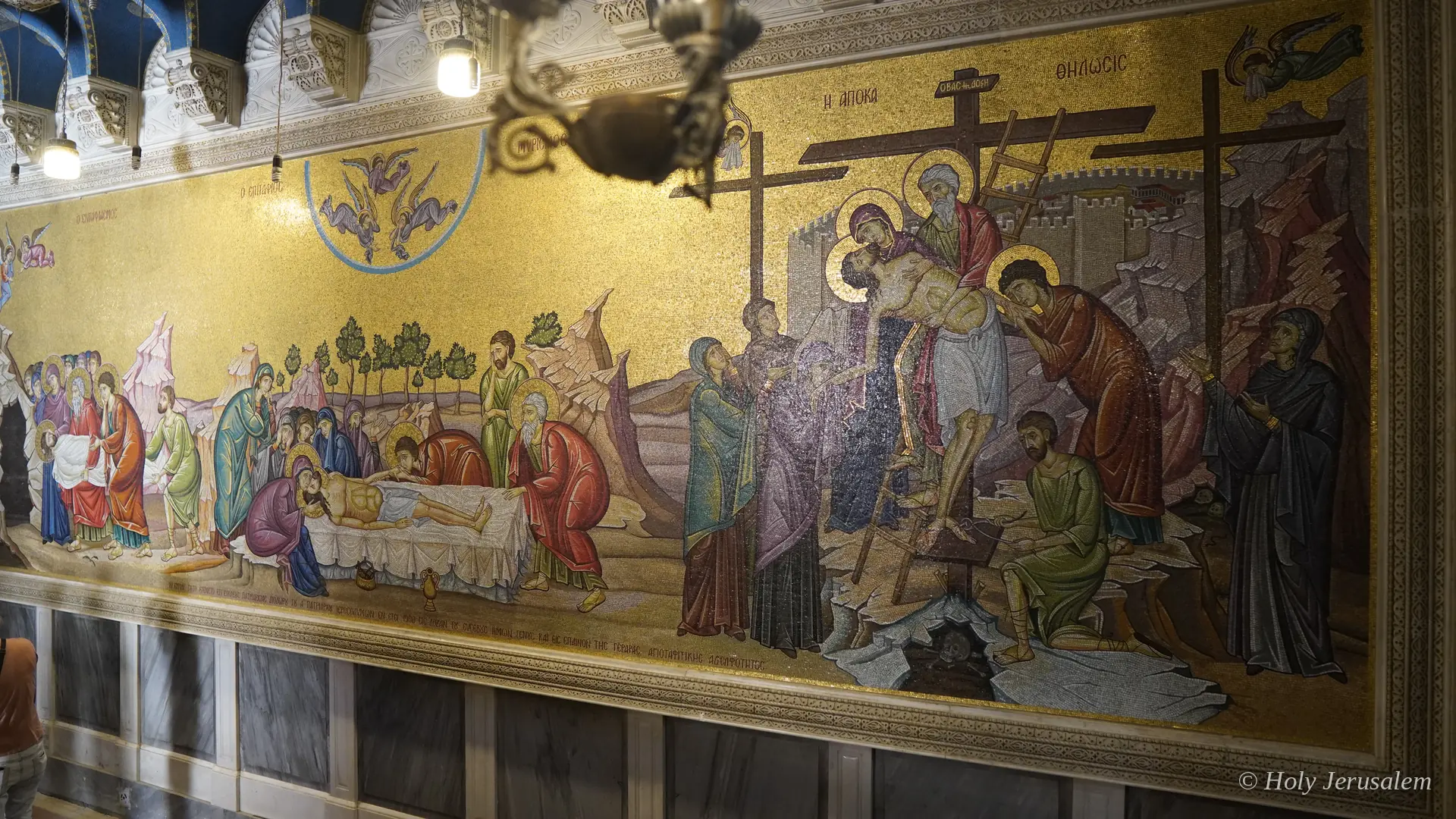
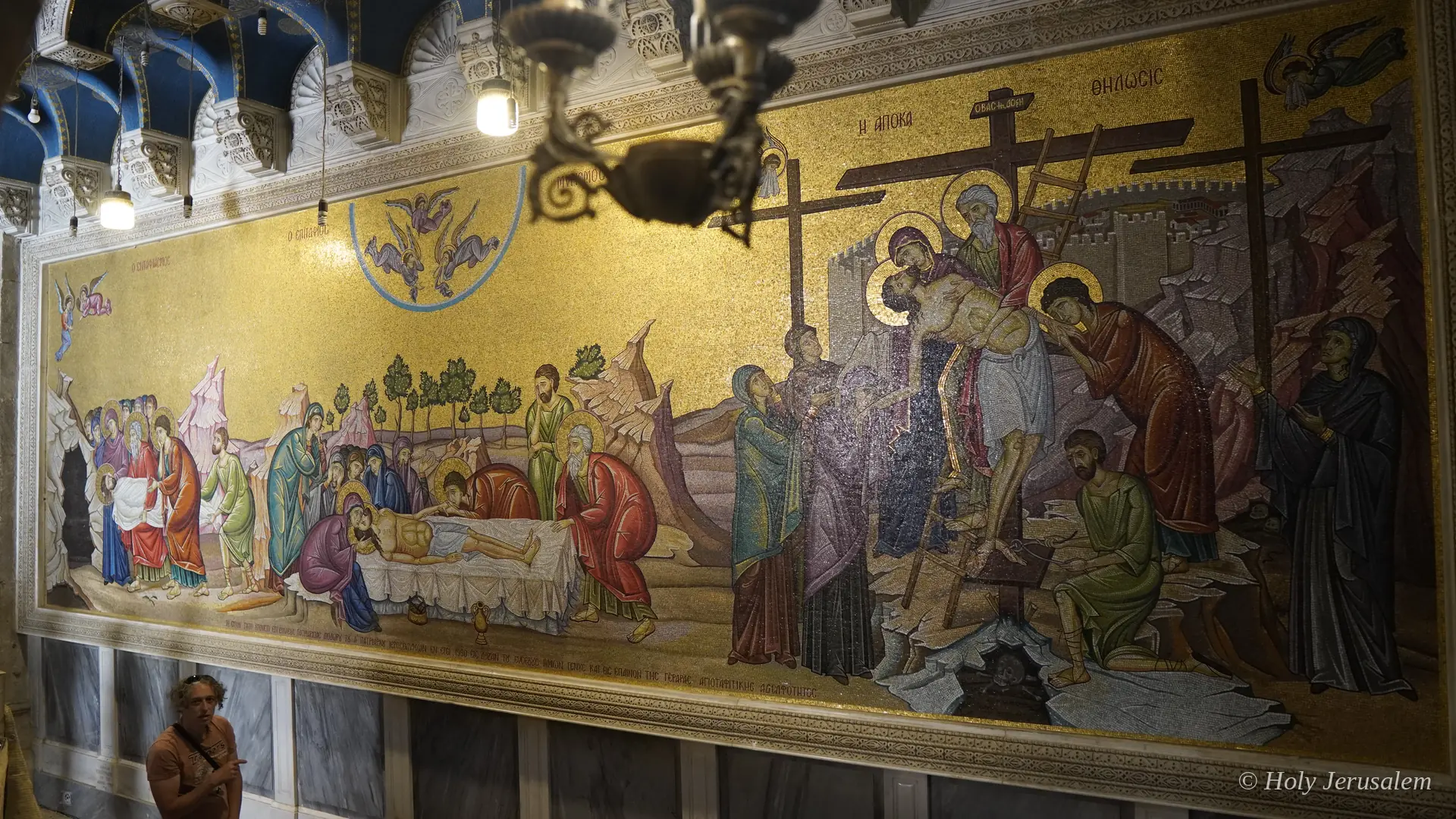
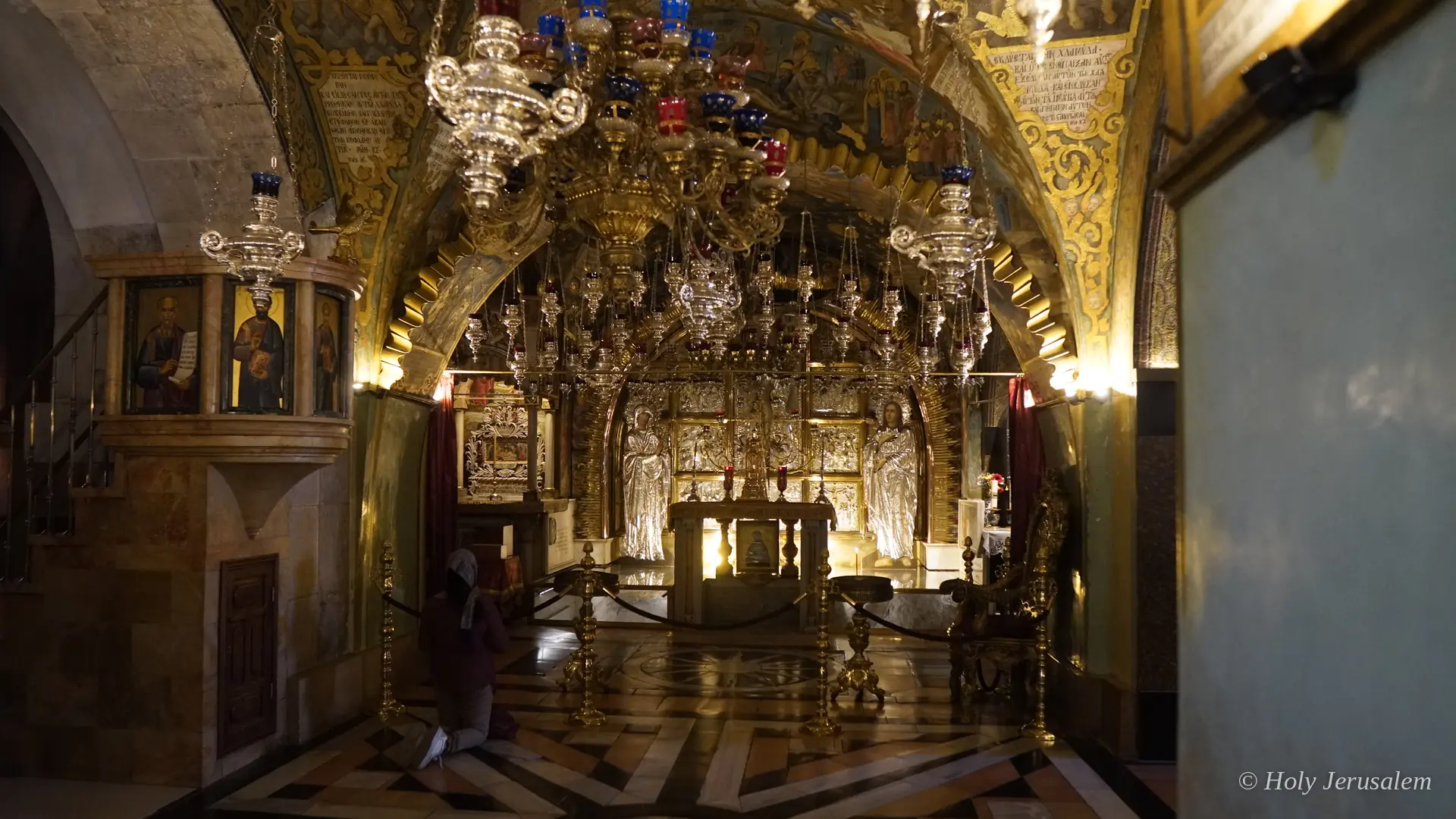
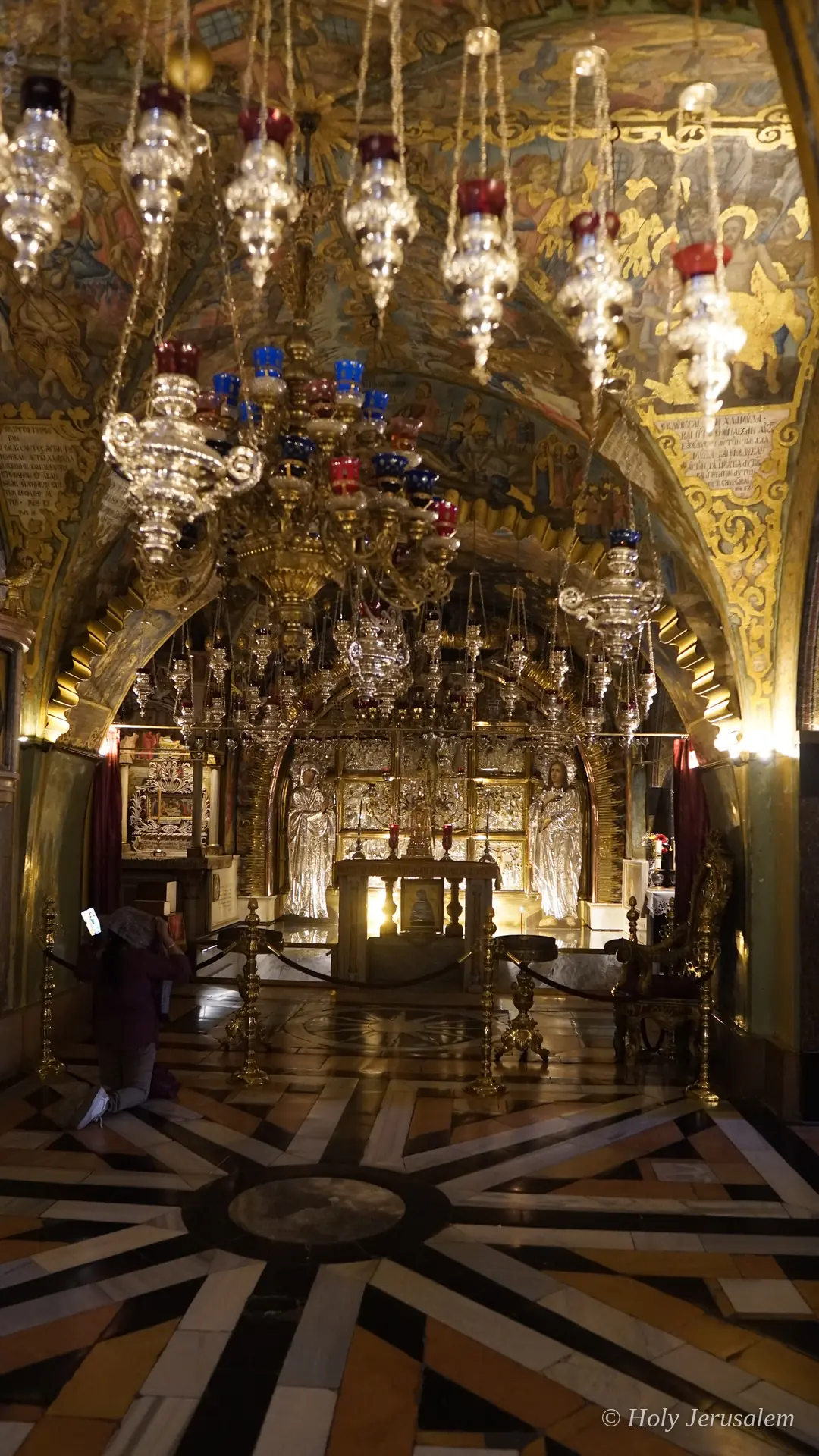
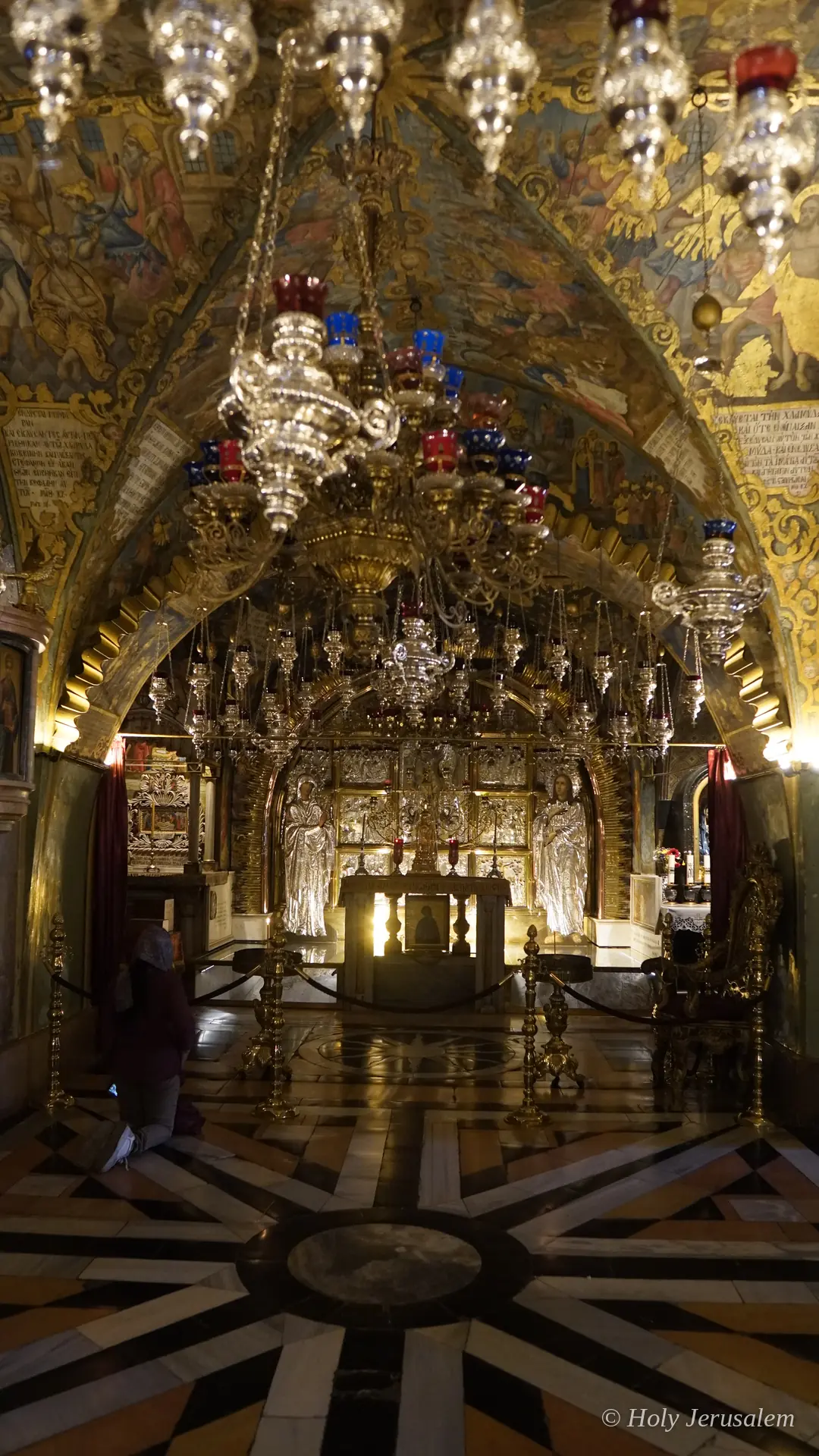
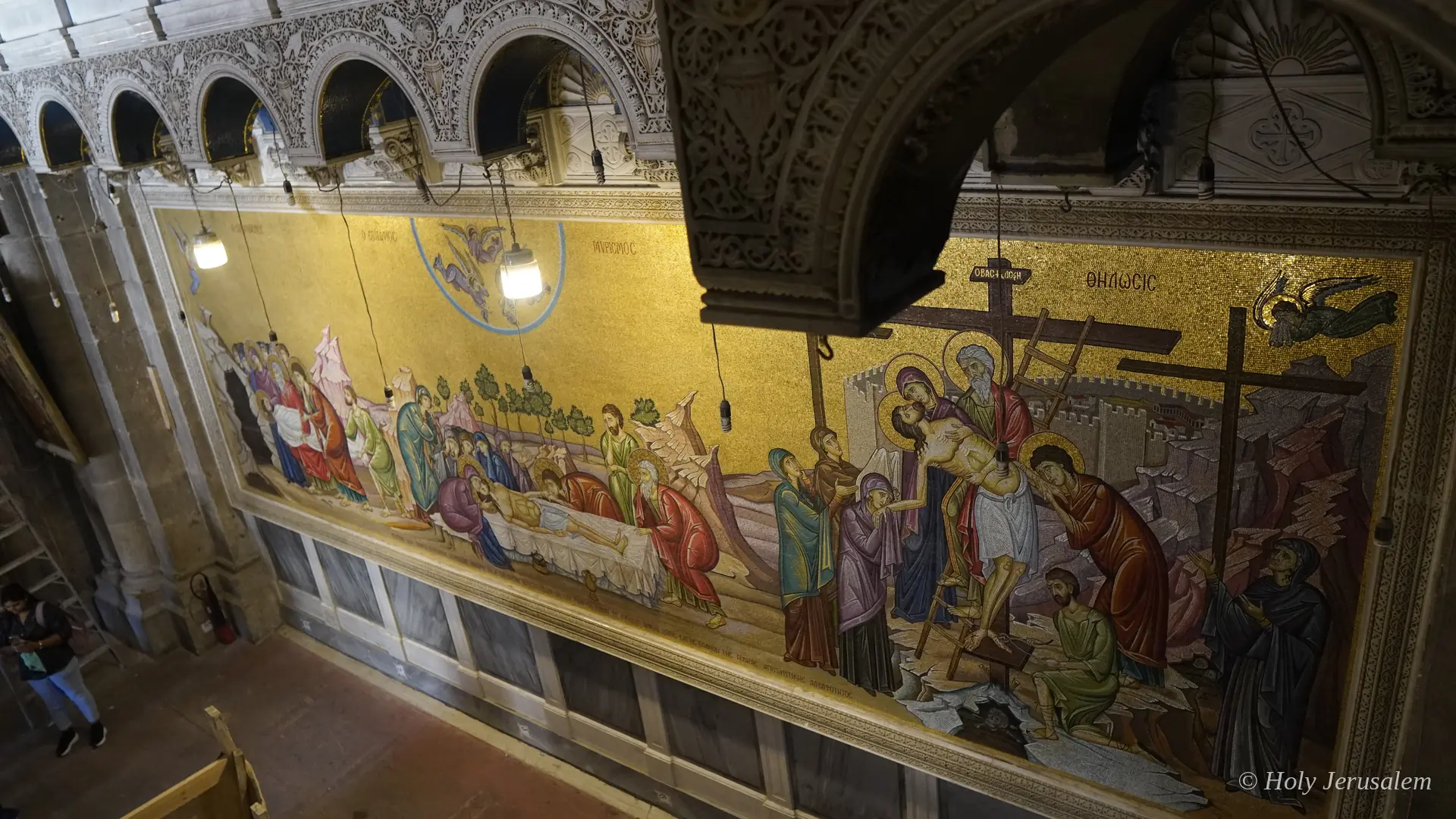
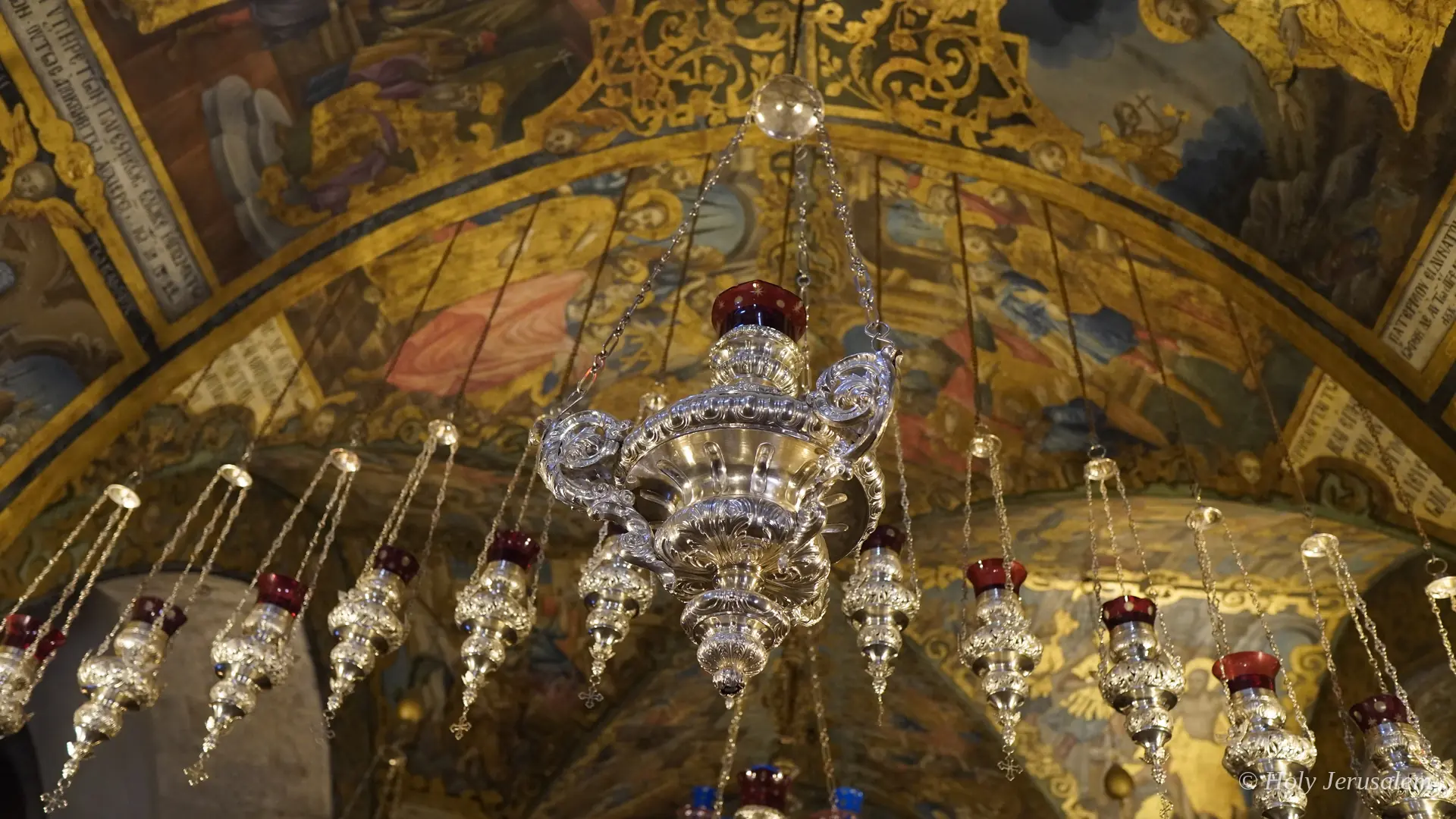
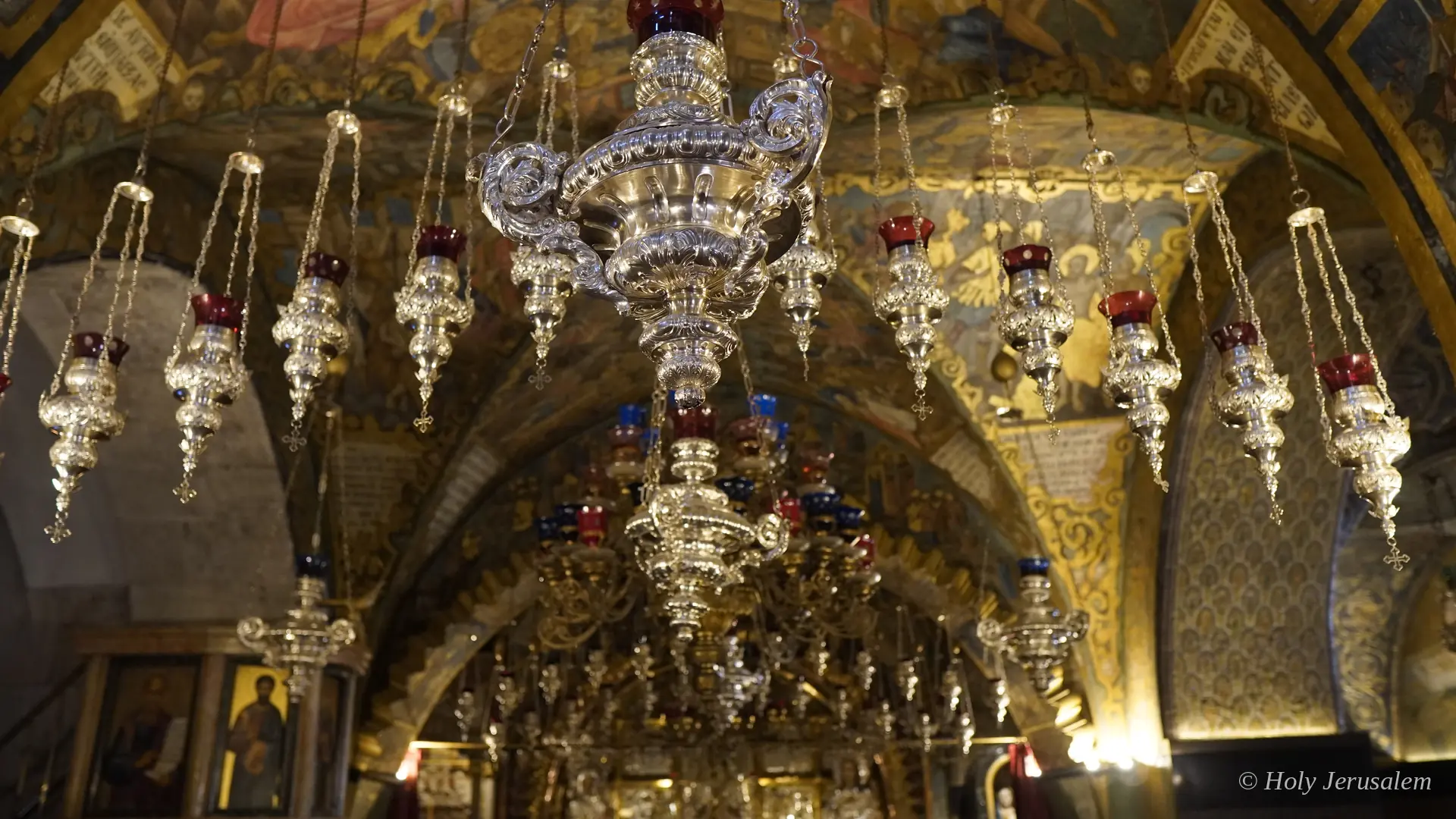
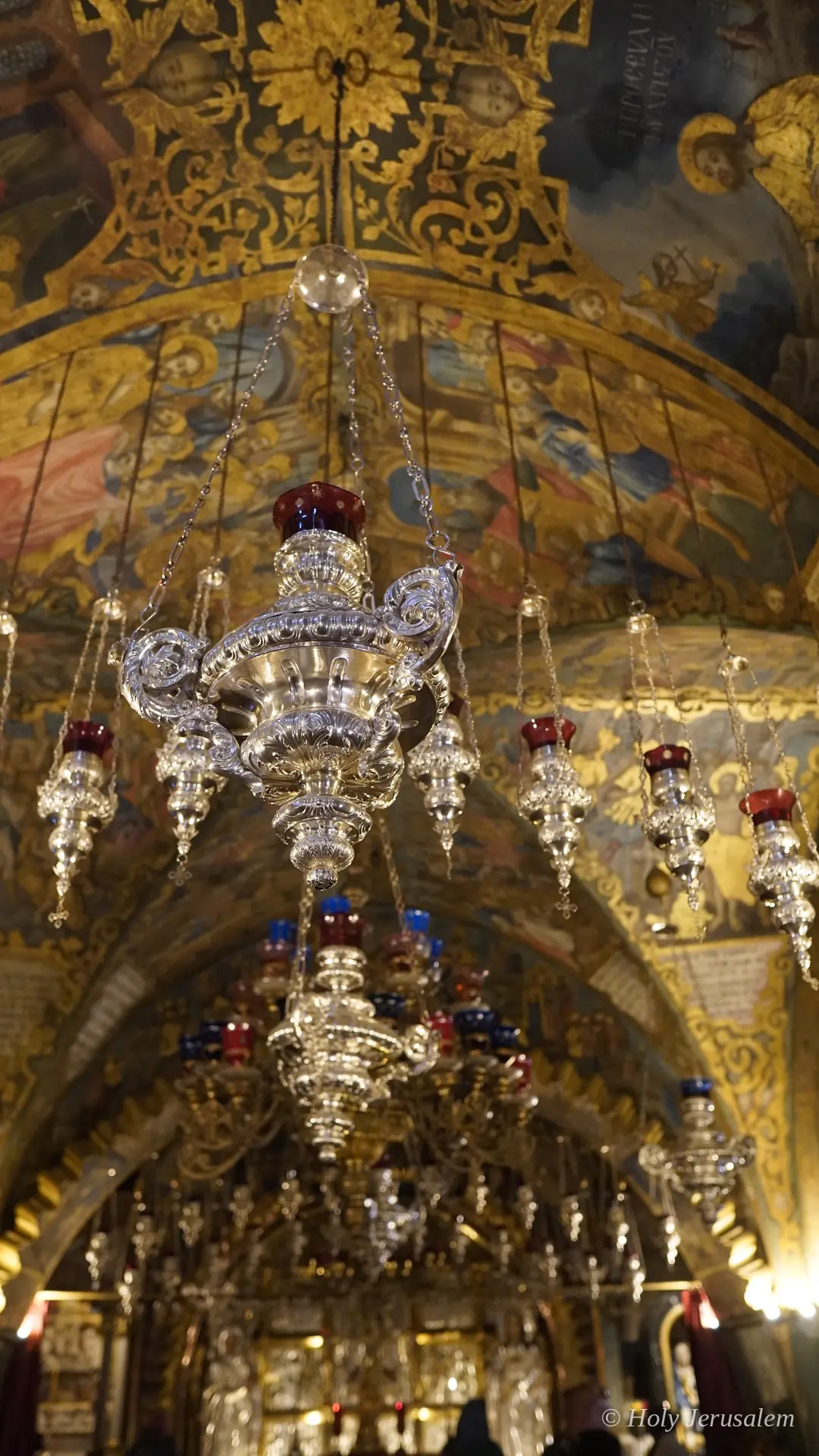
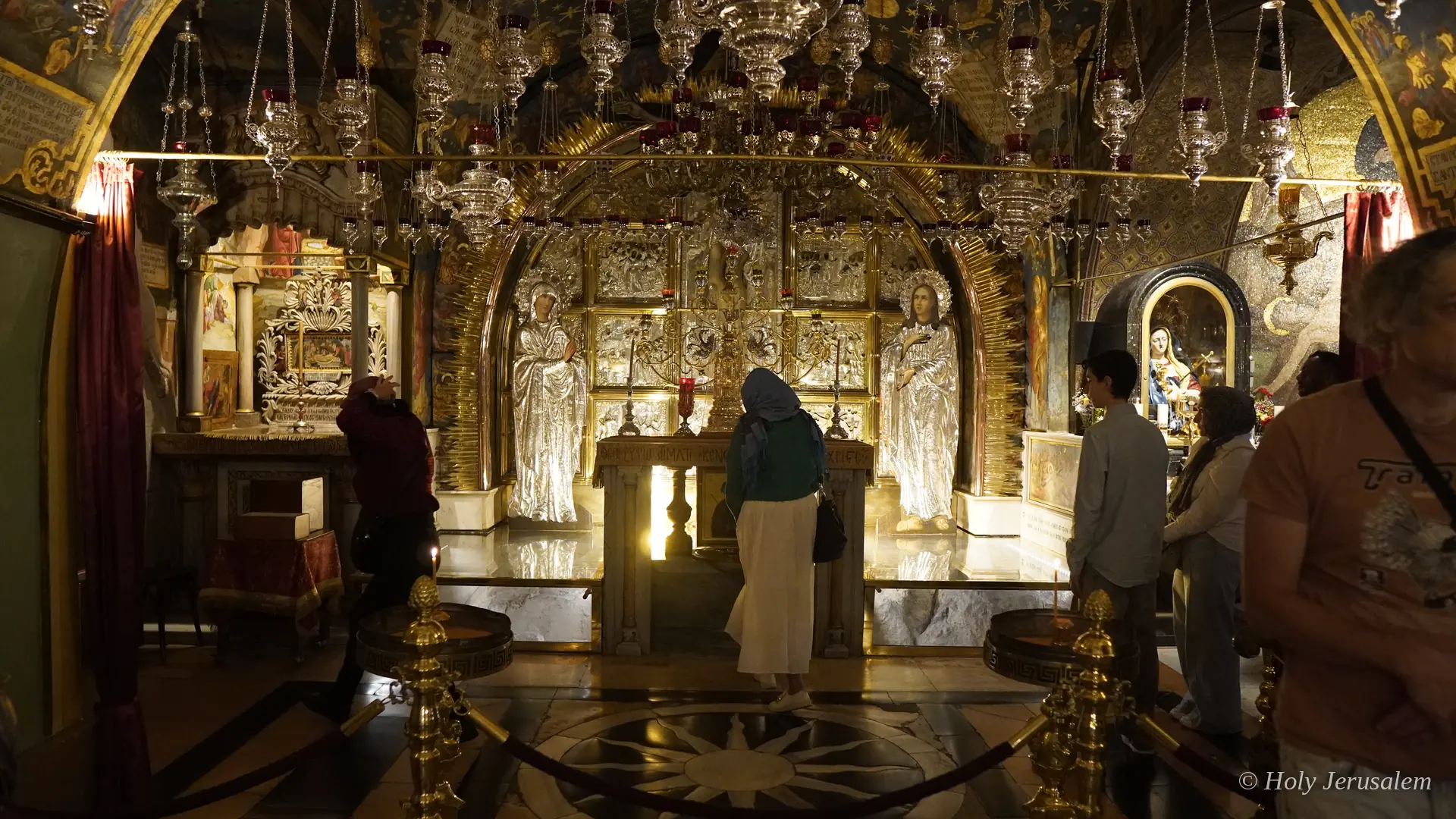
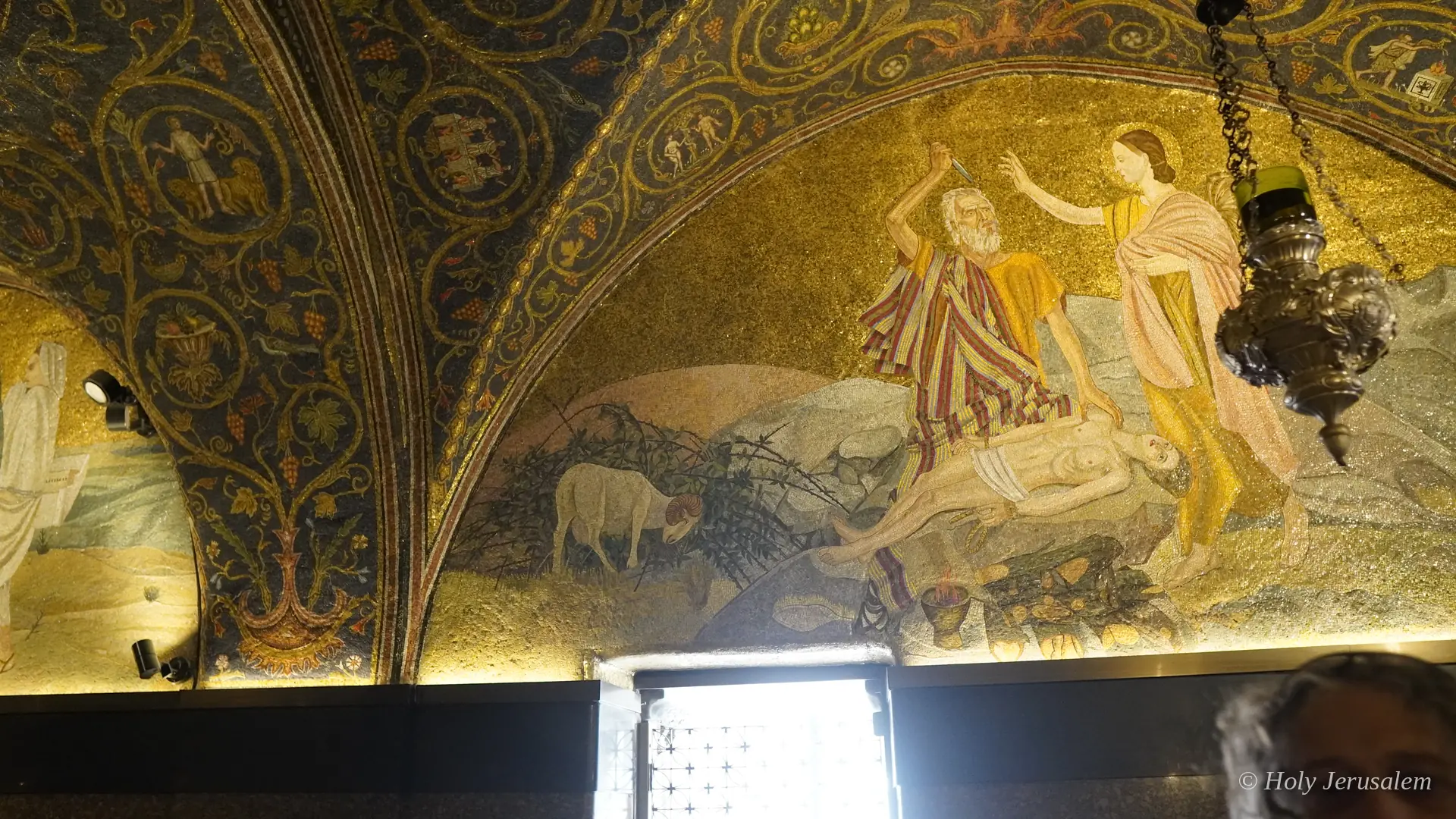
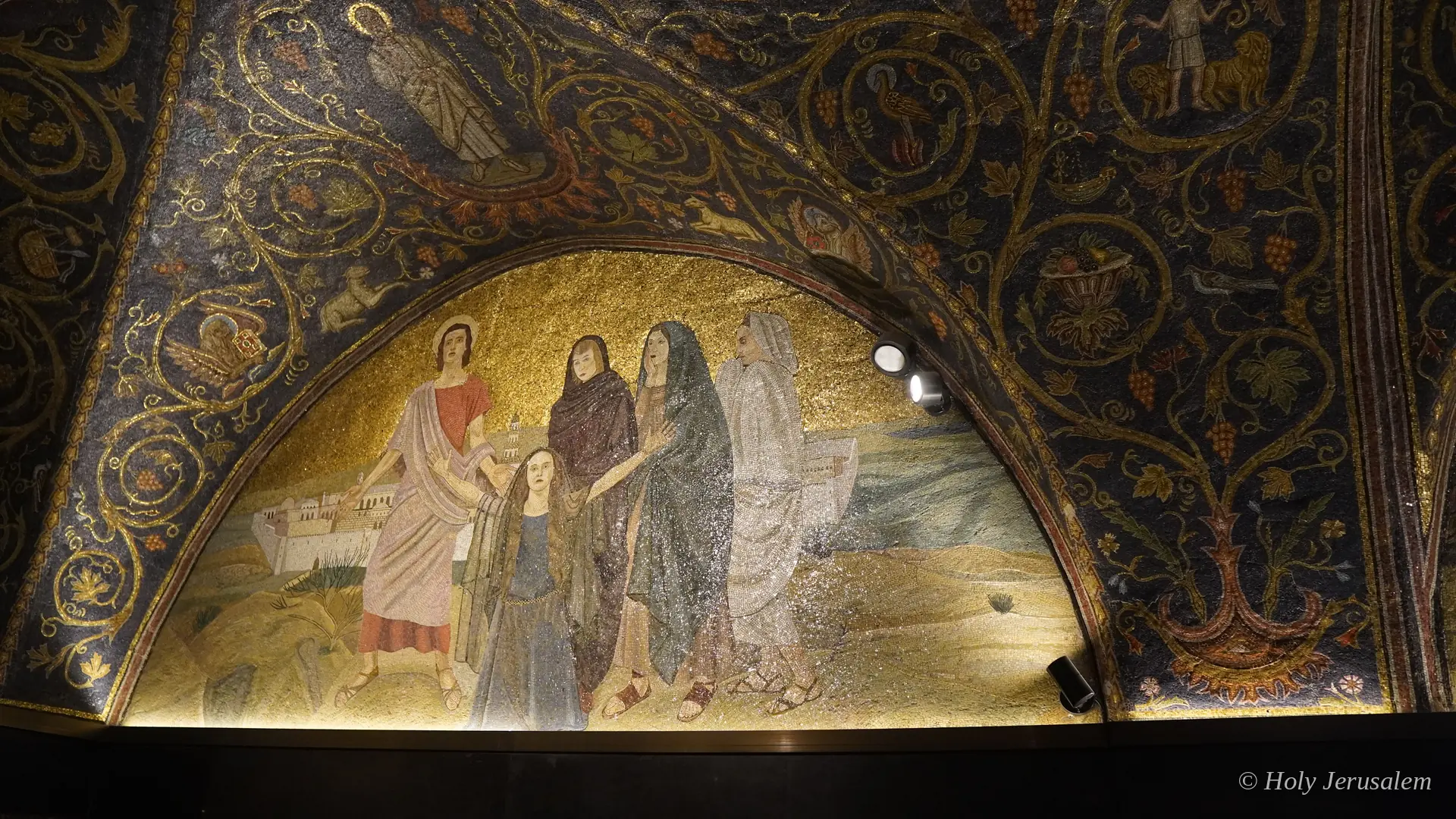
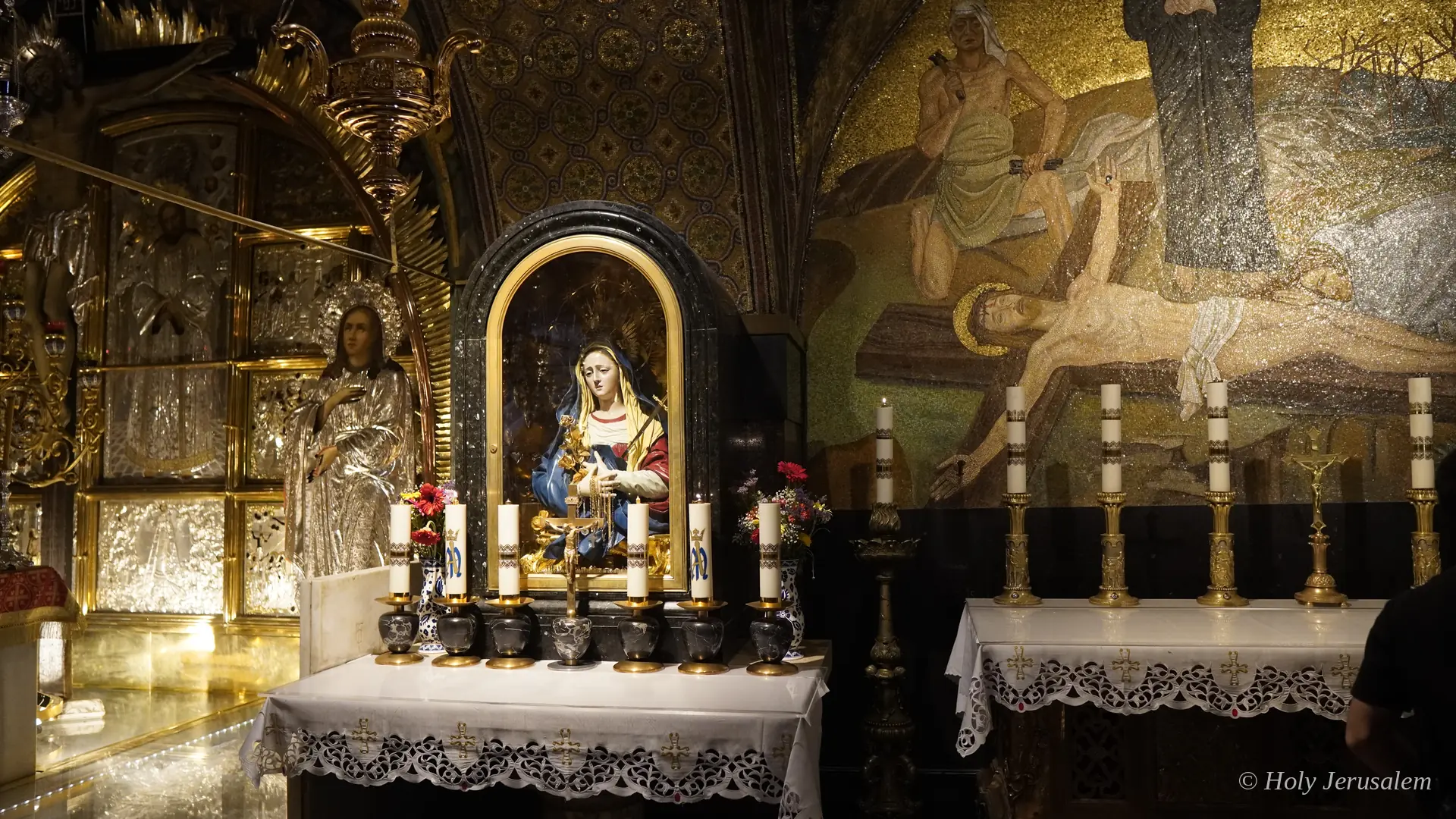
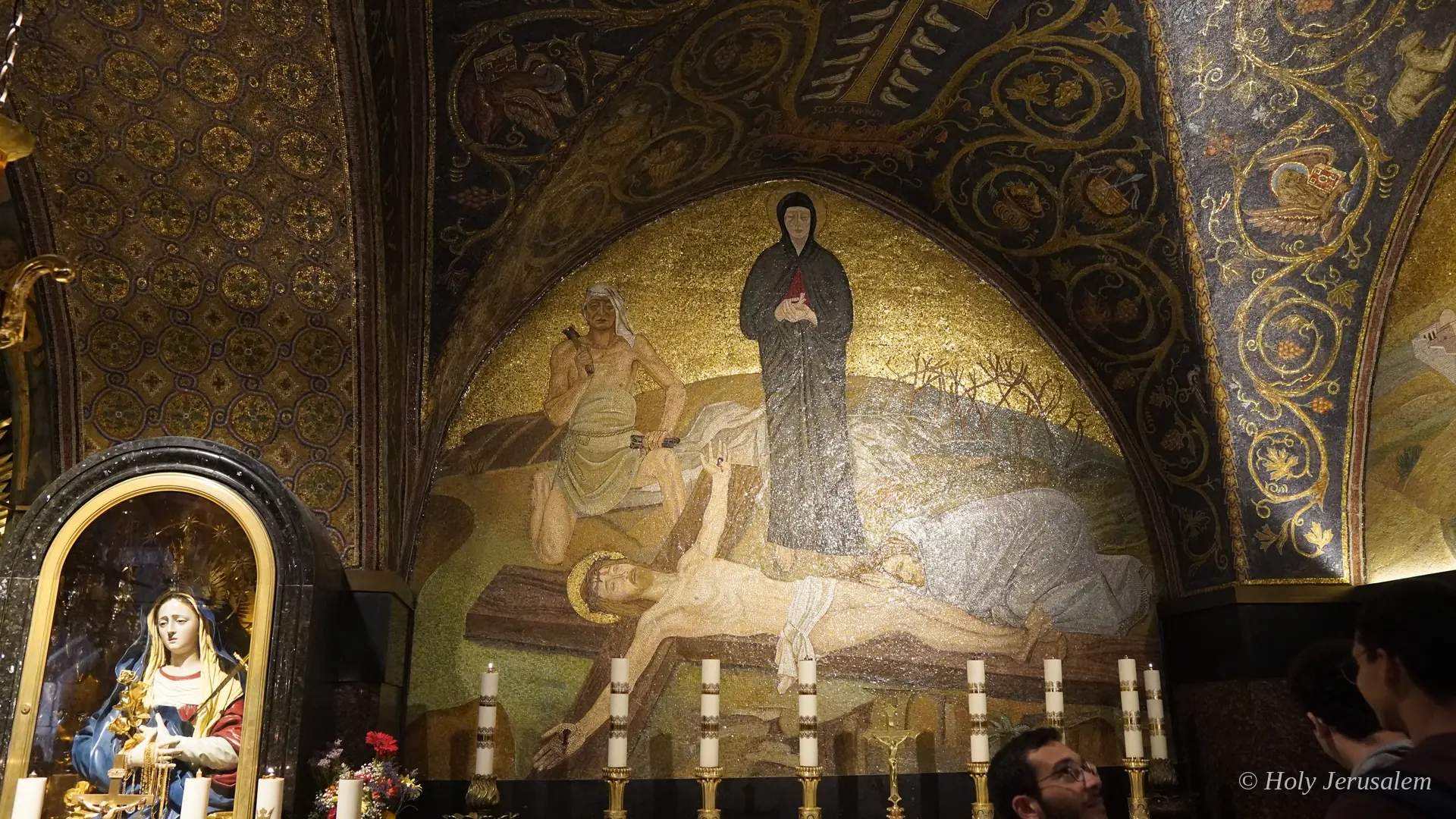
- Golgotha (Calvary): climb the steep stairs to the right of the entrance to the rock of the Crucifixion.
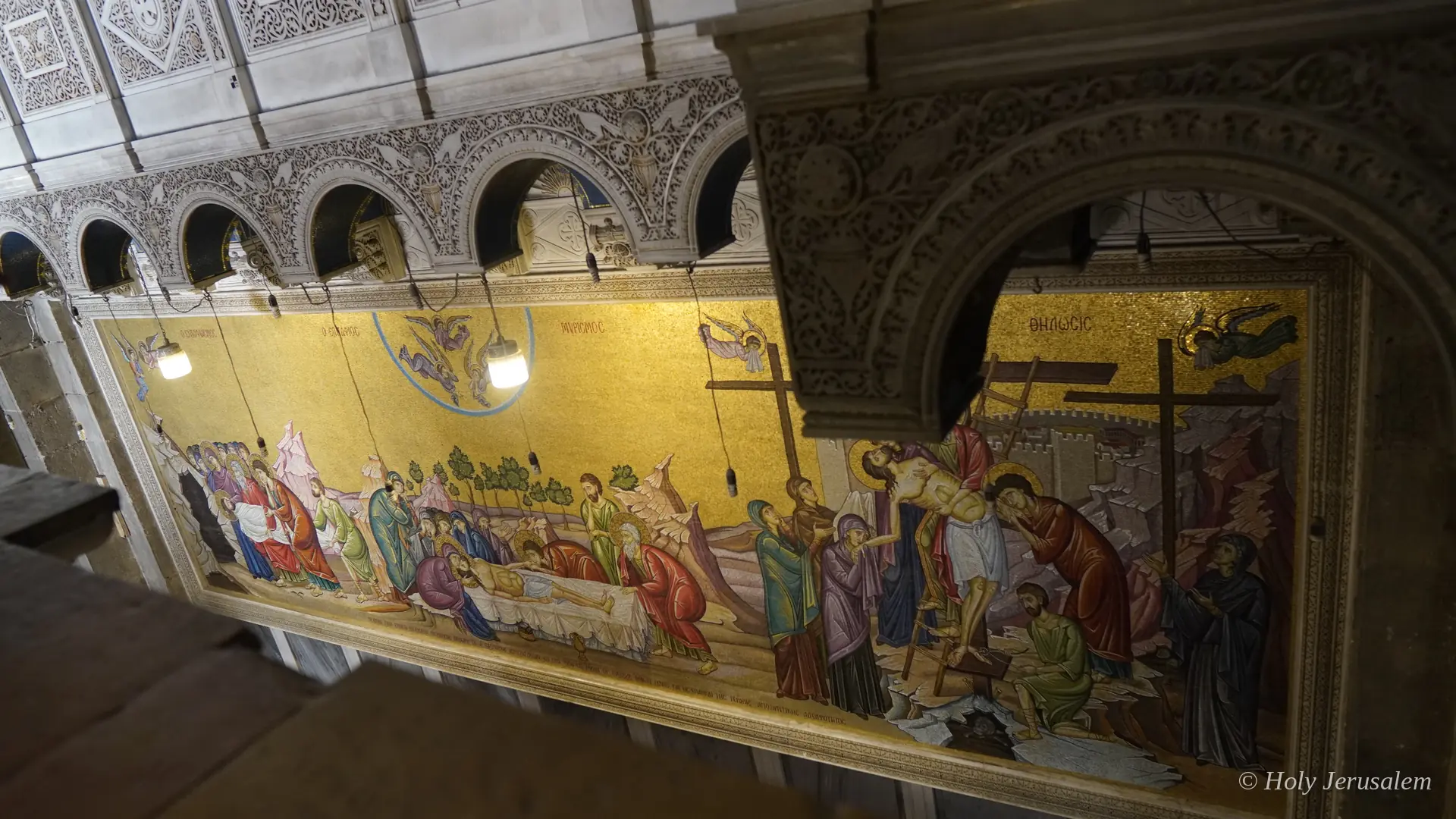
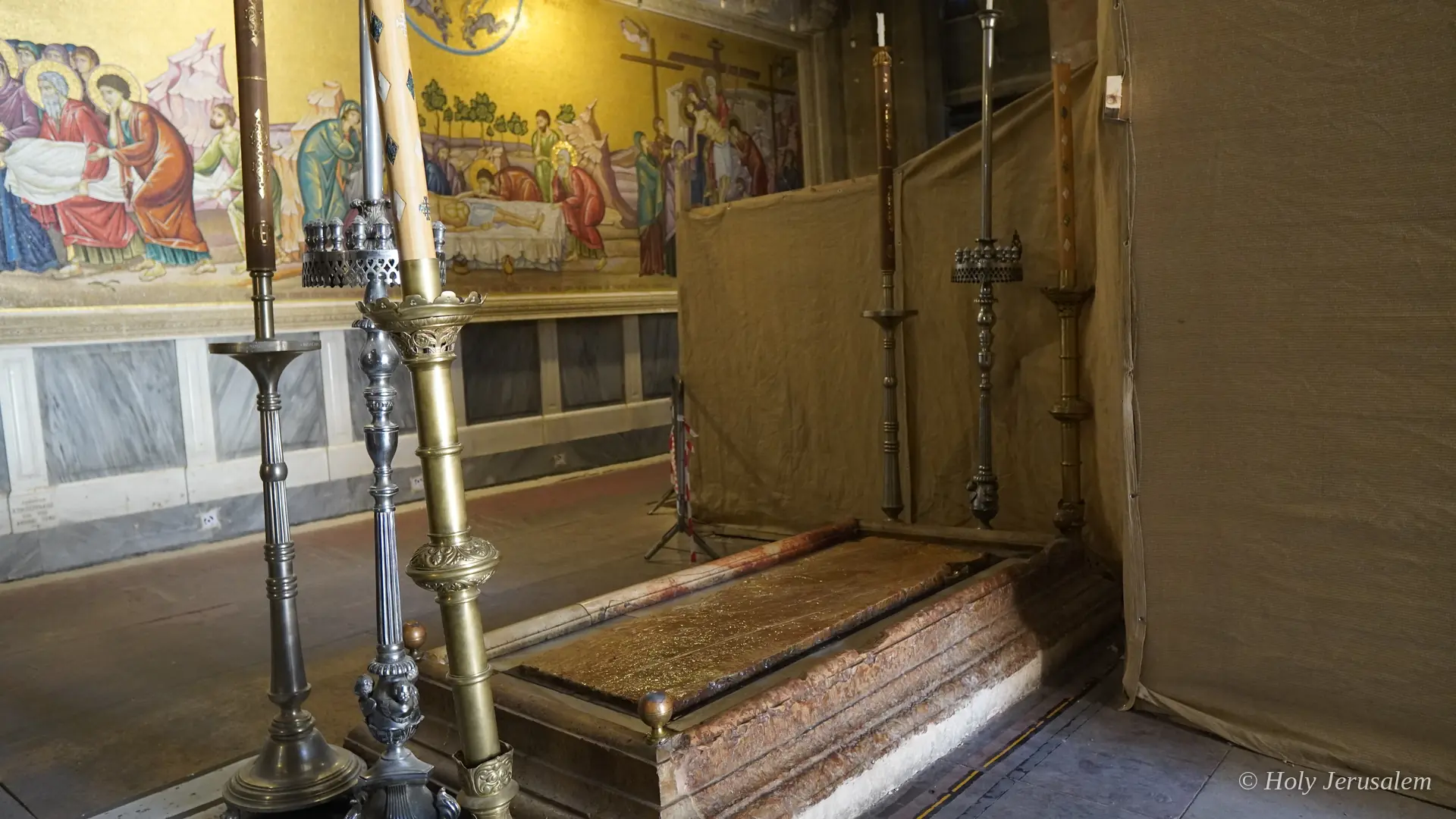
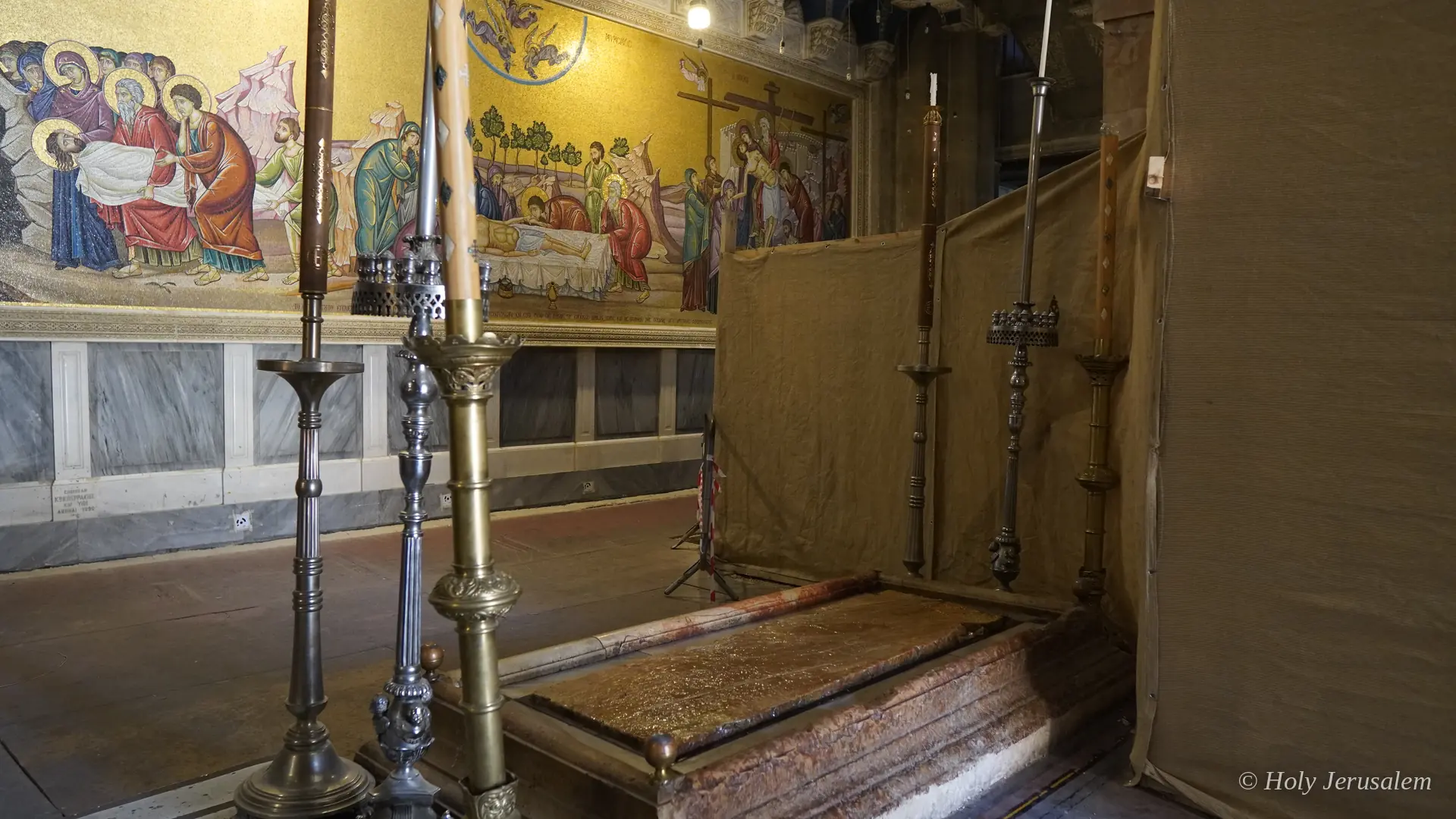
- The Stone of Anointing, just inside the door, where pilgrims kneel and pray.
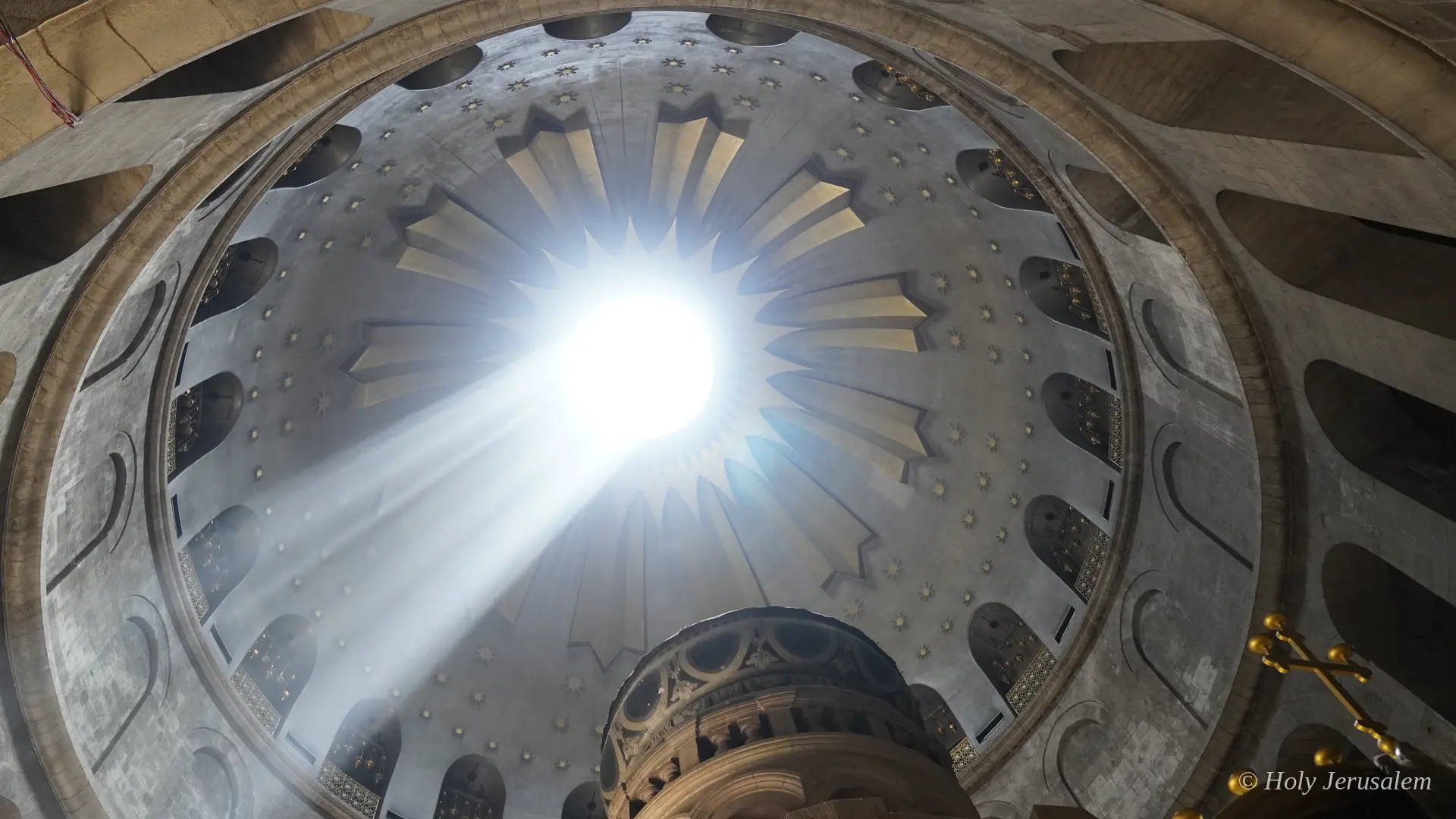
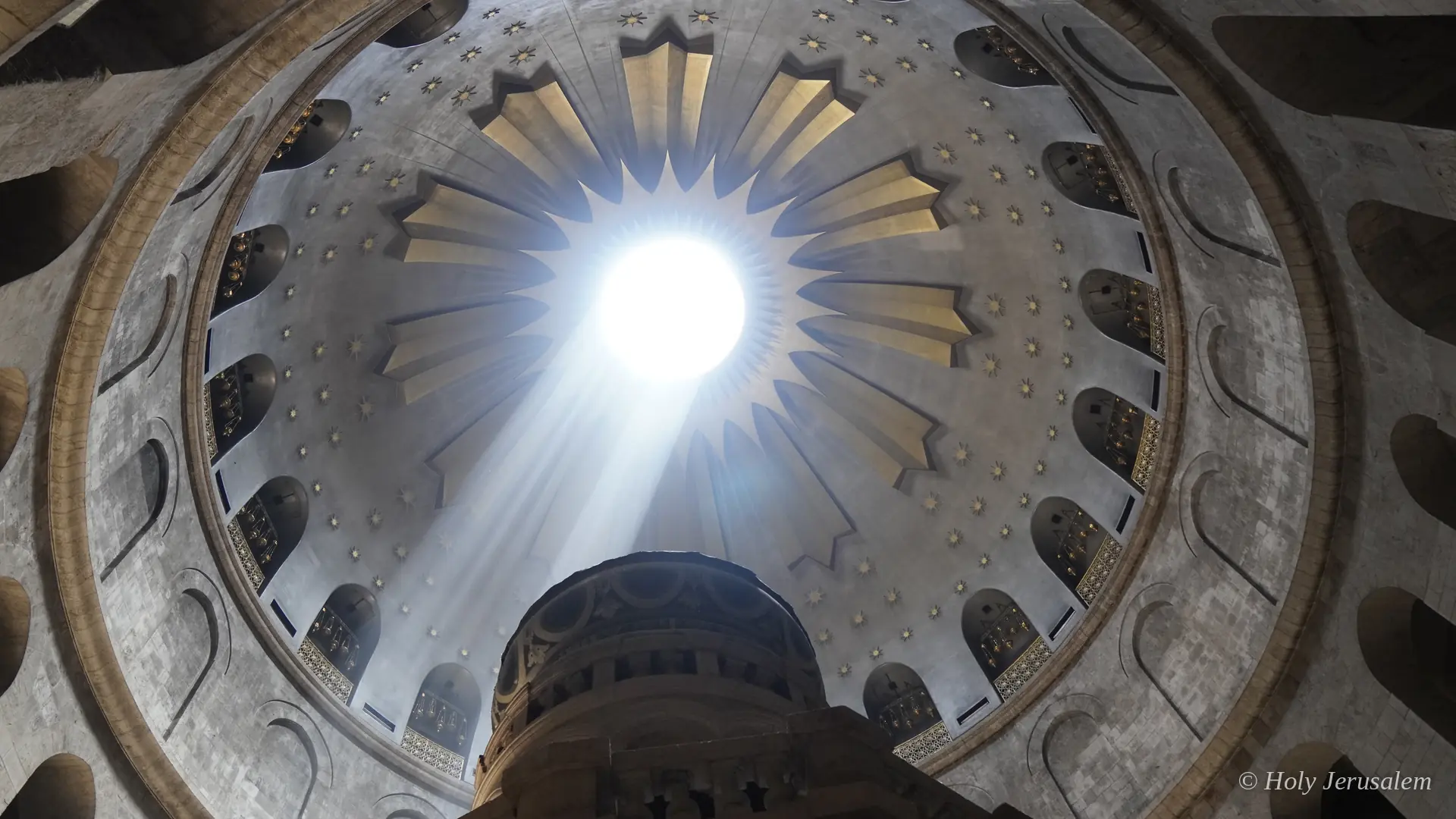
- The Edicule in the great Rotunda, enclosing the tomb of Christ.
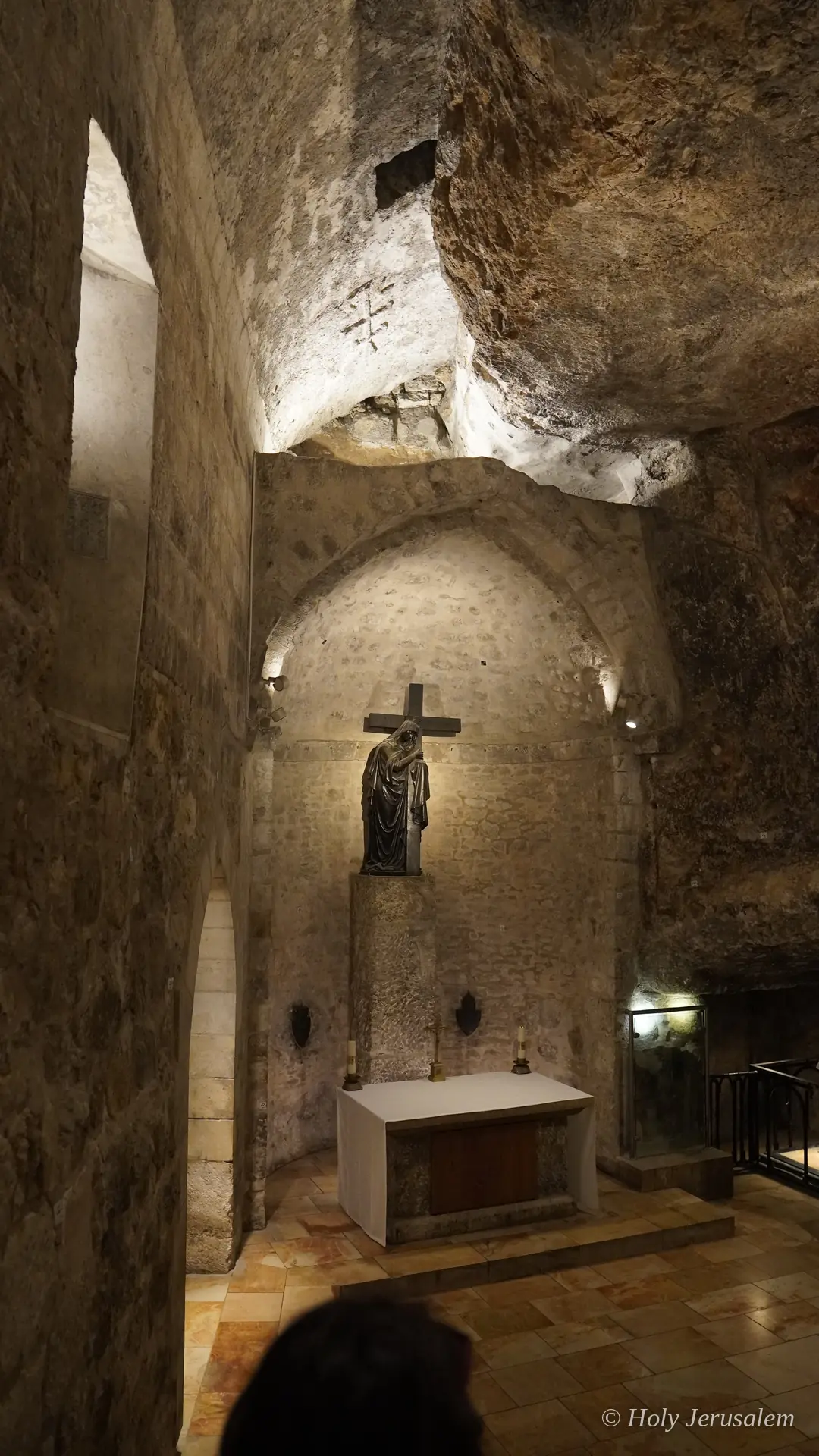
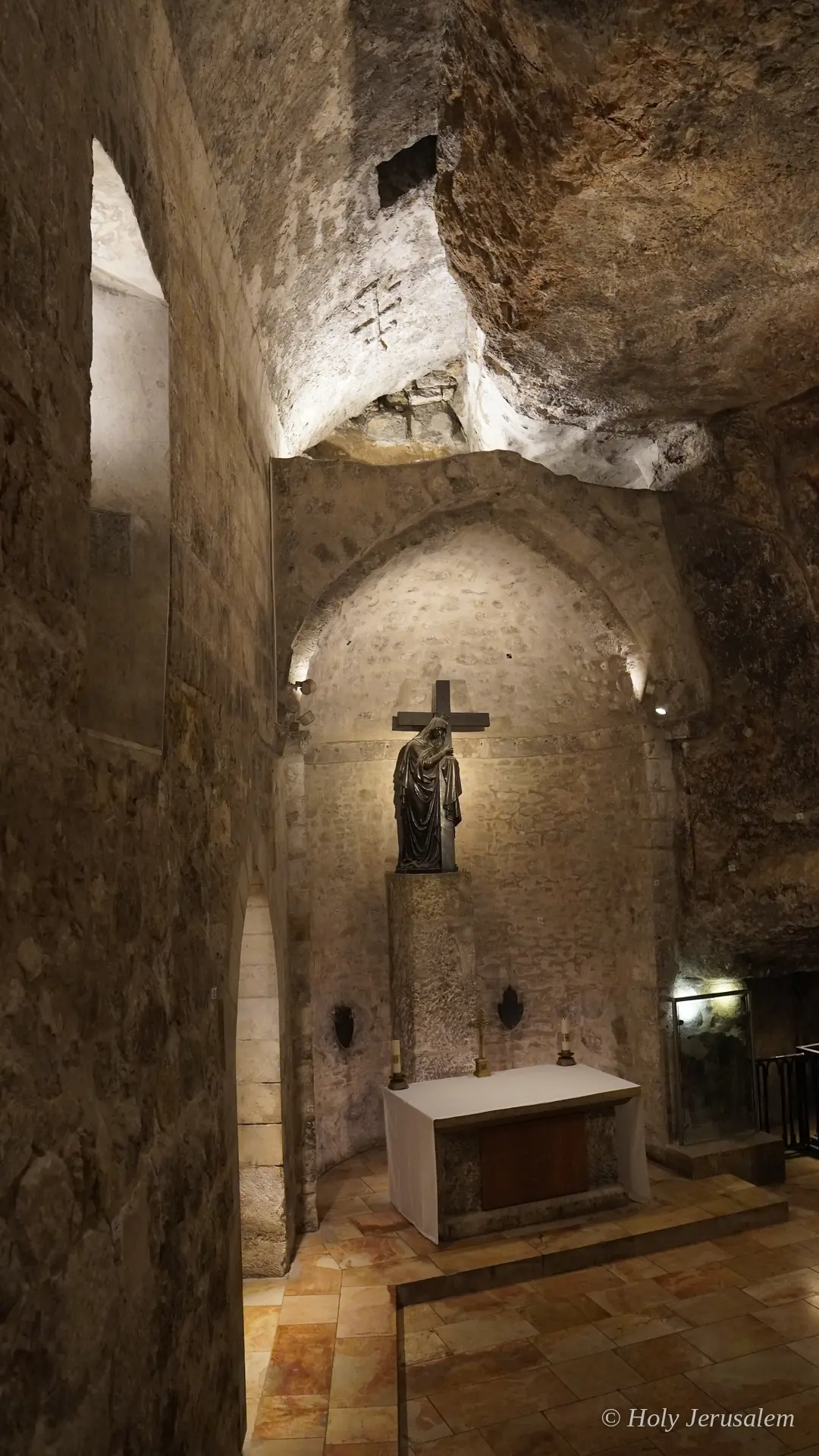
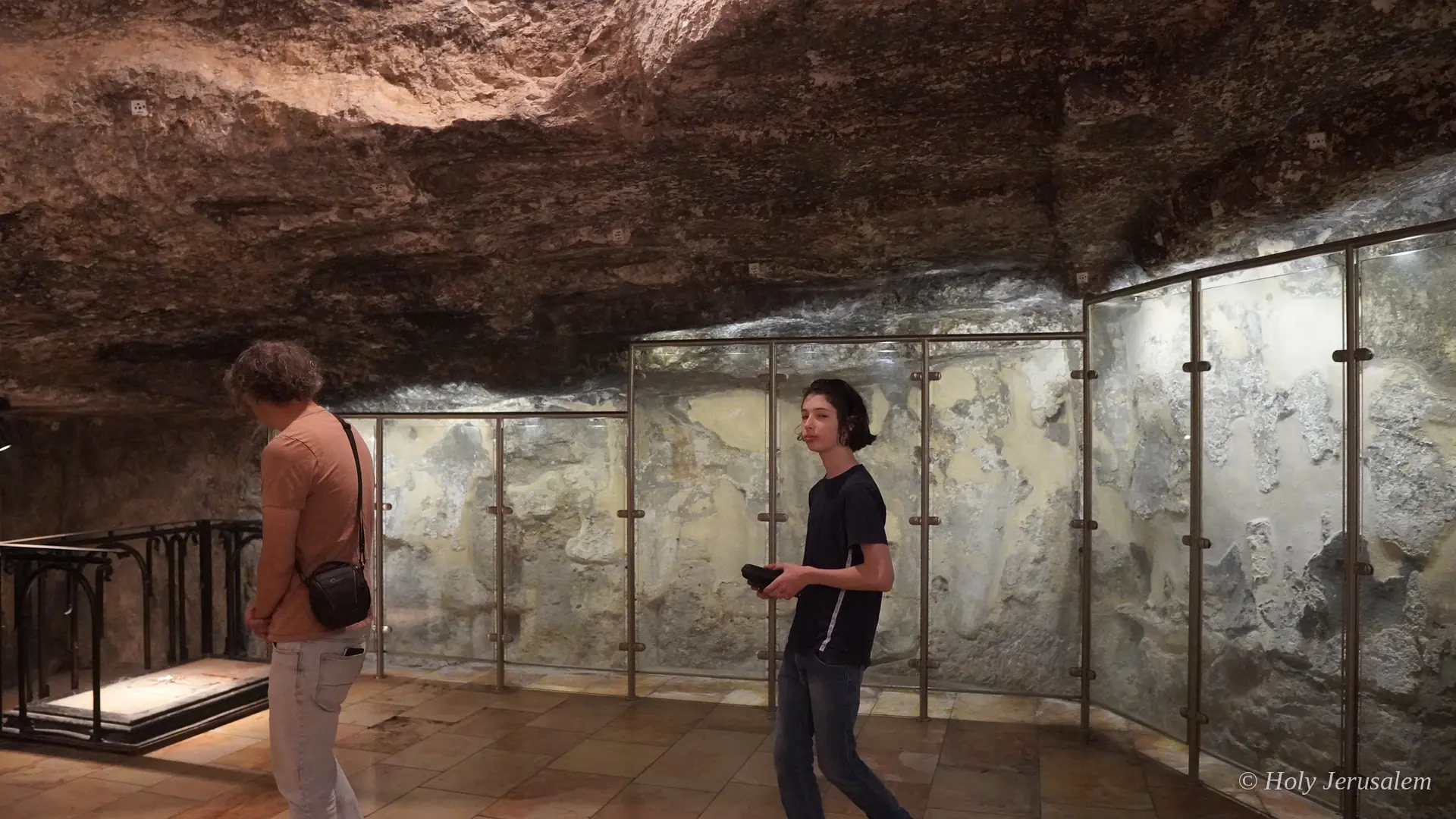
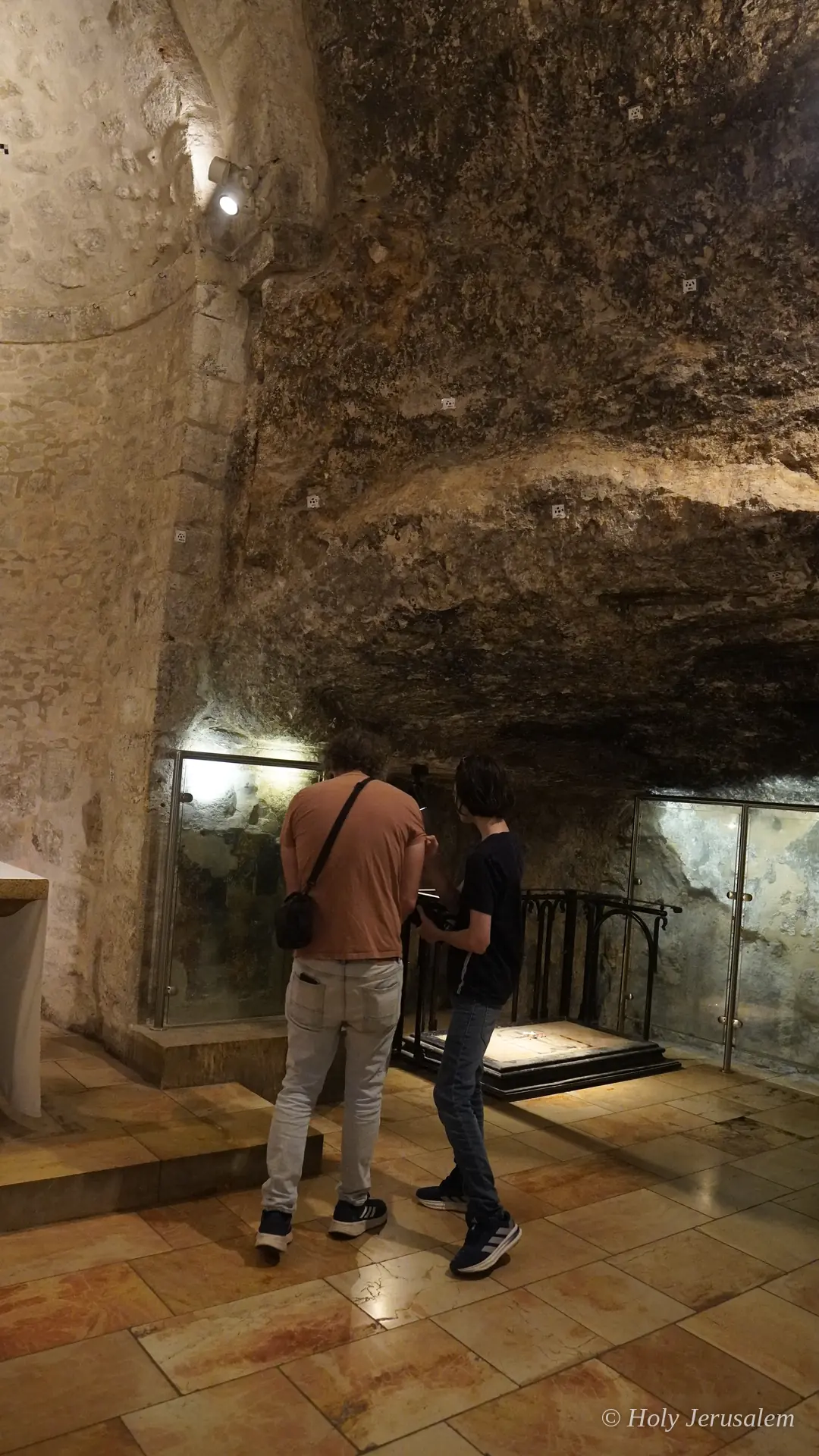
- The Chapel of St. Helena and the grotto below it, where tradition places the finding of the True Cross.
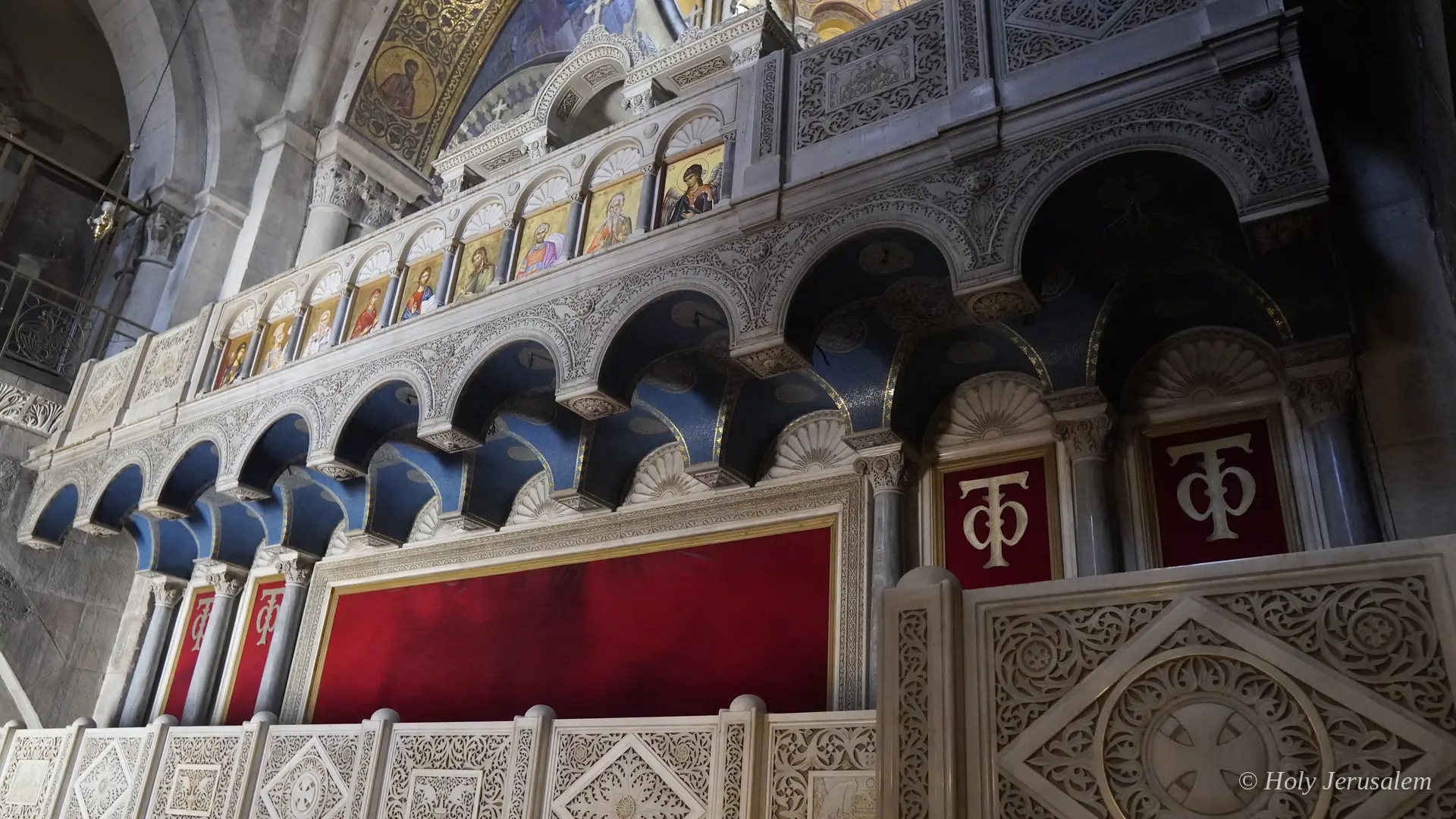
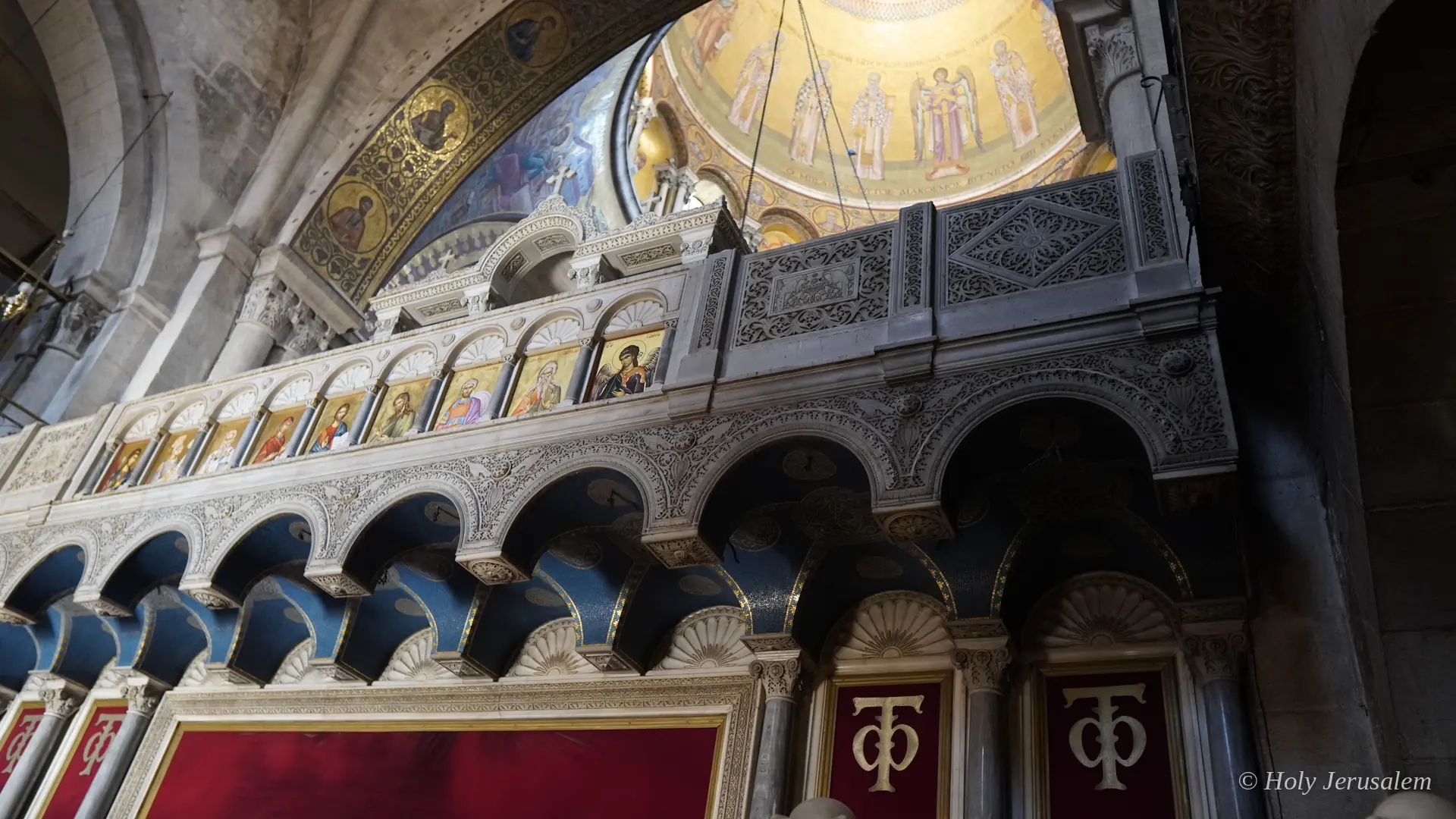
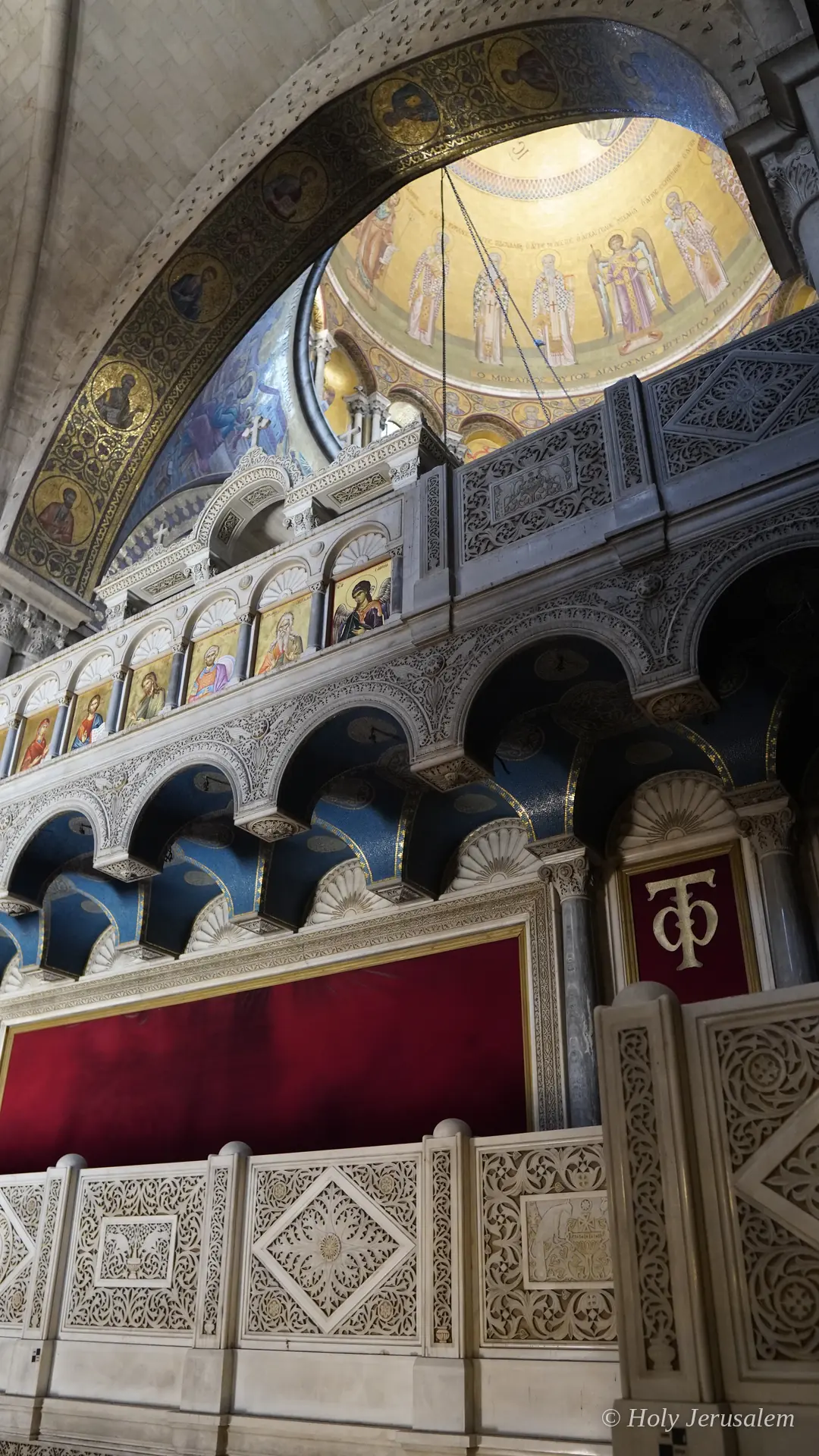
- The Greek Orthodox Katholikon with the 'omphalos' — the traditional centre of the world.
Through the centuries
- c. 30 ADThe Crucifixion, burial and Resurrection of Jesus, outside the city walls of the time.
- 326–335Emperor Constantine builds the first church after Helena's pilgrimage.
- 614Damaged by the Persian invasion; restored soon after.
- 1009Destroyed on the orders of the Fatimid caliph al-Hakim.
- 1149The Crusaders rededicate the church largely in its present form.
- 1852The 'Status Quo' fixes the rights of each Christian community.
- 2016–17The Edicule over the tomb is restored by an ecumenical project.